Lake Baikal
Earth’s Deepest, Oldest, Clearest Lake Mystery
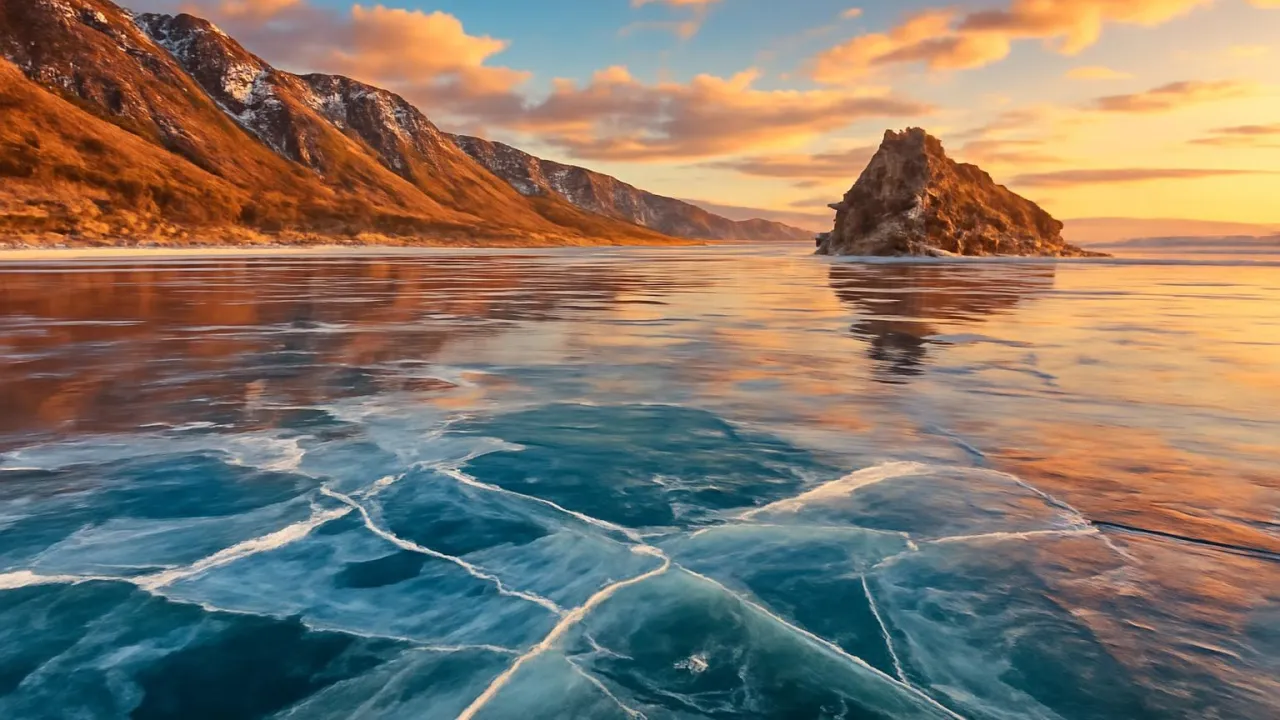
Lake Baikal’s water is so clear that sunlight can reach depths of over 130 feet (40 meters)!
1 A Geological Marvel: The World’s Oldest and Deepest Lake
Lake Baikal’s origins trace back approximately 25 to 30 million years, making it the oldest existing freshwater lake on Earth. Located in a massive continental rift valley in southern Siberia, its basin plunges to a maximum depth of 5,387 feet (1,642 meters), making it the planet’s deepest lake. Baikal’s extraordinary depth means it contains about 5,662 cubic miles (23,600 cubic kilometers) of water—roughly 20% of all unfrozen fresh surface water on Earth. The lake’s unique setting causes the basin to deepen each year at a measurable rate, a rare phenomenon among lakes worldwide.
2 Physics and Acoustics: The Science of Singing Ice
During Siberia’s harsh winters, Lake Baikal freezes with a thick, transparent ice sheet that can exceed three feet (one meter) in thickness. As temperatures fluctuate, the ice contracts and expands, creating fractures that release intense acoustic energy as vibrations. These vibrations propagate across the ice, producing a range of sounds—from sharp cracks to melodic, laser-like tones—due to the unique properties of the ice. Scientists study these acoustic phenomena to better understand the physics of ice, sound transmission, and even climate patterns in the region.
3 A Living Laboratory: Baikal’s Unique Biodiversity
Lake Baikal is renowned for its exceptional biodiversity, hosting over 1,700 species of plants and animals, with nearly two-thirds to the lake. The Baikal seal, or nerpa, is the only exclusively freshwater seal species on Earth, adapted to the lake’s cold, oxygen-rich waters. The golomyanka, a translucent fish, thrives at depths over 1,600 meters and gives birth to live young, a rare trait among fish. Scientists consider Baikal a natural laboratory, using it to study evolutionary processes, adaptation to extreme environments, and the effects of environmental change.
4 Cultural, Historical, and Environmental Significance
For thousands of years, Lake Baikal has been a cultural and spiritual symbol for the indigenous Buryat people and other Siberian communities. Its pristine waters support vital fisheries and provide drinking water for millions. Artists, writers, and explorers have long been inspired by Baikal’s beauty and mystery, making it a subject of countless legends and scientific expeditions. Today, Baikal is a UNESCO World Heritage site, recognized for its ecological and cultural value, but it faces serious threats from industrial pollution, invasive species, and climate change.
5 Preservation and Global Responsibility
Efforts to protect Lake Baikal involve international cooperation, scientific research, and local stewardship. Conservationists monitor water quality, fight pollution, and study the effects of global warming on the lake’s unique ecosystem. Educational programs teach children and adults about Baikal’s importance and how to safeguard its future. By understanding the lake’s scientific, ecological, and cultural significance, people worldwide can help ensure that Lake Baikal remains a source of wonder and life for generations to come.
1. How does Lake Baikal’s rift valley affect its depth over time?
2. Why do scientists call Lake Baikal a 'living laboratory'?