Jet Engine
Blasting Through the Sky With Science
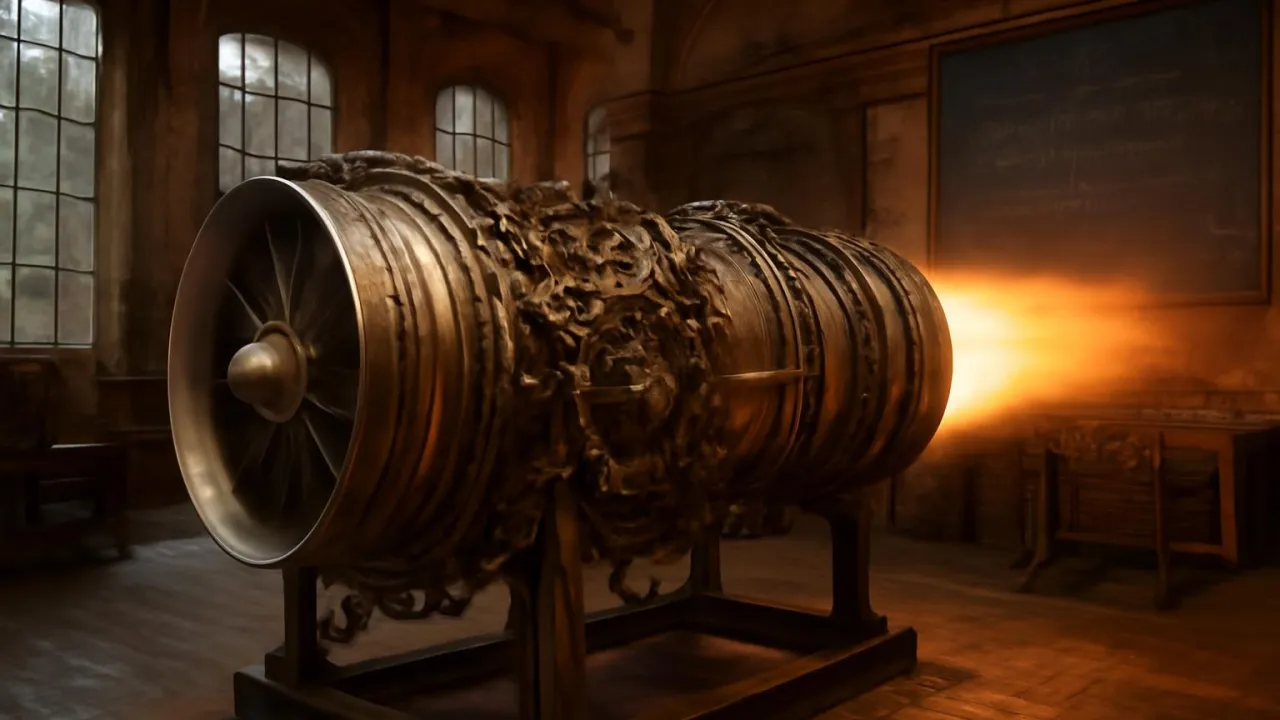
A modern jet engine can push a plane over 600 miles per hour—almost as fast as a race car on the ground!
1 The Science of Jet Power
Jet engines work by taking in large amounts of air, compressing it, and mixing it with fuel for combustion. The burning mixture creates extremely hot, high-pressure gases that expand rapidly and are forced out through a nozzle. This rapid exhaust produces thrust, which propels the plane forward at high speeds. The entire process is based on : for every action, there is an equal and opposite reaction.
2 A Revolution in Flight
Before jet engines, propeller planes traveled slowly and had limited . The invention of the jet engine in the late 1930s changed aviation forever, allowing planes to fly faster, higher, and farther than ever before. Early jet-powered flights amazed crowds with their speed and power, signaling a new era in transportation. Today, almost all commercial airliners use jet engines for efficient long-distance travel.
3 Inventors and Innovations
Frank Whittle in Britain and Hans von Ohain in Germany independently developed the first working jet engines. Their designs used turbines to compress air and combustion chambers to ignite fuel, creating powerful thrust. The first jet-powered flight took place in 1939, and soon after, jet engines spread worldwide. Their invention led to rapid advances in both military and civilian aviation.
4 Impact on the World
Jet engines have made global travel faster, safer, and more accessible to people everywhere. They have connected distant countries and cultures, making it possible to visit family, do business, or explore new places in just hours. The jet engine’s influence can be seen in everything from international tourism to emergency aid and scientific exploration.
1. What law of physics helps jet engines create thrust?
2. Why did jet engines change travel?