Internal Combustion Engine
The Roaring Heart Inside Every Car
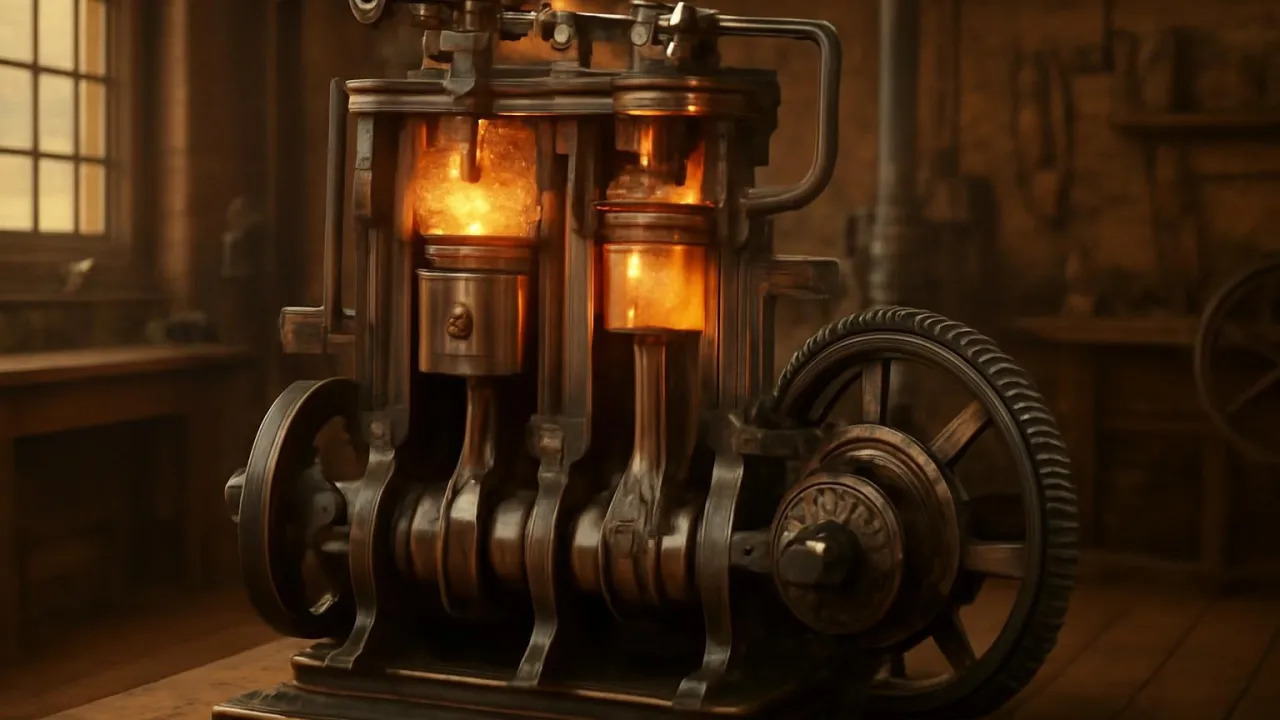
A modern Formula 1 engine can spin over 15,000 times per minute—faster than a dentist’s drill!
1 The Science of Controlled Combustion
An internal combustion engine operates by igniting a precise mixture of fuel and air inside a sealed cylinder, producing a rapid expansion of hot gases. This expansion drives a piston downward, converting chemical energy into mechanical work through the process of . The engine’s crankshaft transforms the pistons’ linear motion into rotational energy, which ultimately turns the vehicle’s wheels. Each cylinder fires in a carefully timed sequence, creating the engine’s distinctive rhythm and powerful output. The four-stroke cycle—intake, compression, power, and exhaust—ensures maximum energy extraction from each drop of fuel. This engineering marvel allows modern engines to reach thousands of revolutions per minute, efficiently powering vehicles great and small.
2 Inventors, Patents, and Evolution
Étienne Lenoir’s early gas engine in 1860 paved the way for Nikolaus Otto’s revolutionary four-stroke design in 1876, which became the foundation of automotive engines. Karl Benz’s 1885 Motorwagen was the first practical automobile powered by an internal combustion engine, earning him a historic patent. Over the decades, engines evolved from simple prototypes to complex machines featuring multiple cylinders, advanced timing mechanisms, and precision fuel injection. Each improvement increased reliability, power, and efficiency, enabling the mass production of cars, trucks, and airplanes. The internal combustion engine’s evolution reflects a blend of scientific discovery, inventive genius, and relentless engineering refinement.
3 Mechanics and Materials
Modern engines are composed of high-strength , precision-machined pistons, and heat-resistant valves to withstand intense pressure and temperature. The combustion process generates forces exceeding 1,000 pounds per square inch inside each cylinder. Lubrication systems minimize friction, while cooling systems prevent overheating by circulating coolant around the engine block. Sophisticated sensors and computer controls manage fuel delivery, ignition timing, and , optimizing performance and reducing environmental impact. The design of intake and exhaust manifolds ensures efficient airflow, enhancing power output and fuel economy. These intricate systems work together to deliver smooth, reliable motion every time you start a vehicle.
4 Impact on Society and the Environment
The internal combustion engine transformed global transportation, enabling rapid movement of people and goods across vast distances. It revolutionized industries, shaped cities, and connected cultures, fueling economic growth and expanding possibilities for exploration. However, the widespread use of fossil fuels has also contributed to air pollution and climate change, prompting urgent calls for cleaner alternatives. Engineers are developing hybrid and electric engines, advanced catalytic converters, and alternative fuels to address these challenges. The legacy of the internal combustion engine is a story of innovation, progress, and the ongoing quest for sustainable mobility.
5 The Road Ahead
As the world seeks greener solutions, the internal combustion engine continues to evolve with new materials, turbocharging, and direct fuel injection technologies. Hybrid vehicles combine combustion and electric power, reducing while maintaining performance. Research into biofuels and hydrogen combustion offers hope for cleaner, renewable energy sources. Despite the rise of electric vehicles, billions of internal combustion engines remain in use worldwide, powering everything from motorcycles to massive cargo ships. The story of this invention is far from over, as engineers and inventors strive to balance power, efficiency, and environmental responsibility for future generations.
1. What is the main purpose of the crankshaft in an engine?
2. Why are engineers developing electric and hybrid engines?