Integrated Circuit (Microchip)
Tiny Chips That Power Our World
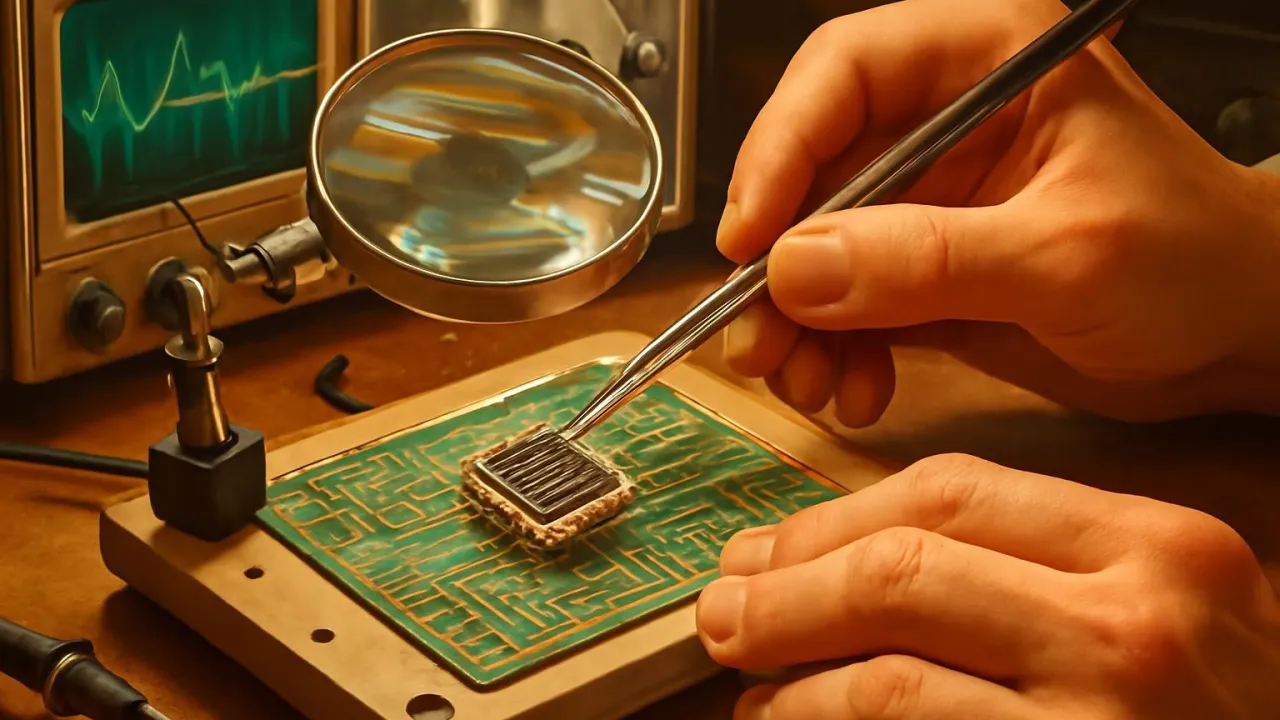
The width of a microchip’s circuits can be less than one-thousandth the width of a human hair!
1 The Birth of the Microchip
In the late 1950s, engineers Jack Kilby and Robert Noyce solved a huge problem: how to fit entire circuits onto a single piece of silicon. Before this, electronic devices used bulky wires and separate parts, which made them slow and easy to break. Their invention, the integrated circuit, allowed many transistors and connections to be built together on a tiny chip. This breakthrough made electronics smaller, faster, and much more .
2 How Microchips Work
A microchip is made from a thin slice of silicon, which is a , meaning it can control the flow of electricity. Engineers use a process called to etch microscopic circuits onto the chip. Each transistor on the chip acts as a switch, turning signals on or off to process information. Billions of these switches work together to make calculations, store data, and run programs.
3 Building and Testing Chips
Creating a microchip requires an extremely clean environment, called a cleanroom, to avoid dust that could ruin the tiny circuits. Engineers design a prototype, then use chemicals and light to build the final chip layer by layer. Each chip is tested to make sure all its circuits work perfectly before it is placed in computers, phones, or other devices.
4 A Global Impact
The integrated circuit changed the world by making powerful computers, smartphones, and medical equipment possible. It led to the digital age, where information can travel instantly and devices get smarter every year. The microchip’s invention helped launch the modern technology industry, creating millions of jobs and connecting people everywhere.
1. Why do engineers need cleanrooms to build microchips?
2. What does a microchip help devices do?