Hard Disk Drive
Spinning Disks That Remember Everything
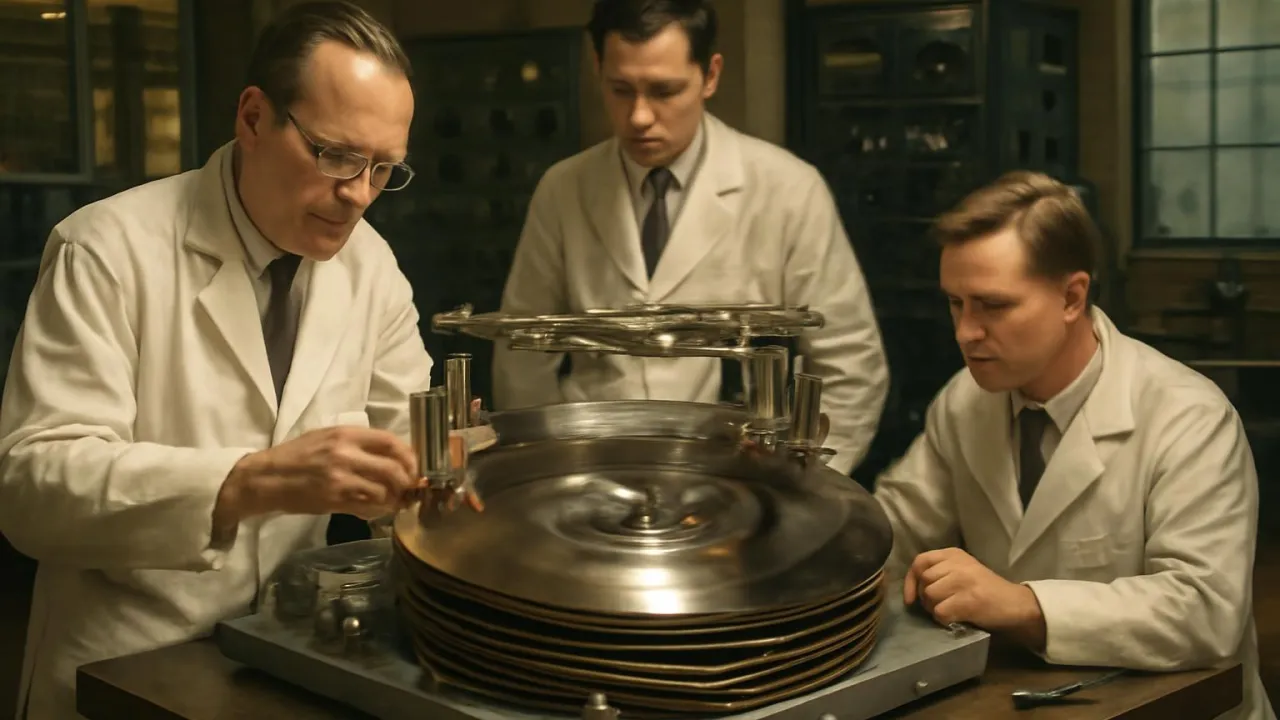
If you stacked all the hard disks made since 1956, they would reach the International Space Station and back—twice!
1 Inside the Spinning Machine
A hard disk drive contains one or more platters, which are flat, circular disks made from glass or aluminum and coated with a thin layer of magnetic material. These platters spin at high speeds, often between 5,400 and 15,000 revolutions per minute, creating a soft, steady whirring sound. Above each platter, a read/write head floats on a cushion of air, never touching the disk itself. This head uses signals to change or detect the direction of tiny magnetic particles on the platter’s surface.
2 How Data Gets Stored and Found
When you save a file, the drive’s electronics turn your data into patterns of magnetic —tiny areas pointing north or south—on the spinning platters. The read/write head moves quickly to the right spot, guided by precise motors and sensors, to store or retrieve information. Because the head never touches the surface, the disk can be used millions of times without wearing out. This clever engineering lets computers access huge amounts of data almost instantly.
3 A Revolution in Computer History
The first hard disk drive, created by IBM in 1956, was as big as two refrigerators and stored only 5 megabytes—less than one modern song. Over decades, engineers made drives smaller, faster, and able to hold billions of times more data. Hard disks helped launch the computer revolution, making it possible for people and businesses to store and share information worldwide.
4 Why Hard Disks Still Matter
Even though new storage types like solid-state drives are becoming popular, hard disks remain important for storing huge amounts of data at a lower cost. They are used in everything from home computers to giant that power the internet. Understanding how hard disks work helps us appreciate the amazing engineering behind the technology we use every day.
1. How does the read/write head avoid damaging the platter?
2. Why did hard disks change the world?