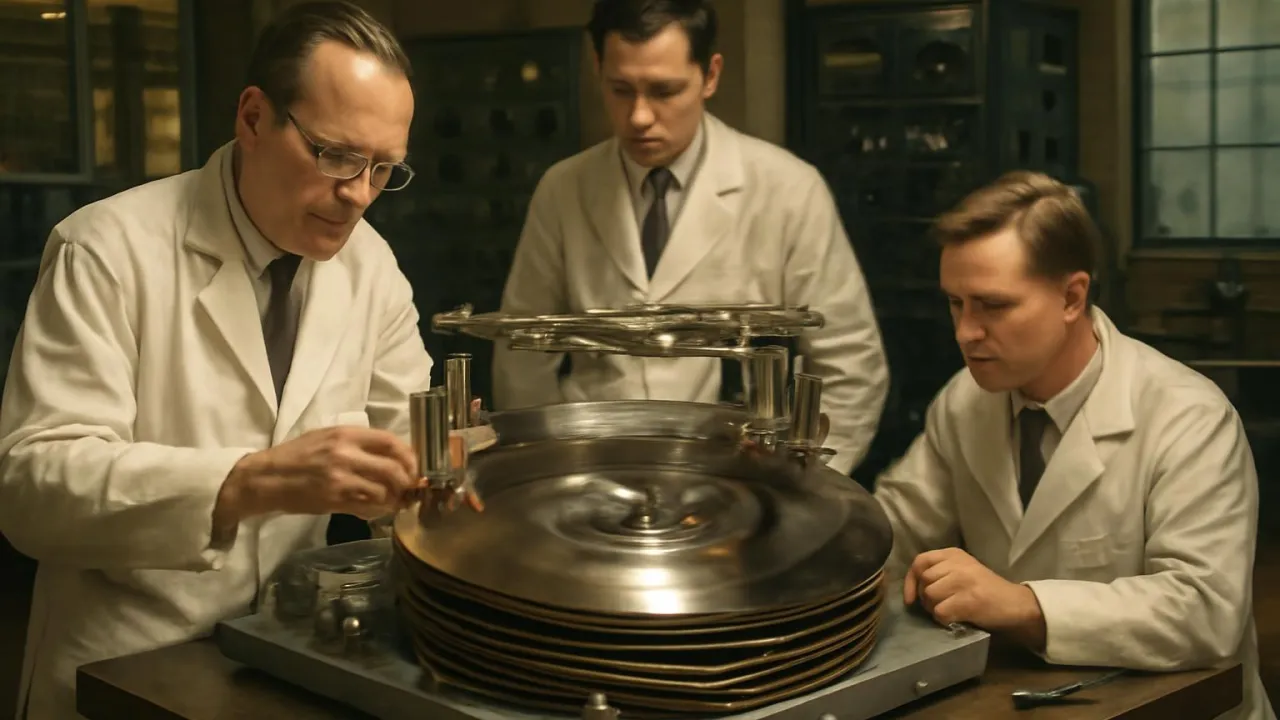
The first hard disk drive was as big as a fridge and weighed over 2,000 pounds!
✨ Word Sparks (Grade 2 Glossary)
Tap 🔊 to hear
magnet
Something that pulls metal things
data
Information stored in computers
server
A big computer that stores lots
🪝
What if your computer could remember every story you told it?
1
Spinning Memory Machines
Hard disk drives have shiny spinning disks inside. These disks turn very quickly, making a soft whirring noise. The disks store lots of information, like your photos and homework. Every time you save something, the disk remembers it.
2
How Do They Work?
Tiny on the disk help store . A special arm moves across the disk to read and write. The arm works kind of like a record player needle. It helps the computer find your files fast.
3
Where Do You Find Them?
Hard disks live in computers all over the world. They are found in laptops, school computers, and big company . Without them, computers could not remember things for us. They make computers smart and helpful.
A modern hard disk can spin at 7,200 revolutions per minute—faster than a race car’s wheels!
✨ Word Sparks (Grade 3 Glossary)
Tap 🔊 to hear
platter
A flat, spinning disk inside
magnetic
Made with magnets or magnet power
revolution
One full spin around
🪝
Have you ever wondered how computers remember so many things, even when turned off?
1
The Spinning Heart of Memory
Inside a hard disk drive, shiny circular spin at thousands of per minute. These platters are coated with a special material that stores data. When you save a file, the computer changes tiny magnetic bits on the platter. This is how your computer remembers photos, videos, and games.
2
The Reading and Writing Dance
A small part called the read/write head floats just above the spinning . This head moves in and out, reading and changing the bits. The process is similar to how a record player needle follows grooves, but it never touches the platter. This helps the drive last longer and work faster.
3
A Big Invention for the World
IBM engineers invented the first hard disk drive in 1956. It was huge and could only store a few songs’ worth of data. Today’s drives are much smaller but can hold millions of photos. Hard disks made it possible for computers to store more and more information.
4
Vocabulary in Action
Words like vibration and are important for hard disks. Vibration means shaking, which can hurt the disks. Magnetic means using magnets, which is how the disks store data. These words help us understand how hard disks work and why they are so important.
If you stacked all the hard disks made since 1956, they would reach the International Space Station and back—twice!
✨ Word Sparks (Grade 4 Glossary)
Tap 🔊 to hear
electromagnetic
Using electricity and magnetism together
bit
A tiny piece of computer data
data center
A place with many computers storing data
🪝
Imagine hearing a gentle whir as a computer stores your favorite song—how does it do that?
1
Inside the Spinning Machine
A hard disk drive contains one or more platters, which are flat, circular disks made from glass or aluminum and coated with a thin layer of magnetic material. These platters spin at high speeds, often between 5,400 and 15,000 revolutions per minute, creating a soft, steady whirring sound. Above each platter, a read/write head floats on a cushion of air, never touching the disk itself. This head uses signals to change or detect the direction of tiny magnetic particles on the platter’s surface.
2
How Data Gets Stored and Found
When you save a file, the drive’s electronics turn your data into patterns of magnetic —tiny areas pointing north or south—on the spinning platters. The read/write head moves quickly to the right spot, guided by precise motors and sensors, to store or retrieve information. Because the head never touches the surface, the disk can be used millions of times without wearing out. This clever engineering lets computers access huge amounts of data almost instantly.
3
A Revolution in Computer History
The first hard disk drive, created by IBM in 1956, was as big as two refrigerators and stored only 5 megabytes—less than one modern song. Over decades, engineers made drives smaller, faster, and able to hold billions of times more data. Hard disks helped launch the computer revolution, making it possible for people and businesses to store and share information worldwide.
4
Why Hard Disks Still Matter
Even though new storage types like solid-state drives are becoming popular, hard disks remain important for storing huge amounts of data at a lower cost. They are used in everything from home computers to giant that power the internet. Understanding how hard disks work helps us appreciate the amazing engineering behind the technology we use every day.
1. How does the read/write head avoid damaging the platter?
2. Why did hard disks change the world?
🤯 Mind-Blowing Fact • Grade 5
A single modern hard disk can store the text of every book in your city’s library—thousands of times over!
✨ Word Sparks (Grade 5 Glossary)
Tap 🔊 to hear
magnetic domain
A tiny area storing a bit
actuator arm
Moves the head over the disk
nanotechnology
Science of super tiny things
🪝
What if you could peek inside a computer and watch the memory spin—would you see a miracle of magnets and motion?
1
A Symphony of Spinning and Magnetism
Picture a tiny orchestra of spinning disks and floating arms, all working together inside your computer. The hard disk drive is not just a box—it’s a marvel of engineering, using magnetism and movement to capture every photo, song, and story you save. Each platter, made from glass or aluminum and coated with an ultra-thin magnetic layer, whirls at up to 15,000 revolutions per minute. Billions of , each smaller than a speck of dust, flip directions to store the binary code for your data. The , guided by precise motors, sweeps the read/write head just nanometers above the surface, never touching, but always working.
2
From Your Click to Magnetic Code
When you click 'save,' a chain reaction begins: the drive’s controller translates your digital data into electrical signals. These signals travel to the read/write head, which acts as a tiny electromagnet, flipping the direction of microscopic domains on the platter. Reading works in reverse—the head senses the magnetic fields as the platter spins beneath it, turning those patterns back into the text, images, or music you see. Every step must be perfect, because even a speck of dust or a tiny vibration could scramble the information.
3
The Giant Leap That Changed Computing
Back in 1956, IBM’s RAMAC 350 looked like a pair of giant refrigerators and could only store 5 megabytes—barely enough for a single song today. Over the years, scientists and engineers used breakthroughs in materials science, , and error-correcting codes to shrink drives and boost their power. Now, a drive smaller than your hand can hold several terabytes—enough for millions of photos or entire movie collections. This leap in storage made personal computers, the internet, and global information sharing possible.
4
Why Hard Disks Matter in Our World
Hard disk drives are the backbone of data centers, powering everything from your favorite websites to scientific discoveries. Their ability to store huge amounts of information at a low cost keeps them essential for businesses, schools, and even space missions. The engineering behind hard disks—precision mechanics, electromagnetism, and error correction—continues to inspire new inventions in robotics, medicine, and artificial intelligence. Even as solid-state drives grow in popularity, hard disks remain crucial for massive, affordable storage.
5
The Future of Spinning Memory
Engineers are pushing the limits with innovations like heat-assisted magnetic recording (HAMR) and shingled magnetic recording (SMR), which let hard disks store even more data in the same space. As our digital world grows, understanding the science behind hard disks helps us appreciate the teamwork of physics, creativity, and problem-solving that makes modern technology possible. Next time you hear a gentle whir from a computer, remember the tiny, spinning marvels working hard to remember your digital life.