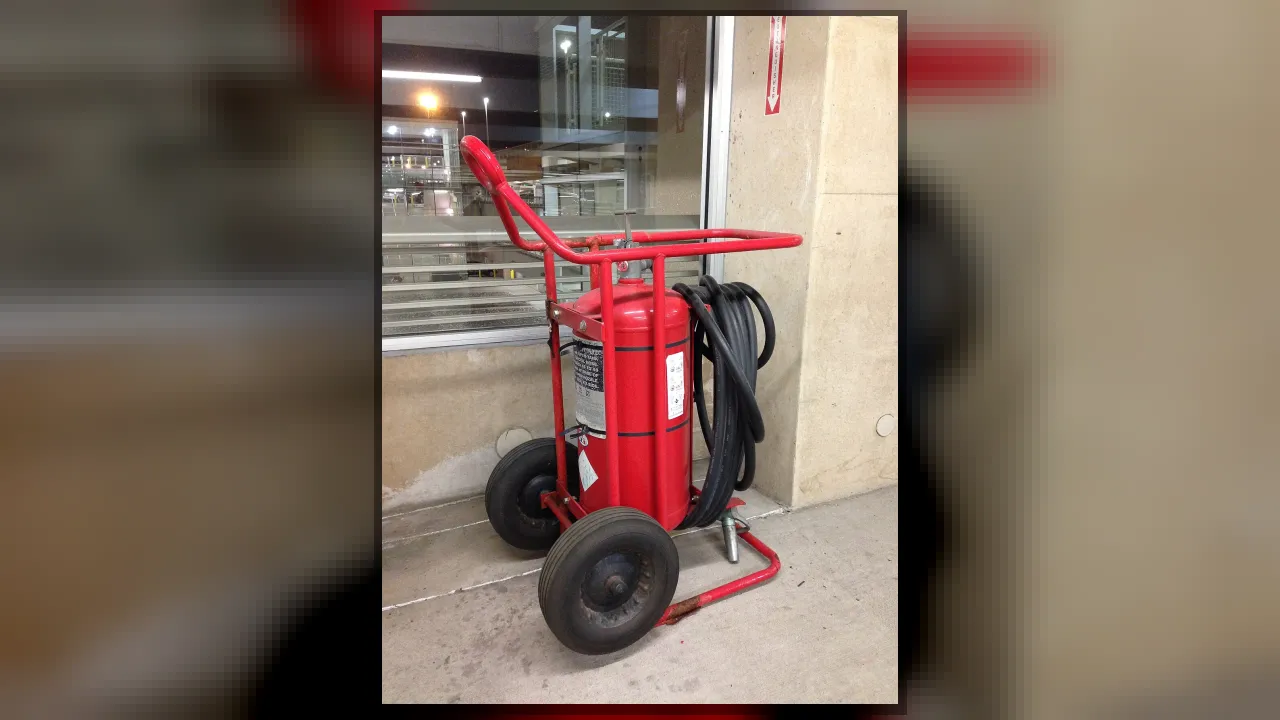
Some fire extinguishers use special powder instead of foam to fight different kinds of fires!
✨ Word Sparks (Grade 2 Glossary)
Tap 🔊 to hear
emergency
A time when help is needed fast
handle
The part you hold and squeeze
invent
To make something new
🪝
Have you ever heard a loud hiss and seen white foam cover a fire?
1
A Tool for Safety
Fire extinguishers are found in schools and stores, ready to help in emergencies. They are usually red and easy to spot, so people can grab them fast. Firefighters and adults use them to stop small fires before they grow.
2
How Does It Work?
You pull a safety pin and squeeze the , which makes the extinguisher spray foam. The foam quickly covers the fire, cooling it down and stopping the flames from spreading. It is important to aim at the bottom of the fire, not the top.
3
A Smart Invention
Long ago, people used buckets of water to fight fires. In 1818, George William Manby invented the first fire extinguisher in England, making it much easier to stop fires quickly. Today, many places have fire extinguishers to keep everyone safe.
Some fire extinguishers can spray up to 15 feet to reach distant flames!
✨ Word Sparks (Grade 3 Glossary)
Tap 🔊 to hear
pressurized
Full of tightly packed air or gas
combustion
The process of something burning
solution
A liquid mix of different things
🪝
Can you imagine the loud hiss and cool spray that stops a dangerous fire?
1
A Clever Safety Device
Fire extinguishers are important tools found in schools, stores, and homes everywhere. Their bright red color helps people spot them quickly during emergencies. When a fire starts, using an extinguisher can stop it from spreading and keep everyone safe. Firefighters and adults learn how to use them in case of danger.
2
How Fire Extinguishers Work
Inside the extinguisher, chemicals wait to be released. When you pull the pin and squeeze the handle, the chemicals spray out in a strong burst. The foam or powder covers the flames, blocking oxygen and cooling the fire. This stops the reaction that makes fires grow.
3
Invented to Save Lives
Before fire extinguishers, people used buckets of water or sand to fight fires. In 1818, George William Manby invented the first portable extinguisher in England. His design used a copper container filled with potassium carbonate , which was sprayed onto the fire. This invention made it much easier and faster to put out small fires.
4
Types and Uses
Today, there are many types of fire extinguishers for different kinds of fires. Some use foam, others use dry powder, and some use carbon dioxide gas. Each type is labeled for the fires it can safely put out, such as wood, grease, or electrical fires. Knowing which extinguisher to use is important for safety.
Some fire extinguishers use carbon dioxide, which turns into a freezing cold gas that smothers flames instantly!
✨ Word Sparks (Grade 4 Glossary)
Tap 🔊 to hear
nozzle
The part where spray comes out
chemical reaction
How things change when mixed or burned
carbon dioxide
A gas that can put out fire
🪝
What if you could stop a fire with just a squeeze and a hiss?
1
The Science Behind the Spray
Fire extinguishers use pressurized chemicals or gases to put out fires quickly and safely. When the handle is squeezed, the pressure forces the extinguishing agent—such as foam, powder, or —out through a . These agents work by cooling the fire, blocking oxygen, or interrupting the of combustion. The design of each extinguisher depends on the type of fire it is meant to fight.
2
A Historic Invention
Before fire extinguishers, people relied on buckets of water or sand to battle flames, which was slow and often dangerous. In 1818, English inventor George William Manby created the first portable fire extinguisher, using a copper canister filled with potassium carbonate solution. This invention allowed people to respond to fires much faster, saving lives and property.
3
Types for Every Fire
Modern fire extinguishers are classified by the types of fires they can handle, such as Class A for wood and paper, Class B for flammable liquids, and Class C for electrical fires. Some use foam to smother flames, while others use dry powder or to cut off oxygen or cool the burning material. Knowing which type to use is crucial for safety and effectiveness.
4
Global Impact and Safety
Fire extinguishers have become essential safety equipment in buildings, vehicles, and public spaces around the world. Their presence helps prevent small fires from turning into major disasters, protecting people and property. Fire safety training teaches people how to use extinguishers properly, making communities safer for everyone.
1. Which class of extinguisher is used for electrical fires?
2. What did people use before fire extinguishers?
🤯 Mind-Blowing Fact • Grade 5
Some advanced fire extinguishers can blast their spray up to 20 feet and empty in less than 10 seconds!
✨ Word Sparks (Grade 5 Glossary)
Tap 🔊 to hear
propellant
Gas that pushes spray out fast
combustion
The chemical process of burning
PASS method
Steps: Pull, Aim, Squeeze, Sweep
🪝
What if you heard a sudden hiss and saw a powerful jet of foam blast from a red cylinder—would you know how this invention works and why it saves lives?
1
The Moment a Fire Breaks Out
Picture the urgent rush as someone grabs the red cylinder, pulls a pin, and aims at flickering flames. A sharp hiss fills the air as a powerful spray bursts out, covering the fire in seconds. This dramatic moment is possible because of the clever engineering inside every fire extinguisher. The pressure inside the tank pushes out the extinguishing agent with incredible force, reaching fires that are several feet away. Each second counts, and the extinguisher’s design is built for speed and safety.
2
How Engineering Stops the Flames
Inside a fire extinguisher, a gas—such as nitrogen or carbon dioxide—keeps the extinguishing material under high pressure. When the handle is squeezed, a valve opens and the pressurized agent rushes through the nozzle, turning into a strong spray. The agent, which might be foam, dry powder, water, or CO2, interrupts the fire’s process. Some agents cool the burning material, while others block oxygen or break the chemical chain reaction that keeps the fire alive.
3
From Buckets to Brilliant Invention
Long ago, people fought fires with buckets of water or sand, which took time and teamwork. In 1818, George William Manby invented the first portable fire extinguisher in England, using a copper vessel filled with potassium carbonate solution and compressed air. Over the years, inventors created new types for different hazards, such as soda-acid, carbon tetrachloride, and modern dry chemical and CO2 models. Today’s extinguishers are tested for reliability and must meet strict safety standards worldwide.
4
Types, Ratings, and Global Safety
Fire extinguishers are labeled by the types of fires they can safely put out: Class A for ordinary combustibles, Class B for flammable liquids, Class C for electrical fires, Class D for metals, and Class K for cooking oils. Each extinguisher has a rating that shows what it can handle and how effective it is. Safety codes require extinguishers in schools, public buildings, airplanes, and vehicles, and regular inspections make sure they are always ready for emergencies.
5
A World Made Safer
The fire extinguisher’s invention has saved countless lives and protected valuable property all over the world. Fire safety education teaches people to use extinguishers correctly by following the : Pull, Aim, Squeeze, and Sweep. New eco-friendly agents and smart sensor systems are being developed to fight fires faster and with less harm to the environment. The fire extinguisher remains a symbol of quick thinking, engineering, and community protection in every corner of the globe.