Fiber-Optic Cable
Light Beams That Carry Our Voices
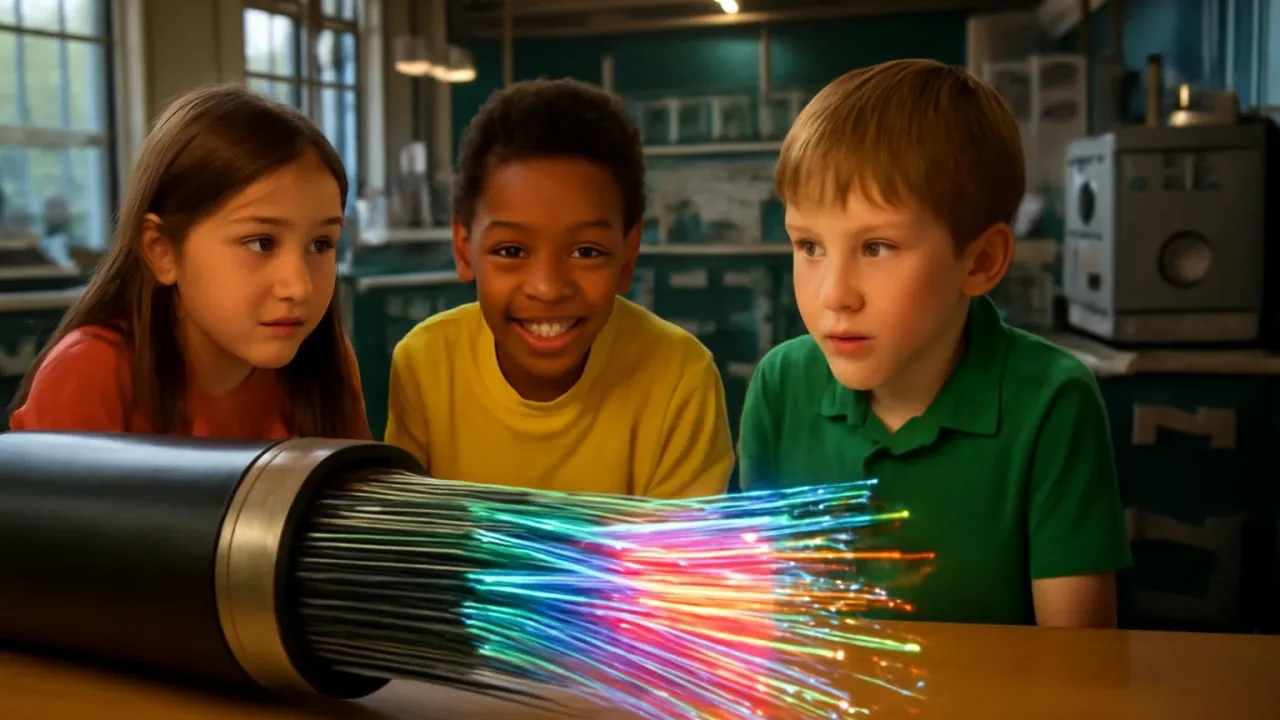
The glass in a fiber-optic cable is so pure that light can travel over 100 kilometers before it fades!
1 How Fiber-Optic Cables Work
Fiber-optic cables are made of extremely thin strands of glass or plastic called optical fibers, each about as thick as a human hair. When someone sends a message, it is turned into pulses of laser light that travel through these fibers. The light pulses bounce along the inside walls of the fiber by a process called total internal reflection, which keeps the signal from escaping. This allows the light—and the message it carries—to travel long distances without losing strength.
2 A Revolution in Communication
Before fiber optics, people relied on copper wires to send phone calls and information, which was much slower and less reliable. Fiber-optic cables, invented by a team at Corning Incorporated in 1970, made it possible to send massive amounts of data almost instantly. Today, these cables form the backbone of the global internet, carrying everything from emails to high-definition video streams. They have made worldwide communication faster, clearer, and more affordable.
3 The Science of Light Signals
Each fiber can carry many different light signals at once by using different , or colors, of light. This technique, called wavelength division multiplexing, allows a single cable to transmit thousands of phone calls or internet connections at the same time. The fiber’s core is surrounded by a special that reflects the light inward, making sure the signal travels efficiently. Engineers carefully design the fibers to minimize signal loss and over long distances.
4 Connecting Continents and Cultures
Fiber-optic cables stretch across cities, under streets, and even across oceans on the sea floor. These undersea cables connect continents and allow people to share ideas, news, and discoveries in seconds. Fiber optics have transformed business, education, and entertainment by making information available almost anywhere on Earth. This invention continues to shape our world by bringing people closer together every day.
1. What does the cladding in a fiber-optic cable do?
2. How have fiber-optic cables changed our world?