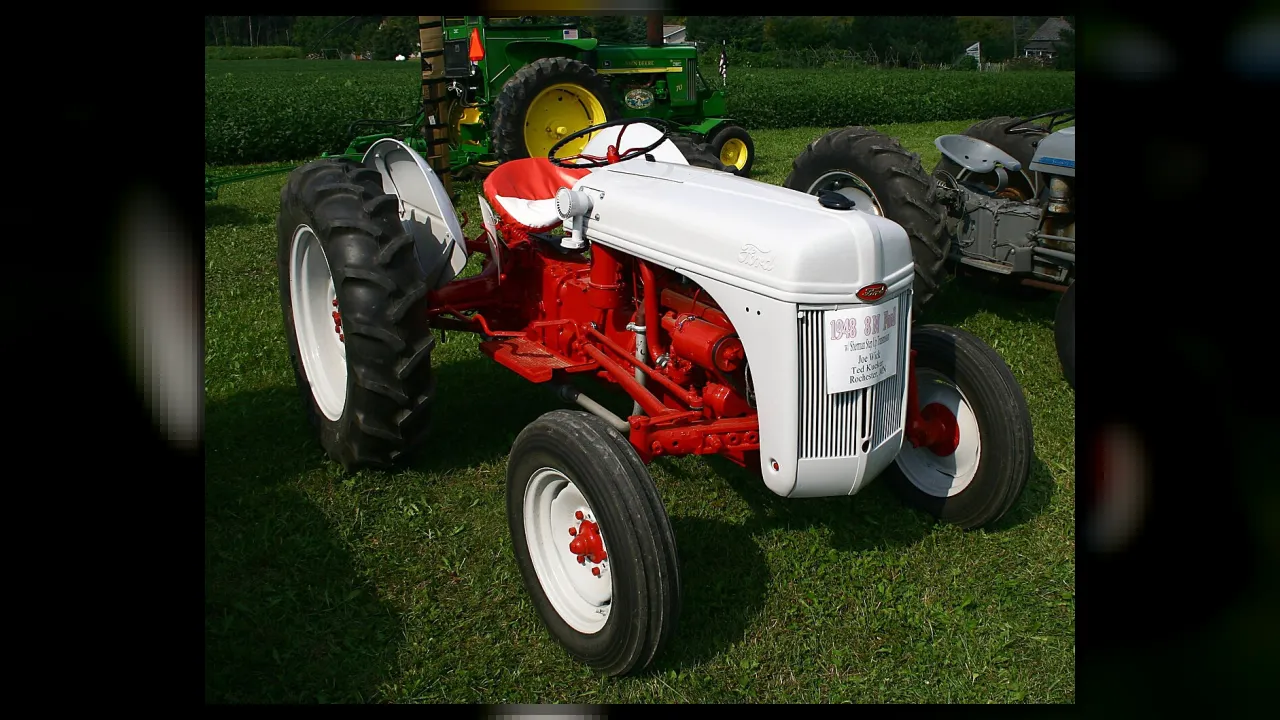
Some tractors can plant hundreds of seeds in just one minute!
✨ Word Sparks (Grade 2 Glossary)
Tap 🔊 to hear
soil
The dirt where plants grow
crop
Plants grown for food
tire
The round part that rolls
🪝
Can you hear the deep rumble in a field?
1
Mighty Machines on the Farm
Tractors have strong engines that roar as they move. They pull big plows and dig up the . Farmers use them to plant seeds and water . Tractors can work all day, even when it is hot or muddy.
2
How Tractors Help
Tractors make farm work much faster and easier for people. One tractor can do the work of many people or animals. They help farmers grow much more food for everyone. Tractors can pull, push, or lift heavy things all over the field.
3
A Cool Feature
Some tractors have huge that never get stuck in mud. Others can even lift heavy hay bales with special arms. Many tractors have comfy seats and roofs to keep farmers safe and dry. New tractors sometimes use computers to help drive straight lines.
Some giant tractors have tires taller than a basketball player!
✨ Word Sparks (Grade 3 Glossary)
Tap 🔊 to hear
vibration
A fast shaking movement
traction
Grip that keeps wheels from slipping
harvest
To gather ripe crops from fields
🪝
What if you could drive a machine that makes the earth shake?
1
The Tractor’s Powerful Engine
A tractor’s engine uses fuel to create strong and turn big wheels. These vibrations help the tractor move across bumpy fields. The engine’s power lets it pull heavy equipment like plows and seeders. Tractors can work for hours without stopping.
2
How Tractors Changed Farming
Before tractors, farmers used horses or oxen to plow fields. Tractors made farm work much faster and easier for everyone. One tractor can do the job of many animals and people. This invention helped farmers grow more food for the world.
3
Cool Tractor Features
Modern tractors have cabs with air conditioning and music radios. Some even use GPS to drive in perfect straight lines. Tractors can pull different tools for planting, watering, or harvesting crops. Their huge tires give them so they do not get stuck.
4
Why Tractors Matter
Tractors help feed millions of people by making farming efficient. They use mechanical energy to turn soil and plant seeds quickly. Many different crops, like wheat and corn, are grown with tractors’ help. Farm tractors are one of the most important inventions in agriculture.
The world’s largest tractor weighs over 100,000 pounds and can pull 60 plows at once!
✨ Word Sparks (Grade 4 Glossary)
Tap 🔊 to hear
internal combustion
Engine that burns fuel for power
axle
Rod that connects and spins wheels
revolution
A big, important change in something
🪝
Have you ever felt the ground shake as a tractor rumbles by?
1
Engines That Changed Everything
Tractors use engines, which burn fuel to create powerful motion and vibration. These engines turn gears and that spin the tractor’s huge wheels. The vibrations from the engine help the tractor move steadily across rough, uneven fields. This mechanical power lets tractors pull heavy tools like plows, seeders, and harvesters.
2
A Revolution in Farming
Before tractors, farmers relied on animal power, which was slow and limited. The invention of the tractor in the late 1800s allowed farmers to work much larger fields in less time. This meant more crops could be planted, tended, and harvested each year. Tractors helped spark a in agriculture, making it possible to feed growing populations.
3
Modern Tractor Technology
Today’s tractors often have enclosed cabs with climate control, GPS navigation, and even computers. These features help farmers plant seeds in perfect rows and track their crops’ growth. Advanced tires and four-wheel drive give tractors excellent traction, even in muddy or hilly conditions. Some tractors are even controlled by computers and can drive themselves using satellite signals.
4
Global Impact of Tractors
Tractors have transformed farming not just in America, but all over the world. They allow one person to do the work of many, making food more plentiful and affordable. Tractors are also used in construction, forestry, and emergency rescue work. The invention of the farm tractor is a key reason why so many people have enough to eat today.
2. What new technology helps tractors plant seeds perfectly?
🤯 Mind-Blowing Fact • Grade 5
The world’s most powerful tractor, the Big Bud 16V-747, produces 1,100 horsepower—enough to pull 80,000 pounds!
✨ Word Sparks (Grade 5 Glossary)
Tap 🔊 to hear
torque
Rotational force that turns wheels
hydraulics
Systems using liquid to move heavy parts
autonomous
Able to operate without a driver
🪝
Imagine the thunderous roar and deep vibrations as a tractor plows a field—what engineering secrets make this possible?
1
The Birth of the Farm Tractor
In 1892, John Froelich built the first successful gasoline-powered tractor in Iowa, revolutionizing agriculture forever. Before this invention, farmers relied on horses or oxen, which limited the size and speed of their work. Froelich’s prototype used an internal combustion engine, which converted chemical energy from fuel into powerful mechanical motion. This breakthrough allowed tractors to pull much heavier loads and work for longer hours than any animal team. The early tractor’s design inspired inventors worldwide to improve and spread this technology.
2
Mechanical and Physical Principles
A tractor’s engine burns fuel in cylinders, causing rapid expansion of gases that push pistons and create rotary motion. This motion is transferred through a transmission and axles to the wheels, generating both forward movement and . Large rear tires increase surface area, providing traction and reducing soil compaction, while front wheels steer the machine. The tractor’s chassis is designed to distribute weight evenly, preventing tipping when pulling heavy implements. Modern tractors often use four-wheel drive and advanced for even greater control and power.
3
Technological Evolution and Features
Over time, tractors evolved from simple, open-air machines to sophisticated vehicles with climate-controlled cabs, GPS guidance, and computerized controls. Today’s tractors can plant, fertilize, and harvest crops with centimeter-level accuracy thanks to satellite navigation and onboard sensors. Some models are fully , using artificial intelligence to operate without a driver. Tractors now feature advanced safety systems, ergonomic seating, and precision tools that maximize efficiency and minimize waste.
4
Global and Cultural Impact
The widespread adoption of tractors dramatically increased farm productivity, helping to feed a rapidly growing global population. Tractors reduced the need for manual labor and animal power, freeing people for other jobs and industries. They also played a crucial role in the Green Revolution, enabling the large-scale planting and harvesting of crops in developing countries. Tractors are now essential in construction, forestry, and disaster relief, making them one of the most versatile inventions of the last 150 years.
5
Quantitative Specs and Future Innovations
Modern tractors can weigh over 100,000 pounds and generate more than 600 horsepower, allowing them to pull dozens of plows or massive harvesting equipment. Some tires stand taller than an adult and are specially engineered to minimize soil erosion and maximize grip. Advanced models use real-time data to adjust planting depth, fertilizer amounts, and even detect plant health from space. As technology advances, electric and hydrogen-powered tractors are being developed to reduce pollution and energy use. The farm tractor’s story is one of constant innovation, powering the future of food for generations to come.