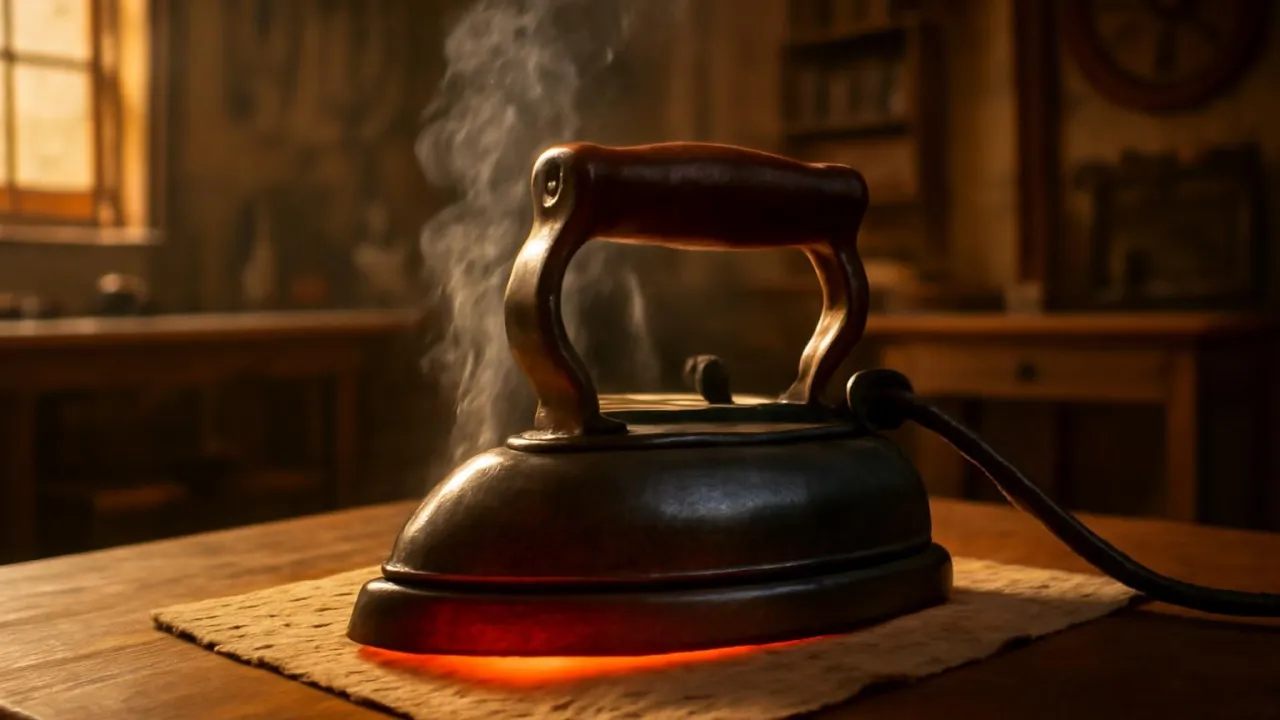
The first electric iron was invented in 1882 by Henry W. Seeley.
✨ Word Sparks (Grade 2 Glossary)
Tap 🔊 to hear
steam
Hot water vapor you can see
press
To push down hard on something
metal plate
Flat, shiny part that gets hot
🪝
Have you ever watched steam rise as someone irons a shirt?
1
A Tool for Smoothness
The iron gets hot when you plug it in, and it shines brightly. People use it to shirts and pants, making them flat and neat. You can see rise as the iron glides over fabric.
2
How Does It Work?
The electric iron has a that heats up quickly. When you push it on clothes, the heat and weight out wrinkles. Some irons even spray water to help smooth tough lines.
3
From Old to New
Long ago, people used heavy irons heated on stoves or fires. Today, electric irons are lighter and much safer, and they make ironing much faster and easier for everyone.
Some modern irons can heat up to 400 degrees Fahrenheit—hotter than boiling water!
✨ Word Sparks (Grade 3 Glossary)
Tap 🔊 to hear
heating element
Wire inside that gets hot
vibrate
To move back and forth quickly
efficient
Works well without wasting energy
🪝
Can you imagine how people made their clothes look neat before electricity?
1
A Sizzling Start
When you plug in an electric iron, you might hear a faint sizzle as it heats up. The metal plate at the bottom gets very hot and shiny. People use it to press shirts, pants, and even curtains. The heat and pressure make wrinkles disappear from fabric.
2
How the Iron Works
Inside the iron, an electric current flows through a special wire called a . This wire resists the electricity, creating heat that spreads across the flat metal plate. The hot plate the water molecules in the fabric, helping to smooth out even stubborn wrinkles. Some irons also use steam, which adds moisture and makes the process easier.
3
From Fire to Plug
Before electric irons, people used heavy irons heated on stoves or over fires. These early irons cooled quickly and could be dangerous to handle. Henry W. Seeley’s 1882 invention used electricity to keep the iron hot for longer periods, making ironing much safer and more .
4
Changing How We Dress
The electric iron changed how families cared for their clothes at home. Wrinkle-free shirts and dresses became easier for everyone to have. Today, irons come in many shapes and sizes, with features like steam, temperature control, and even automatic shut-off for safety.
2. Why did people like electric irons better than fire-heated irons?
🤯 Mind-Blowing Fact • Grade 4
The earliest electric irons had no temperature control, so people sometimes burned their clothes!
✨ Word Sparks (Grade 4 Glossary)
Tap 🔊 to hear
soleplate
The flat, hot bottom of the iron
resistive
Makes electricity turn into heat
moisture
Tiny drops of water in something
🪝
What if you had to iron your clothes using a heavy block of metal from a fire?
1
From Fireplaces to Plugs
Before the electric iron, people relied on heavy chunks of metal heated in fireplaces or on stoves, which cooled quickly and could burn hands. In 1882, Henry W. Seeley invented the first electric iron in New York, transforming how people cared for their clothing. This new invention used a heating element to keep the iron hot for much longer. Suddenly, ironing became safer, faster, and more convenient for families everywhere.
2
The Science of Smoothing
An electric iron works by passing an electric current through a coiled wire inside, called a heating element, which resists the flow and produces heat. The flat metal spreads this heat evenly across its surface, allowing it to press out wrinkles efficiently. When the hot plate is pressed against damp fabric, the heat causes water molecules to vibrate, loosening the fibers. Many modern irons also use steam, which helps break down tough wrinkles by adding .
3
A World of Wrinkle-Free Clothes
The electric iron quickly became a household staple in homes around the world. People could now keep shirts, dresses, and linens looking crisp and neat with less effort. Over time, inventors added new features like adjustable temperature dials, steam vents, and automatic shut-off for safety. These improvements made ironing easier and safer for everyone, from busy parents to professional cleaners.
4
Global Impact and Modern Designs
Today, electric irons are used in almost every country, helping people look tidy for school, work, and special events. Some irons can reach temperatures over 400 degrees Fahrenheit, making them powerful tools for smoothing even the toughest fabrics. The invention of the electric iron also inspired other home appliances, changing how people manage chores and save time. As technology advances, irons continue to get lighter, smarter, and more energy-efficient.
2. Why was the electric iron safer than earlier irons?
🤯 Mind-Blowing Fact • Grade 5
The largest electric iron ever made weighed over 1,000 pounds and was built for a world record demonstration!
✨ Word Sparks (Grade 5 Glossary)
Tap 🔊 to hear
nichrome
A metal wire that heats up fast
thermal conductivity
How well something spreads heat
thermostatic control
A dial that keeps temperature steady
🪝
Imagine the challenge of smoothing a wrinkled shirt with a heavy, fire-heated block—how did electricity revolutionize ironing?
1
From Fire-Heated Metal to Electric Precision
Before the electric iron, people used solid metal ‘sad irons’ heated directly on stoves or open flames, which cooled rapidly and posed significant burn risks. In 1882, American inventor Henry W. Seeley patented the first electric iron in New York, using a resistive heating element to maintain a consistent high temperature. This breakthrough allowed users to iron continuously without reheating, greatly improving safety and efficiency. The electric iron’s introduction marked a pivotal moment in domestic technology, making smooth, professional-looking clothes accessible to everyday families. Over time, the design evolved to include lighter materials and more ergonomic handles.
2
Engineering the Iron: How Heat Tames Fabric
The core of an electric iron is its resistive heating element, typically a coiled wire, which converts electrical energy into heat through resistance. This heat is transferred to the iron’s soleplate, usually made of aluminum or stainless steel for optimal and even heat distribution. When the hot soleplate is pressed against damp fabric, the combination of heat and pressure causes the fabric’s water molecules to vibrate rapidly, relaxing the fibers and eliminating wrinkles. Modern irons often feature steam vents that inject water vapor, further loosening fibers through increased moisture and heat transfer.
3
Quantifying Power: Temperature and Energy Use
Most household electric irons operate between 1,000 and 1,800 watts, reaching temperatures from 250 to over 400 degrees Fahrenheit (120–205°C). allow users to adjust the temperature for different fabrics, preventing scorching or burning. The addition of automatic shut-off mechanisms in recent decades has significantly reduced fire hazards, making ironing much safer. Energy-efficient designs and better insulation have also reduced electricity consumption, aligning with modern sustainability goals.
4
The Iron’s Impact: Social and Global Change
The electric iron transformed daily life by enabling people to care for their clothing at home, reducing reliance on professional laundries. This invention played a key role in changing social norms around cleanliness and appearance, especially as more people began working outside the home. Globally, the electric iron became a symbol of modern living, with millions of units sold annually across continents. Its influence even extended to the development of other small appliances, such as electric kettles and toasters, which use similar heating principles.
5
Innovation Continues: The Future of Ironing
Today’s irons feature advanced materials like ceramic or titanium soleplates, digital temperature controls, and anti-drip systems for improved performance. Some modern steam irons and garment steamers use continuous bursts of steam and vertical ironing capabilities, making them suitable for delicate or hanging fabrics. Research into energy-saving technologies and smart home integration is shaping the future of ironing, with some models now offering automatic fabric detection and app-controlled settings. The electric iron’s evolution demonstrates how engineering, science, and daily life are closely connected, continually improving our routines.