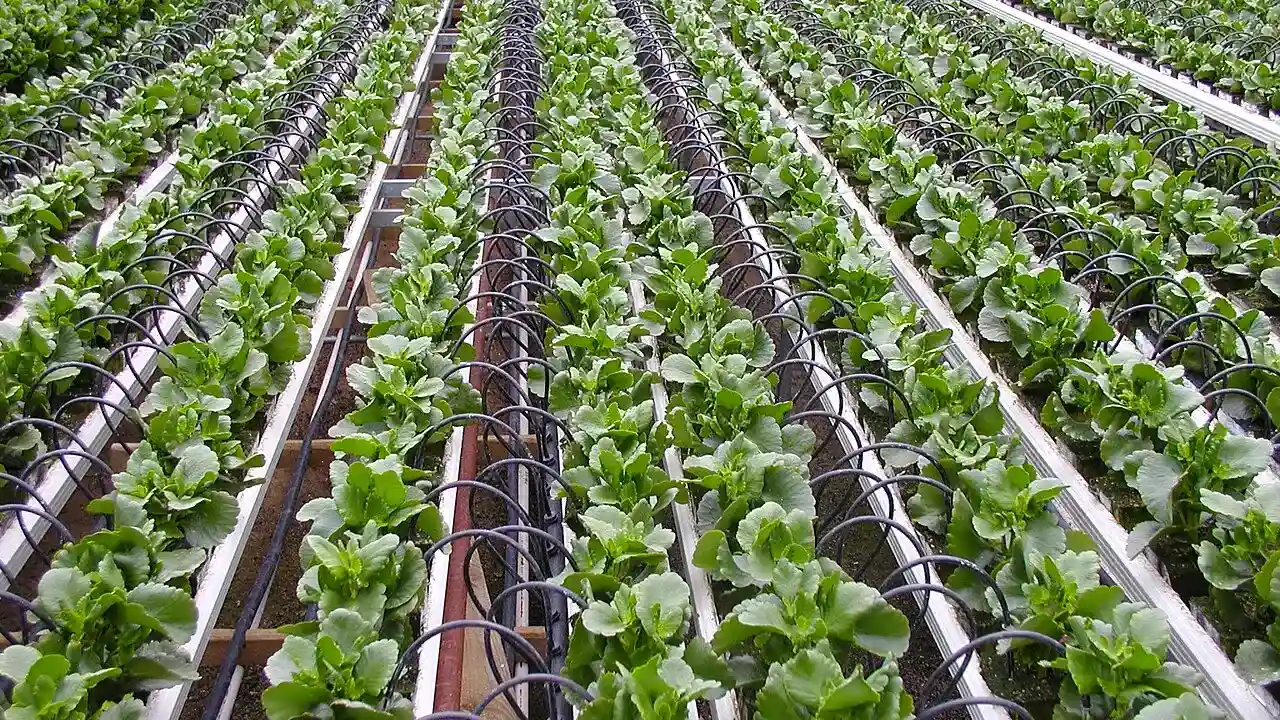
Some farms use drip irrigation to grow food in deserts!
✨ Word Sparks (Grade 2 Glossary)
Tap 🔊 to hear
irrigation
Giving water to plants
invent
To make something new
soil
The dirt where plants grow
🪝
Have you ever seen water drip onto a thirsty plant?
1
How Drip Irrigation Works
Drip uses long tubes with tiny holes in them. Water slowly drips out so each plant gets just enough. This keeps the wet but never too soggy.
2
Helping Farmers and Plants
Farmers use drip to save water and grow healthy crops. The water goes right to the roots, so plants grow strong. This way, less water is wasted in the sun.
3
A Clever Invention
Drip was invented in Israel by Simcha Blass. It helps people grow food in dry places. Today, farmers all over the world use this smart system.
Drip irrigation can double the amount of food grown in some dry regions!
✨ Word Sparks (Grade 3 Glossary)
Tap 🔊 to hear
emitter
A tiny hole that lets water out
evaporation
When water turns into air
engineer
A person who designs things
🪝
Imagine a garden where every plant gets its own tiny drink—how does that work?
1
A Drop at a Time
Drip irrigation uses narrow tubes with small holes called . Water travels through the tubes and drips out slowly near each plant. This gentle watering keeps soil moist without flooding the ground. The steady drops help roots absorb water better.
2
The Science Behind the System
Drip irrigation works by using water pressure to push water through the tubes. The control the flow, so each plant gets just the right amount. This method reduces , which means less water is lost to the air. Farmers can even add plant food to the water for extra growth.
3
A Smart Solution for Dry Places
Simcha Blass, an in Israel, invented modern drip irrigation in the 1960s. He noticed a tree growing strong where a leaky pipe dripped water. His idea soon spread to farms in dry countries around the world. Today, drip irrigation helps people grow food where rain is rare.
4
Changing the World of Farming
Drip irrigation saves up to 50% more water than old methods. It helps crops grow faster and healthier, even in deserts. Farmers can grow more food using less water, which is good for everyone. This invention is now used on millions of farms worldwide.
Some drip irrigation systems use sensors and computers to water plants automatically!
✨ Word Sparks (Grade 4 Glossary)
Tap 🔊 to hear
runoff
Water that flows away from soil
moisture
Water in the ground or air
sustainable
Good for people and nature long-term
🪝
What if you could water a whole field using just a trickle of water?
1
How Drip Irrigation Works
Drip irrigation systems use networks of plastic pipes and emitters to deliver water directly to plant roots. Water flows under low pressure, so it moves slowly through the tubes and drips out at each emitter. This targeted delivery reduces evaporation and , making every drop count. Farmers can also add fertilizer to the water, feeding plants while they drink.
2
The Invention’s Clever Beginnings
Simcha Blass, an Israeli engineer, invented drip irrigation after observing a tree thriving near a leaky pipe. He realized that slow, steady watering could help plants survive in dry climates. Blass and Kibbutz Hatzerim built the first commercial system in the 1960s. Their invention quickly spread to farms in many countries facing water shortages.
3
A Global Farming Revolution
Drip irrigation has transformed agriculture in arid regions by making farming possible where rainfall is scarce. The system can save up to 60% of the water used by traditional irrigation. Crops like tomatoes, grapes, and melons grow faster and healthier because their roots always have enough . Today, millions of farmers worldwide rely on drip irrigation to feed their communities.
4
Smart Science for a Thirsty World
Drip irrigation is a solution that helps conserve water and protect the environment. By reducing , it prevents soil erosion and keeps nutrients in the ground. Scientists continue to improve the technology, making it even more efficient and affordable. This invention shows how engineering and observation can solve big problems for people everywhere.
Some modern drip irrigation systems use solar power and computer sensors to water plants perfectly, even in deserts!
✨ Word Sparks (Grade 5 Glossary)
Tap 🔊 to hear
hydraulics
The science of moving water through pipes
capillary action
How water moves through tiny spaces in soil
biodegradable
Able to break down naturally in nature
🪝
Picture a quiet morning on a farm—can you hear the soft patter of water drops landing right where plants need them most?
1
Precision Watering: A New Way to Farm
Instead of flooding fields or spraying water everywhere, farmers using drip irrigation carefully guide water through a maze of tubes. Each tube leads to a special emitter that releases slow, steady drops directly onto the soil above a plant’s roots. This gentle sound of dripping water means every plant gets just the right amount, with almost no waste. Even on the hottest days, the soil stays moist and healthy below the surface. Farmers can walk the rows and see how each drop makes a difference.
2
The Science of Every Drop
Drip irrigation relies on low-pressure and the science of to move water through narrow pipes. Emitters are designed to release water at precise flow rates, measured in liters or gallons per hour, matching each crop’s needs. As water trickles out, it’s absorbed gradually by the soil, so roots can take up moisture without drowning. Modern systems often include sensors and timers that track soil moisture and weather, turning water on and off automatically. This scientific approach helps plants grow stronger and healthier while conserving resources.
3
From a Simple Leak to a Global Solution
The idea for drip irrigation began when engineer Simcha Blass noticed a tree thriving near a tiny leak in a pipe. He realized that slow, steady watering could help plants survive in dry places where rain was rare. Working with Kibbutz Hatzerim in Israel, Blass developed the first commercial drip system in the 1960s, using plastic emitters and tubing. His invention quickly spread to farms facing drought and water shortages around the world. Today, millions of farmers rely on this technology to grow food where it was once impossible.
4
Changing Agriculture and the Environment
Drip irrigation has transformed farming in over 100 countries, from India to California. It can save up to 60% more water than traditional methods and increase crop yields by 20-90%, depending on the crop and climate. Advanced systems now use solar-powered pumps, computer controls, and real-time sensors to deliver water only when and where it’s needed. By reducing runoff and fertilizer loss, drip irrigation also helps protect rivers and groundwater from pollution. This technology is a key tool for sustainable agriculture in a changing world.
5
Innovation for a Thirsty Planet
As the world’s population grows and climate change affects rainfall, drip irrigation offers hope for feeding more people with less water. Engineers are developing tubing, affordable emitters, and smarter controls to help even the smallest farms. Every drop counts, and with careful design and observation, drip irrigation proves that science and creativity can solve big problems. Its legacy continues to grow, helping both people and the planet thrive—one drop at a time.