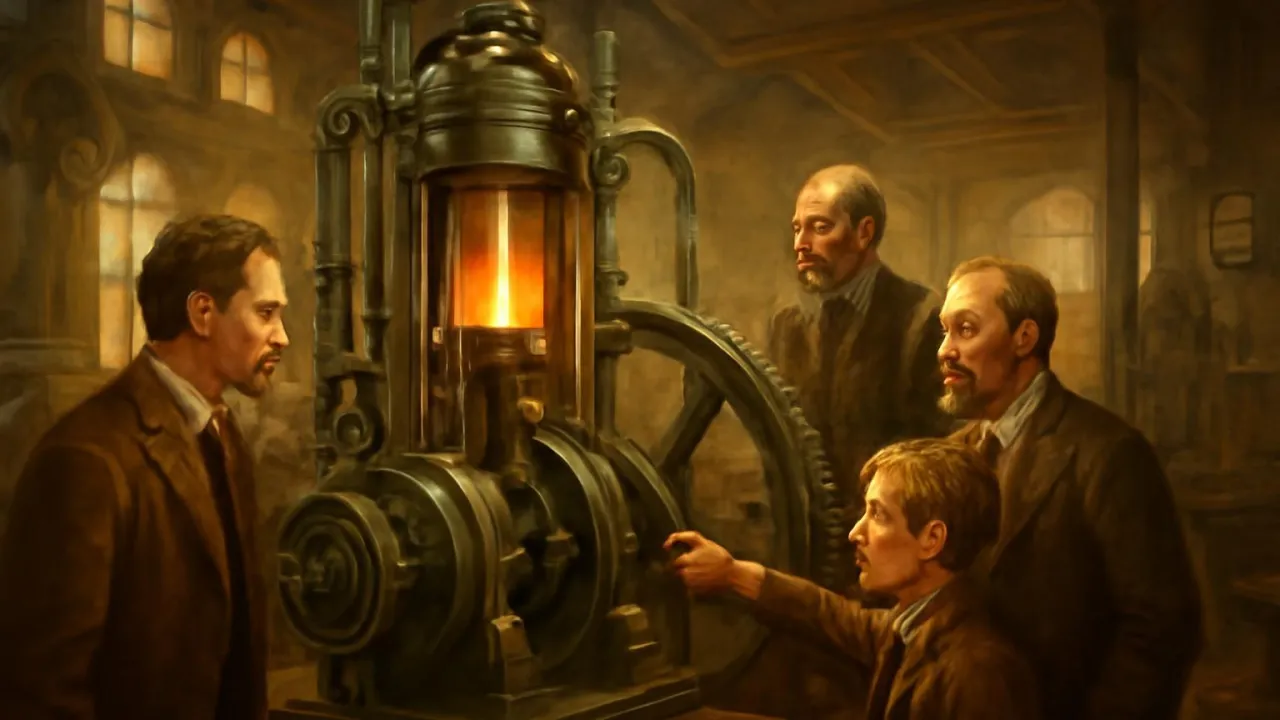
The first diesel engine could run for hours without stopping.
✨ Word Sparks (Grade 2 Glossary)
Tap 🔊 to hear
diesel
A special fuel for big engines
cylinder
A round space where fuel burns
vibration
A shaking or buzzing feeling
🪝
Have you ever felt the rumble of a giant engine under your feet?
1
Engines That Shake the Earth
engines make trains and trucks rumble loudly, shaking the ground as they go. These engines are much bigger than car engines, and they pull heavy things. People can feel the deep when they stand nearby.
2
How Diesel Engines Work
A engine burns fuel and uses hot air to make power. The fuel goes into a , and the air gets squeezed until it is very hot. When the fuel meets the hot air, it explodes and pushes parts to turn the wheels.
3
Moving the World
engines help move trains, trucks, and even ships across long distances. They make it possible for people to travel far and for goods to reach stores. Without diesel engines, moving heavy things would be very hard.
Some modern diesel engines can power huge ships as long as football fields!
✨ Word Sparks (Grade 3 Glossary)
Tap 🔊 to hear
piston
A part that moves up and down
internal combustion
Burning fuel inside a machine
prototype
The first working model of something
🪝
Imagine standing next to a roaring train—what’s making all that powerful noise?
1
The Mighty Diesel Engine
Diesel engines are powerful machines that make trains, ships, and trucks move. When they run, you can hear deep rumbles and feel strong vibrations in the ground. These engines are much larger and stronger than car engines. They are built to carry heavy loads over long distances.
2
How Does It Work?
Inside the engine, air is squeezed tightly in a chamber called a cylinder. When diesel fuel is sprayed in, the hot, compressed air causes it to ignite without a spark. This small explosion pushes a , which turns a crankshaft to create motion. This process is called .
3
Rudolf Diesel’s Big Idea
In 1897, Rudolf Diesel invented this engine in Germany. He wanted to make an engine that used less fuel and worked more efficiently than steam engines. His engine was large and slow, but it showed how powerful the new design could be. Soon, factories and trains began using diesel engines for tough jobs.
4
Changing How We Travel
Diesel engines made it possible to move goods and people farther and faster. They are used in ships that cross oceans and trucks that deliver food to stores. Because they are strong and last a long time, diesel engines help connect cities and countries around the world.
The world’s largest diesel engine is over 44 feet tall and powers giant container ships!
✨ Word Sparks (Grade 4 Glossary)
Tap 🔊 to hear
crankshaft
A rod that turns to make movement
fuel-efficient
Uses less fuel to make power
cargo
Things carried by ships or trucks
🪝
Can you picture the thunderous roar and shaking ground as a diesel-powered train speeds by?
1
Engines That Move the World
When a diesel engine starts, it fills the air with deep, powerful rumbles that you can feel in your chest. These engines are designed for strength, making them perfect for trains, ships, and trucks that need to haul heavy over long distances. Unlike small car engines, diesel engines are built to last for many years and run for hours without stopping. Their reliability has made them essential to modern transportation and industry.
2
The Science of Diesel Power
A diesel engine works by compressing air inside a cylinder until it gets extremely hot. When diesel fuel is injected, the heat causes it to ignite instantly—no spark plug needed. This process, called internal combustion, produces a powerful force that pushes a piston and turns a . The engine’s design makes it more than steam or gasoline engines, especially for heavy-duty work.
3
Rudolf Diesel’s Revolutionary Invention
Rudolf Diesel, a German inventor, created the first working diesel engine in 1897. He wanted to build an engine that wasted less fuel and could run on different types of oil. Diesel’s prototype was large and not very fast, but it proved that his new idea worked. Soon, factories, trains, and ships began using diesel engines to power their machines and vehicles.
4
A Global Impact
Diesel engines changed how people and goods travel across the world. They made it possible for trucks to deliver food and supplies to faraway places and for ships to cross oceans carrying huge loads. Today, diesel technology continues to evolve, helping build cities, connect countries, and support global trade.
1. Why are diesel engines good for heavy vehicles?
2. What happens when diesel fuel meets hot air in the engine?
🤯 Mind-Blowing Fact • Grade 5
The world’s largest diesel engine, the Wärtsilä-Sulzer RTA96-C, produces over 107,000 horsepower and powers massive container ships!
✨ Word Sparks (Grade 5 Glossary)
Tap 🔊 to hear
torque
Strong turning force from an engine
emissions
Gases or particles released by engines
catalytic converter
A device that cleans engine exhaust
🪝
What if you could peer inside a roaring train engine and see the science that makes it thunder across continents?
1
From Workshop to World Power
Step into an 1890s workshop, where Rudolf Diesel’s invention first shook the air with its deep, rhythmic rumble. Unlike steam engines, the diesel engine used a new principle: compressing air to such high pressure and temperature that injected fuel ignites spontaneously. This innovation allowed for greater fuel efficiency and more reliable operation, especially for heavy-duty vehicles and machinery. The first working diesel engine, built in Germany in 1897, was large and slow but demonstrated a breakthrough in mechanical engineering. Diesel’s design quickly attracted attention from industries needing powerful, long-lasting engines for transportation and manufacturing.
2
The Science of Internal Combustion
A diesel engine operates on the principle of internal combustion, where chemical energy from fuel is converted directly into mechanical energy. Air is drawn into a cylinder and compressed by a piston until it reaches temperatures above 500°C (932°F). When diesel fuel is injected, it vaporizes and ignites due to the intense heat, causing a rapid expansion of gases. This explosion pushes the piston downward, turning the crankshaft and generating rotational force. Unlike gasoline engines, diesel engines do not require spark plugs, making them more robust and efficient for continuous operation.
3
Engineering Advancements and Global Impact
Diesel engines revolutionized transportation by enabling trains, trucks, and ships to move heavier loads over greater distances than ever before. Their high at low speeds makes them ideal for hauling freight and powering construction equipment. Over the 20th century, innovations like turbocharging, direct fuel injection, and electronic controls made diesel engines cleaner and more powerful. Today, they are essential for global trade, agriculture, and emergency power generation, supporting economies and connecting distant regions.
4
Environmental Challenges and Future Solutions
While diesel engines are known for their efficiency, they also produce such as nitrogen oxides and particulates, which can affect air quality. Engineers have developed advanced filters, , and cleaner fuels to reduce pollution from diesel exhaust. Research continues into alternative fuels, hybrid systems, and even fully electric engines to make transportation more sustainable. The diesel engine’s story is still evolving as science seeks to balance power, efficiency, and environmental care.
5
A Legacy of Innovation
Rudolf Diesel’s quest to build a better engine changed the world’s industries and the way people travel. His invention’s ability to turn chemical energy into powerful motion set the stage for modern engineering achievements. Today, diesel engines power everything from ambulances to ocean liners, proving that one person’s idea can drive progress for generations. As technology advances, the diesel engine remains a symbol of human ingenuity and the ongoing search for cleaner, more efficient power.