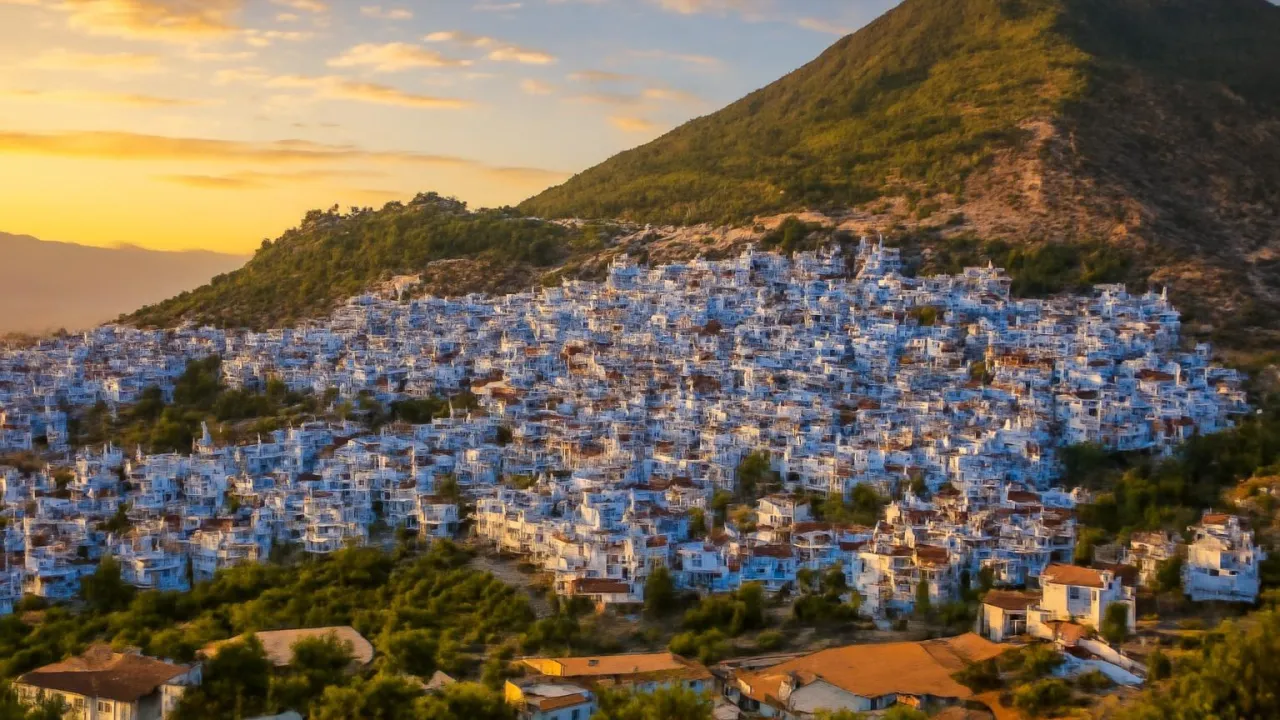
1. What color are most of the buildings in Chefchaouen?
2. Where is Chefchaouen built?
🤯 Mind-Blowing Fact • Grade 2
Some believe the blue paint keeps away bugs called mosquitoes.
✨ Word Sparks (Grade 2 Glossary)
Tap 🔊 to hear
shade
A lighter or darker color
market
Place where people buy and sell things
visitor
A person who comes to see a place
🪝
Can you imagine walking in a city painted all blue?
1
A Blue Surprise
When you visit Chefchaouen, you see blue everywhere you look. The houses, doors, and stairs are painted in many of blue. People say the blue color makes the city feel cool and calm.
2
High in the Mountains
Chefchaouen is a small city in the Rif Mountains of Morocco. The city sits on a hillside, and its winding streets go up and down. You can see tall mountains and green trees all around the city.
3
A Place to Explore
Kids play games in the blue streets, and love to take photos. The city is known for its friendly people and colorful . Many people come to Chefchaouen to see its beautiful blue walls.
Chefchaouen’s blue paint is often made from local minerals mixed with water.
✨ Word Sparks (Grade 3 Glossary)
Tap 🔊 to hear
medina
Old part of a city with twisty streets
tradition
A custom passed down in families
mineral
A natural rock or crystal from the earth
🪝
What would it feel like to wander through winding blue streets on a sunny mountain?
1
A City Painted Blue
In Chefchaouen, every wall, door, and step is covered in blue paint. The city’s blue color began long ago, and now almost every building glows in shades from sky to deep sea. As sunlight bounces off the blue walls, the streets seem to shimmer and sparkle.
2
High in the Rif Mountains
Chefchaouen is built on steep hillsides in the Rif Mountains of northern Morocco. The city’s , or old town, is a maze of narrow, twisting paths. People climb up and down stone steps, passing blue fountains and flower pots along the way.
3
Why So Blue?
No one knows exactly why Chefchaouen is blue, but some say it keeps homes cool by reflecting sunlight. Others believe the blue color repels mosquitoes or has special meaning for the people who live there. The blue paint is refreshed every year as part of a local .
4
A Place Full of Life
Children play soccer in the blue alleys while shopkeepers sell woven baskets and spices. Visitors from around the world come to explore Chefchaouen’s unique beauty. The city’s bright blue color has made it famous as a peaceful and magical place.
1. What is one reason people say Chefchaouen is painted blue?
2. What do visitors like to do in Chefchaouen?
🤯 Mind-Blowing Fact • Grade 4
Chefchaouen’s medina contains over 1,000 blue-painted buildings, making it one of the most colorful cities on Earth.
✨ Word Sparks (Grade 4 Glossary)
Tap 🔊 to hear
labyrinth
A maze with many winding paths
microclimate
Special weather in a small area
pigment
A substance that gives color to paint
🪝
Imagine stepping into a city where every street, wall, and rooftop glows in blue—what stories might these colors tell?
1
A Blue City in the Mountains
Chefchaouen sits nestled in the steep Rif Mountains, its buildings painted in every shade of blue you can imagine. Founded in 1471, the city’s medina is a of narrow alleys, arched doorways, and stone steps. The blue color tradition began with Jewish refugees, who believed blue symbolized the sky and heaven. Today, the entire cityscape shimmers under the Moroccan sun, creating a peaceful, dreamlike atmosphere for residents and visitors.
2
The Science Behind the Blue Walls
The blue paint is made from local minerals mixed with water and sometimes lime, which helps the color last through sun and rain. Some scientists believe the blue reflects sunlight, keeping homes cooler during hot summers. Others think the blue may discourage mosquitoes, as the color is less attractive to the insects. The city’s unique , with its mountain breezes and shaded alleys, also helps keep Chefchaouen comfortable.
3
Tradition and Community
Painting the city blue is a tradition passed down through generations, with families refreshing their walls each spring. This ritual brings neighbors together and keeps the medina looking bright and clean. The blue color has become a symbol of Chefchaouen’s welcoming spirit, attracting artists, photographers, and travelers from around the globe.
4
A Landmark of Culture and Beauty
Chefchaouen’s blue cityscape is now recognized as one of Morocco’s most iconic landmarks. The medina’s winding paths are filled with the sounds of children playing, merchants selling spices, and visitors marveling at the scenery. The city’s blend of history, architecture, and natural beauty makes it a living work of art in the mountains.
1. How do families in Chefchaouen keep their city blue and clean?
2. What is one scientific reason for Chefchaouen’s blue paint?
🤯 Mind-Blowing Fact • Grade 5
Chefchaouen’s blue color tradition is so influential that it has inspired scientific studies on how color affects temperature, mood, and even insect behavior.
✨ Word Sparks (Grade 5 Glossary)
Tap 🔊 to hear
indigo
A deep blue dye from plants or minerals
alkaline
A substance that is not acidic, often used in paint
heritage
Traditions and history passed down in a community
🪝
What if you could decode the secrets of a city where every wall and rooftop radiates blue—how would the science, history, and culture shape your journey?
1
A City of Blue in the Rif Mountains
Chefchaouen, founded in 1471, is perched at 2,000 feet in Morocco’s rugged Rif Mountains, where over 1,000 buildings are coated in vibrant blue hues. The city’s medina, a UNESCO-recognized historic quarter, is a labyrinth of narrow alleys, arched passageways, and terraced rooftops. The blue tradition began with Jewish refugees in the 15th century, who painted their homes blue as a symbol of the sky, spirituality, and hope. Today, this tradition is embraced by all residents, making Chefchaouen a living canvas that draws artists, scholars, and travelers from around the world.
2
The Chemistry and Physics of Blue Walls
The blue pigment used in Chefchaouen is often derived from local minerals such as , copper sulfate, or azurite, blended with lime and water for durability. Scientifically, blue surfaces reflect short-wavelength visible light, which helps lower the absorption of solar heat and keeps interiors cooler during Morocco’s hot summers. Some researchers also note that the blue pigment’s properties may deter insects like mosquitoes, contributing to a more comfortable living environment. The city’s elevation and mountain microclimate further enhance the cooling effect, making Chefchaouen a unique example of environmental adaptation.
3
Tradition, Ritual, and Community Identity
Every spring, residents participate in a city-wide ritual of repainting their homes, reinforcing both communal bonds and the medina’s iconic appearance. This annual event is more than maintenance; it is a celebration of , identity, and pride. The blue color has become a powerful symbol of Chefchaouen’s peaceful coexistence, blending Islamic, Jewish, and Berber cultural influences. The tradition also supports local artisans, whose handcrafted blue pigments and brushes are sold in bustling markets throughout the city.
4
Global Impact and Cultural Significance
Chefchaouen’s blue cityscape is now recognized internationally as a symbol of Morocco’s cultural diversity and artistic . The medina attracts over 200,000 visitors annually, supporting local economies and inspiring artists, photographers, and filmmakers. Its unique blend of architectural design, color psychology, and environmental adaptation has been studied in fields ranging from urban planning to anthropology. The city’s preservation efforts ensure that its blue legacy continues for future generations.
5
A Living Laboratory of Art and Science
Chefchaouen is not just a tourist attraction but a living laboratory where art, science, and history intersect. The city’s blue tradition demonstrates how cultural practices can have practical scientific benefits, such as temperature regulation and pest control. Its architecture, shaped by centuries of adaptation to mountain terrain, features thick stone walls, small windows, and shaded courtyards that optimize comfort in a challenging climate. Chefchaouen’s story invites us to explore how human creativity and community can transform a city into a masterpiece of both beauty and function.