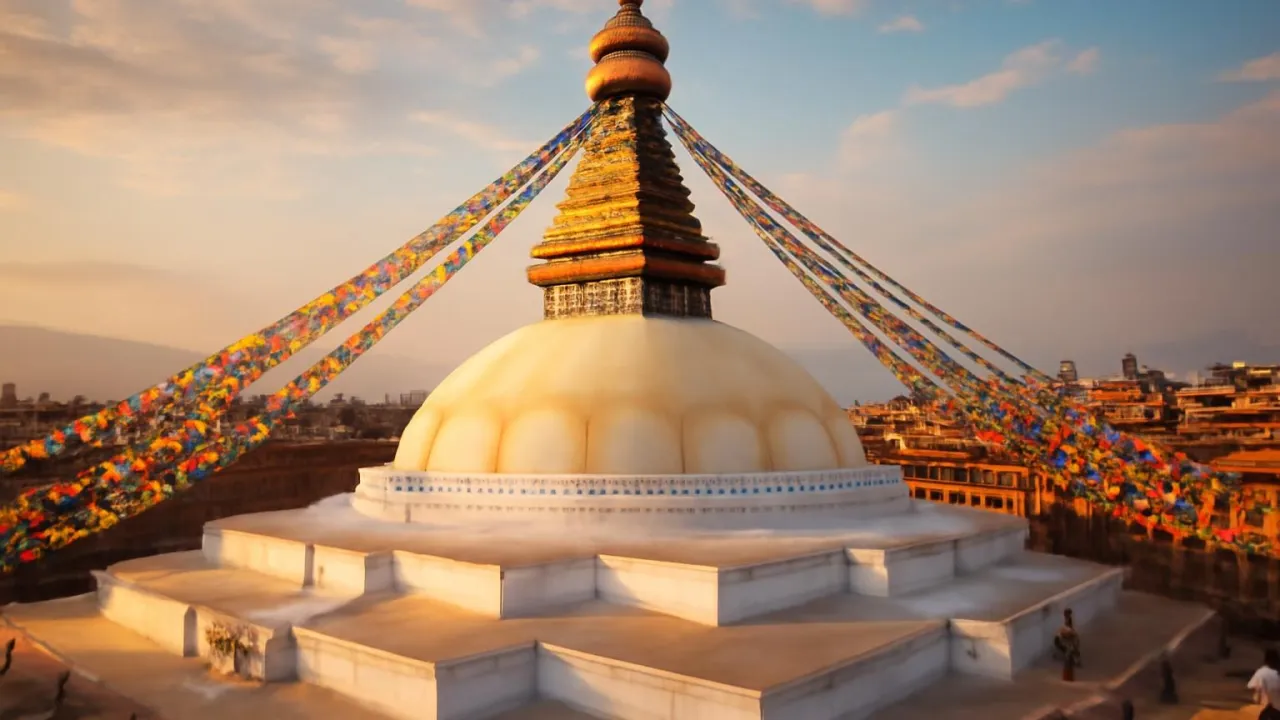
Boudhanath Stupa has four giant painted eyes looking in every direction!
✨ Word Sparks (Grade 2 Glossary)
Tap 🔊 to hear
prayer wheel
A spinning cylinder for prayers
peace
A calm and happy feeling
monument
A special building or statue
🪝
What if you could walk under hundreds of fluttering flags?
1
A Circle of Wonder
Boudhanath Stupa looks like a giant white circle with a golden top. People walk around it, spinning as they go. The stupa shines brightly in the sunlight, making it look magical. It is one of the most special places in Nepal.
2
Flags in the Sky
Colorful prayer flags are tied from the stupa to tall poles. The wind blows them so they dance and wave in the air. Each flag carries a wish for and happiness. Visitors love to watch the flags move together.
3
A Place for Everyone
Many people come here to pray, think, or just enjoy the . Some spin the wheels and say quiet prayers as they walk. The stupa is a place for all people, young and old. It is always calm and welcoming to everyone.
The stupa’s dome is so big that it can be seen from airplanes flying over Kathmandu!
✨ Word Sparks (Grade 3 Glossary)
Tap 🔊 to hear
mandala
A special circle design in Buddhism
pilgrim
A person who travels for faith
enlightenment
Understanding everything deeply and clearly
🪝
What secrets might a giant white dome with watchful eyes hold?
1
A Dome with Eyes
Boudhanath Stupa stands tall in Kathmandu, its white dome shining in the sun. On top, four large painted eyes look out in all directions, symbolizing the wisdom of Buddha. The stupa is shaped like a giant , which is a symbol of the universe in Buddhism. Every day, people walk around the base, spinning prayer wheels and chanting.
2
Flags and Prayers in the Wind
Colorful prayer flags stretch from the golden spire down to the ground. The wind blows the flags, carrying prayers and hopes across the valley. Each flag’s color stands for an element, like earth, water, or sky. The stupa’s peaceful sounds include bells, soft chants, and the fluttering of fabric.
3
How the Stupa Stands
The stupa’s round base is made of strong brick and stone. Its dome shape helps it stay stable during earthquakes, a common danger in Nepal. The spire on top is built in thirteen steps, representing the path to . Engineers use special techniques to keep the monument safe and solid.
4
A Place for All People
Boudhanath is important for Buddhist from many countries. It is a UNESCO World Heritage site because of its beauty and history. People of all ages come to find peace, meditate, and celebrate festivals. The stupa brings together visitors from all around the world.
After a major earthquake in 2015, the entire golden spire was rebuilt by local craftspeople in under two years!
✨ Word Sparks (Grade 4 Glossary)
Tap 🔊 to hear
mantra
A special word or chant for prayer
hemispherical
Shaped like half a round ball
restoration
Fixing something to make it strong again
🪝
Imagine hearing bells and chants as you walk beneath a sea of swirling flags—what stories does this ancient stupa tell?
1
The Heart of Kathmandu Valley
Boudhanath Stupa rises above the city, its massive white dome gleaming in the sunlight and drawing visitors from all over the world. Built during the early medieval period, it has survived centuries of earthquakes, thanks to its ingenious engineering and solid brick foundation. The stupa’s four painted Buddha eyes gaze out over Kathmandu, symbolizing awareness and compassion for all living beings. Every day, monks, pilgrims, and tourists walk clockwise around the monument, spinning prayer wheels and chanting .
2
Flags, Prayers, and Elements
Thousands of colorful prayer flags stretch from the golden spire to the ground, fluttering in the mountain breeze. Each flag carries sacred , believed to be spread by the wind to bring peace and harmony. The five flag colors represent the elements: blue for sky, white for air, red for fire, green for water, and yellow for earth. The stupa’s design is shaped like a mandala, a sacred circle used for meditation and representing the universe in Buddhist tradition.
3
Engineering for Safety and Strength
The stupa’s dome is built with layers of brick and mud mortar, forming a strong, earthquake-resistant structure. Its shape distributes weight evenly, helping it withstand the frequent tremors in Nepal. The thirteen golden tiers on the spire symbolize the steps to enlightenment, while the square base provides stability on the soft valley soil. Engineers and artisans have carefully restored the stupa after earthquakes, using both ancient and modern techniques.
4
A Living World Heritage Site
Boudhanath is recognized as a UNESCO World Heritage site for its unique architecture and cultural importance. It serves as a center for Tibetan Buddhism in Nepal, welcoming refugees, monks, and spiritual seekers from many countries. The stupa is the heart of festivals, ceremonies, and daily rituals that fill the air with music, incense, and laughter. Its presence brings together people of all backgrounds, making it a symbol of peace and unity for the world.
Boudhanath’s dome covers over 31,000 square feet—almost half the size of a soccer field!
✨ Word Sparks (Grade 5 Glossary)
Tap 🔊 to hear
cosmology
The study of the universe’s structure and origin
seismic
Related to earthquakes and ground shaking
circumambulation
Walking in a circle around something sacred
🪝
If you stood at sunrise beneath Boudhanath’s golden spire, what ancient secrets might you discover in its stones and swirling flags?
1
A Monument of Spiritual Geometry
Boudhanath Stupa dominates the Kathmandu Valley skyline, its vast white dome and golden spire radiating spiritual energy and architectural brilliance. Constructed during the 5th to 6th century CE, the stupa’s design follows precise geometric and symbolic principles rooted in Buddhist . The monument’s massive mandala base, measuring 397 feet (121 meters) in diameter, represents the universe, while the dome’s hemispherical form symbolizes the infinite sky. The four sets of all-seeing Buddha eyes, painted on each cardinal direction, embody wisdom and watchfulness over the city.
2
Engineering Marvels and Earthquake Resilience
The stupa’s structural integrity relies on a sophisticated layering of brick, mud mortar, and whitewashed lime, creating both strength and flexibility. Its hemispherical dome distributes forces evenly, significantly reducing the risk of collapse during frequent Nepalese earthquakes. The monument’s central spire rises 118 feet (36 meters) high and is topped by thirteen golden tiers, each representing a stage on the path to enlightenment. After the devastating 2015 earthquake, engineers and artisans collaborated to restore the spire using traditional methods and modern seismic reinforcement techniques.
3
Prayer Flags: Carriers of Hope and Harmony
Thousands of prayer flags radiate from the stupa’s pinnacle, stretching outward in vibrant lines that ripple in the Himalayan breeze. Each flag is inscribed with sacred mantras and symbols, intended to spread blessings, compassion, and harmony as the wind passes through. The five traditional colors—blue, white, red, green, and yellow—represent sky, air, fire, water, and earth, reflecting the interconnectedness of all things in Buddhist philosophy. The continuous movement of these flags creates a living tapestry of prayer and cultural identity.
4
A Center for Pilgrimage and Cultural Unity
Boudhanath Stupa serves as a focal point for Buddhist pilgrimage, attracting devotees and tourists from across Nepal, Tibet, Bhutan, and beyond. The monument is encircled by monasteries, shops, and homes, forming a vibrant community dedicated to spiritual practice and cultural preservation. Daily rituals include , the spinning of prayer wheels, and the chanting of mantras, filling the air with a harmonious blend of sound, color, and incense. Annual festivals, such as Losar and Buddha Jayanti, transform the stupa plaza into a spectacular celebration of faith and unity.
5
Legacy, Restoration, and Global Significance
Recognized as a UNESCO World Heritage site since 1979, Boudhanath Stupa is a living testament to Nepal’s resilience, artistry, and spiritual heritage. Its restoration after the 2015 earthquake involved hundreds of local craftspeople, engineers, and monks, who meticulously rebuilt the spire and reinforced the structure for future generations. The stupa’s enduring presence continues to inspire peace, compassion, and intercultural understanding, making it a beacon of hope for people around the world. Its architectural and spiritual legacy bridges ancient tradition with modern global citizenship.