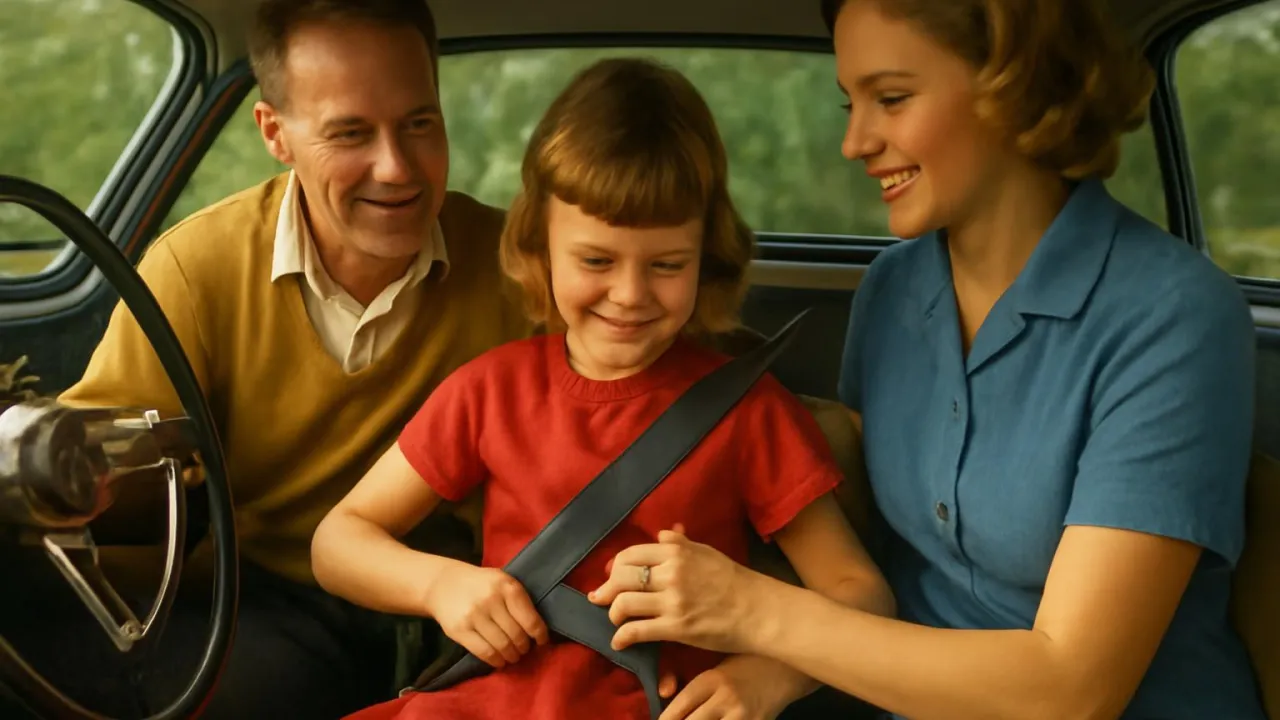
1. What sound does a seatbelt make when you buckle it?
2. Why do we wear seatbelts in cars?
🤯 Mind-Blowing Fact • Grade 2
The seatbelt has saved millions of lives since it was invented!
✨ Word Sparks (Grade 2 Glossary)
Tap 🔊 to hear
fabric
Material made from threads or fibers
invent
To make something new
accident
When something goes wrong by surprise
🪝
What if you could fly forward in a car? What stops you?
1
Buckle Up for Safety
When you sit in a car, you pull the seatbelt across your body and hear a click. The seatbelt holds you tight if the car stops quickly or turns fast. It keeps you from flying forward in your seat. Every person in the car should wear one.
2
How Was It Made?
A smart engineer named Nils Bohlin made the modern seatbelt in Sweden. He wanted to keep people safe in cars, so he designed a belt that goes over your lap and shoulder. This special shape helps protect your whole body. Today, almost every car has seatbelts.
3
A Life-Saving Belt
Seatbelts are made from strong, soft that does not break easily. They are tested to make sure they work in crashes and sudden stops. Wearing a seatbelt can save your life in an . That is why we always buckle up before the car moves.
The three-point seatbelt design is used in almost every car on Earth!
✨ Word Sparks (Grade 3 Glossary)
Tap 🔊 to hear
inertia
The way things want to keep moving
restraint
Something that holds you back or in place
durability
How long something stays strong
🪝
Imagine a car stopping suddenly—how does a simple strap keep you safe?
1
The Snap That Saves
When you buckle your seatbelt, you hear a loud click and feel it lock. The seatbelt stretches across your lap and chest, holding you snugly in your seat. If the car stops fast, the belt keeps you from flying forward. This simple strap is a powerful safety tool.
2
A Clever Invention
Nils Bohlin, a Swedish engineer, invented the three-point seatbelt in 1959. He designed it to go over your shoulder and lap for better protection. The seatbelt's strong fabric and metal buckle can handle a lot of force. Volvo was the first car company to use this new design.
3
How It Works
The seatbelt uses the principle of to keep your body safe. When a car suddenly stops, your body wants to keep moving forward because of . The seatbelt spreads the force across your chest and hips, helping to absorb the impact. This reduces injury and helps save lives.
4
Changing the World
After seatbelts were invented, car safety improved all around the world. Laws were made to require seatbelts in cars, and people learned to buckle up. Today, seatbelts are tested for strength, vibration, and . They are one of the most important inventions for road safety.
1. Why does a seatbelt go across your chest and hips?
2. Which company first used the three-point seatbelt?
🤯 Mind-Blowing Fact • Grade 4
Nils Bohlin gave away his seatbelt patent so every car company could use it for free.
✨ Word Sparks (Grade 4 Glossary)
Tap 🔊 to hear
patent
A special right to an invention
pelvis
The strong bone at your hips
impact
The force of something hitting
🪝
What if a simple strap could turn a dangerous crash into a safe stop?
1
The Click That Protects
Every time you hear the click of a seatbelt, you are using a piece of life-saving engineering. The seatbelt stretches across your chest and lap, locking into a sturdy buckle. Its woven fabric is designed to be both strong and slightly flexible, so it can absorb some of the energy from a sudden stop. This simple action helps protect people of all ages during car rides.
2
A Breakthrough in Safety
In 1959, Swedish engineer Nils Bohlin invented the three-point seatbelt for Volvo cars. Before this, seatbelts only went across the lap, which could cause injury in a crash. Bohlin’s design included a belt over the shoulder and across the hips, distributing force more safely. His invention quickly became the standard in automotive safety worldwide.
3
The Science Behind the Strap
Seatbelts work by using the principles of inertia and restraint. In a crash, your body wants to keep moving forward, but the seatbelt restrains you, spreading the across your strongest bones—the chest and . The fabric is tested for vibration, strength, and durability to ensure it will not break under pressure. This engineering reduces injuries and saves countless lives every year.
4
Changing Laws and Saving Lives
After the seatbelt’s invention, countries around the world began passing laws requiring seatbelt use. Car companies improved designs to make seatbelts more comfortable and easier to use. Today, wearing a seatbelt is one of the simplest ways to stay safe in a car. The three-point seatbelt remains a crucial invention, showing how engineering can protect people everywhere.
Modern seatbelts must withstand over 6,000 crash test cycles before being approved for use in new cars.
✨ Word Sparks (Grade 5 Glossary)
Tap 🔊 to hear
pretensioner
A device that tightens the seatbelt fast in a crash
webbing
Strong woven fabric used in seatbelts
adoption
When many people start using something new
🪝
Can a simple webbing strap truly decide the difference between life and death in a crash?
1
Engineering the Everyday Hero
Every time you slide into a car and hear the crisp click of a seatbelt, you’re engaging with one of the most effective safety inventions in history. The seatbelt’s design features tightly woven polyester engineered to withstand forces exceeding 3,000 pounds, yet it remains flexible enough to contour comfortably across the human body. This remarkable blend of strength and comfort is no accident; it is the result of decades of engineering refinement and crash testing. When properly worn, the seatbelt restrains your body during a collision, preventing dangerous forward motion and minimizing injury.
2
From Idea to Universal Standard
In 1959, Swedish engineer Nils Bohlin revolutionized automotive safety by inventing the three-point seatbelt for Volvo. Unlike earlier lap belts, Bohlin’s design anchored the belt at three points, distributing crash forces across the chest, shoulder, and pelvis—areas best able to absorb impact. Volvo recognized the life-saving potential and made the patent available to all manufacturers, accelerating global . Within two decades, seatbelts became mandatory in cars across Europe, North America, and much of the world.
3
Physics in Action: Inertia, Force, and Safety
Seatbelts operate on the physics principle of inertia, which states that objects in motion tend to stay in motion unless acted upon by an outside force. In a crash, your body wants to keep moving forward at the car’s previous speed. The seatbelt restrains this motion, spreading the force over the chest and pelvis to reduce concentrated injury. Modern seatbelts also include features like , which instantly tighten the belt during a crash, and energy management loops that allow controlled stretching to absorb even more impact energy.
4
Testing, Laws, and Lasting Impact
Before a seatbelt is installed in any car, it must pass rigorous strength, vibration, and durability tests that simulate years of use and extreme crash conditions. Governments worldwide have enacted laws requiring seatbelt use, and public health campaigns have educated millions about their life-saving benefits. According to the National Highway Traffic Safety Administration, seatbelts reduce the risk of fatal injury to front-seat passengers by 45%. The World Health Organization credits seatbelts with saving over a million lives each decade.
5
The Invention That Keeps Giving
The automotive seatbelt’s evolution continues with innovations like inflatable seatbelts and smart sensors that adjust tension based on passenger size and crash severity. The three-point seatbelt remains a symbol of how a simple, accessible invention can have a profound global impact. Every time you buckle up, you participate in a legacy of engineering that values human life above all else. As cars become more advanced, the humble seatbelt remains a constant guardian, quietly protecting millions every single day.