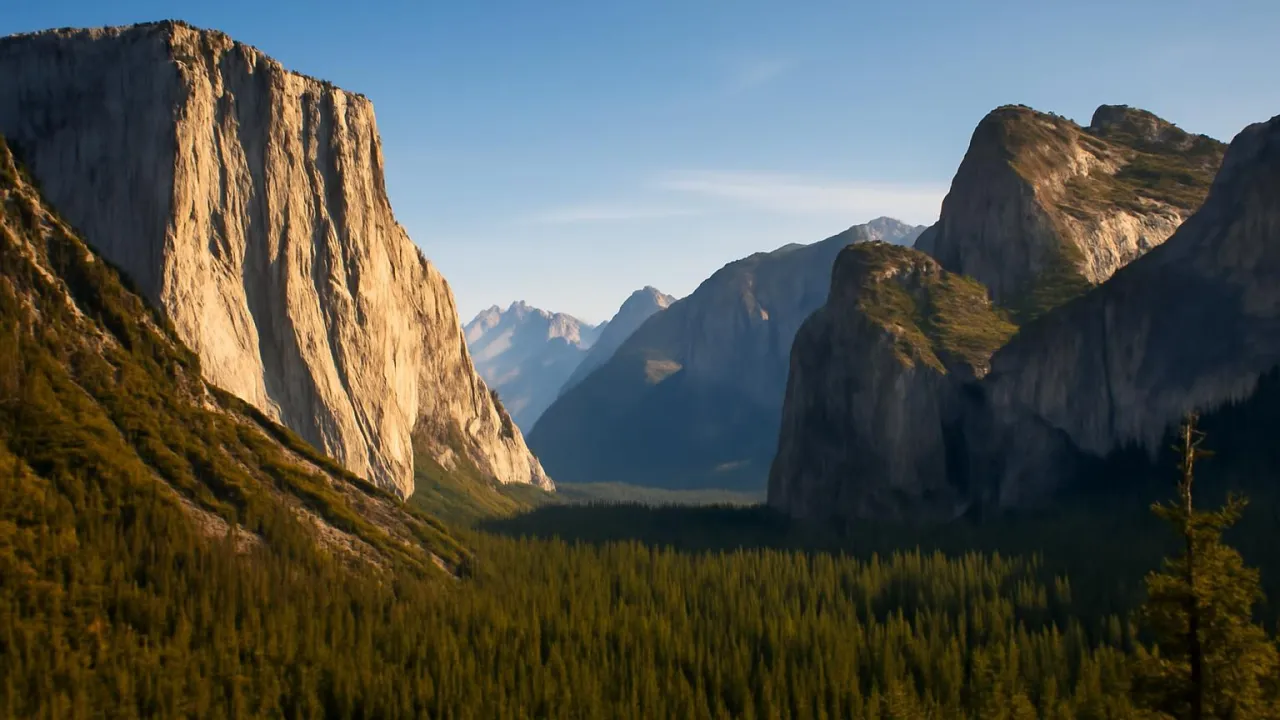
Half Dome looks like a giant rock sliced in half by nature!
✨ Word Sparks (Grade 2 Glossary)
Tap 🔊 to hear
glacier
A huge, slow-moving ice river
scale
To climb up something tall
valley
A low area between mountains
🪝
Have you ever seen a rock so big it touches the clouds?
1
Sky-High Stone Wonders
Half Dome and El Capitan are giant rocks in Yosemite. Their steep sides shine in sunlight and seem to reach the sky. Many people visit Yosemite to see these famous rocks.
2
Made by Nature’s Power
Long ago, and water shaped these granite towers. The ice moved slowly, carving the rocks into their special shapes. Today, you can see smooth and rough parts on their faces.
3
Adventure for All
Climbers use ropes to El Capitan’s tall cliff. Hikers walk up trails to see Half Dome from above. People come from all over the world to explore and enjoy the view.
El Capitan’s granite wall is taller than the world’s tallest roller coaster by far!
✨ Word Sparks (Grade 3 Glossary)
Tap 🔊 to hear
monolith
A single, huge rock formation
erosion
Wearing away by wind and water
summit
The very top of a mountain
🪝
Can you imagine hearing your voice echo off a wall as tall as a skyscraper?
1
Giants of Granite
Half Dome and El Capitan rise above Yosemite Valley, their granite faces gleaming in the sun. These were shaped by powerful glaciers millions of years ago. The smooth, curved top of Half Dome looks like a giant stone helmet. El Capitan’s vertical cliff is one of the tallest exposed rock faces in the world.
2
Nature’s Carving Tools
Glaciers are slow-moving rivers of ice that carved the valley and these cliffs. As the ice moved, it scraped and broke the granite, creating sharp edges and steep walls. Water, wind, and have continued to shape the rocks over time. This process makes Yosemite’s cliffs unique and beautiful.
3
Climbing to New Heights
El Capitan is famous for rock climbing, attracting climbers from around the globe. Climbers use ropes and special gear to scale its 3,000-foot vertical face. Half Dome’s rounded top is a favorite for hikers, who follow a long trail and use cables to reach the . Both rocks offer amazing views of the valley below.
4
Echoes and Exploration
Yosemite’s granite walls can create echoes when you shout or clap. The hard stone bounces sound waves back across the valley. Many visitors enjoy listening to these echoes and exploring the trails. These natural wonders inspire scientists, artists, and adventurers alike.
1. What tool did glaciers use to shape Yosemite’s cliffs?
2. Why do climbers visit El Capitan?
🤯 Mind-Blowing Fact • Grade 4
Half Dome’s top is so smooth because glaciers scraped away its upper half over thousands of years!
✨ Word Sparks (Grade 4 Glossary)
Tap 🔊 to hear
tectonic
Related to Earth’s moving plates
conservation
Protecting nature for the future
anchor
A tool to hold climbers safely
🪝
What if you could see the world from the top of a giant granite wall?
1
Granite Titans of Yosemite
Half Dome and El Capitan are two of Yosemite National Park’s most famous granite monoliths, soaring high above the valley floor. These natural wonders were formed deep underground more than 80 million years ago, when molten rock cooled and hardened into granite. Over time, forces pushed these rocks upward, and glaciers carved their dramatic shapes during the last Ice Age. Their striking appearance draws millions of visitors each year.
2
The Power of Glaciers and Erosion
Massive glaciers once filled Yosemite Valley, moving slowly and grinding against the granite beneath. As the glaciers advanced and retreated, they sculpted the sheer face of El Capitan and the curved crest of Half Dome. Erosion from wind, rain, and melting ice continues to shape these cliffs today, revealing new cracks and patterns in the stone. This ongoing process makes Yosemite’s landscape ever-changing and fascinating for scientists.
3
Climbing Legends and Hiking Adventures
El Capitan is known worldwide as one of the greatest rock climbing challenges, with routes that can take several days to complete. Climbers use ropes, harnesses, and to scale its 3,000-foot vertical face, testing their skill and endurance. Half Dome is a popular hiking destination, with a famous cable route that helps hikers reach its rounded summit. Both sites offer breathtaking views and inspire a sense of adventure and achievement.
4
Echoes, Inspiration, and Conservation
The granite walls of Yosemite create powerful echoes, bouncing sound waves across the valley and delighting visitors. Artists, photographers, and scientists have long been inspired by the beauty and geology of these formations. The park is a UNESCO World Heritage Site, protected so future generations can experience its wonders. efforts help preserve the natural environment and keep these granite giants standing tall.
1. How did glaciers shape the granite cliffs of Yosemite?
2. Why is Yosemite a UNESCO World Heritage Site?
🤯 Mind-Blowing Fact • Grade 5
El Capitan’s vertical face is so massive that it creates its own wind patterns and microclimates!
✨ Word Sparks (Grade 5 Glossary)
Tap 🔊 to hear
pluton
A huge body of cooled underground rock
microclimate
A small area with its own special weather
resonance
How sound vibrates and echoes in a space
🪝
What secrets would you discover if you could explore every crack and echo of Yosemite’s mighty granite walls?
1
Geological Origins: Born from Fire and Ice
Half Dome and El Capitan, Yosemite’s most iconic granite monoliths, began as molten magma deep beneath the Earth’s surface over 80 million years ago. As this magma cooled slowly, it crystallized into coarse-grained granite, forming enormous underground rock masses called . Uplift from tectonic plate movement gradually exposed these plutons, and over millions of years, erosion and glaciation sculpted them into the dramatic cliffs we see today. The last Ice Age, beginning about 2.5 million years ago, brought glaciers that carved Yosemite Valley and shaped the unique profiles of Half Dome and El Capitan.
2
Forces of Change: Glacial Carving and Erosion
Glaciers acted as powerful natural sculptors, grinding and plucking at the granite with immense force as they advanced and retreated. The vertical face of El Capitan was exposed as glaciers sheared away weaker rock, leaving behind a nearly sheer 3,000-foot wall. Half Dome’s famous shape resulted from glaciers eroding away one side, leaving a smooth, curved crest and a steep, exposed face. Even today, weathering and erosion continue to reveal new features, with freeze-thaw cycles widening cracks and causing occasional rockfalls.
3
Climbing and Human Exploration
El Capitan’s imposing vertical face has made it a legendary destination for rock climbers worldwide, with over 70 established climbing routes. Some ascents, like the famous ‘Nose’ route, require multiple days and specialized equipment such as cams, pitons, and dynamic ropes. Half Dome’s summit can be reached by a strenuous 14- to 16-mile hike, including a final section with steel cables to assist hikers up its steep granite slope. Both formations challenge human endurance and skill, attracting thousands of climbers and hikers annually.
4
Sound, Echoes, and Scientific Study
The dense granite of Yosemite’s cliffs reflects sound waves efficiently, creating distinct echoes that can be heard throughout the valley. Scientists study these echoes to learn about the rock’s structure and the valley’s acoustics, while visitors enjoy the natural amphitheater effect. The granite’s mineral composition, primarily quartz and feldspar, gives it both strength and , making it resistant to rapid erosion but capable of amplifying sound.
5
Global Significance and Conservation Efforts
Yosemite’s granite giants are not only natural wonders but also symbols of conservation and environmental stewardship. The park’s designation as a UNESCO World Heritage Site recognizes its geological significance and the need to protect its unique landscapes. Ongoing conservation efforts focus on preserving the delicate balance between visitor access and the protection of native habitats, rare species, and geological features. By studying and safeguarding Yosemite’s cliffs, scientists and park rangers help ensure that these awe-inspiring formations will inspire future generations.