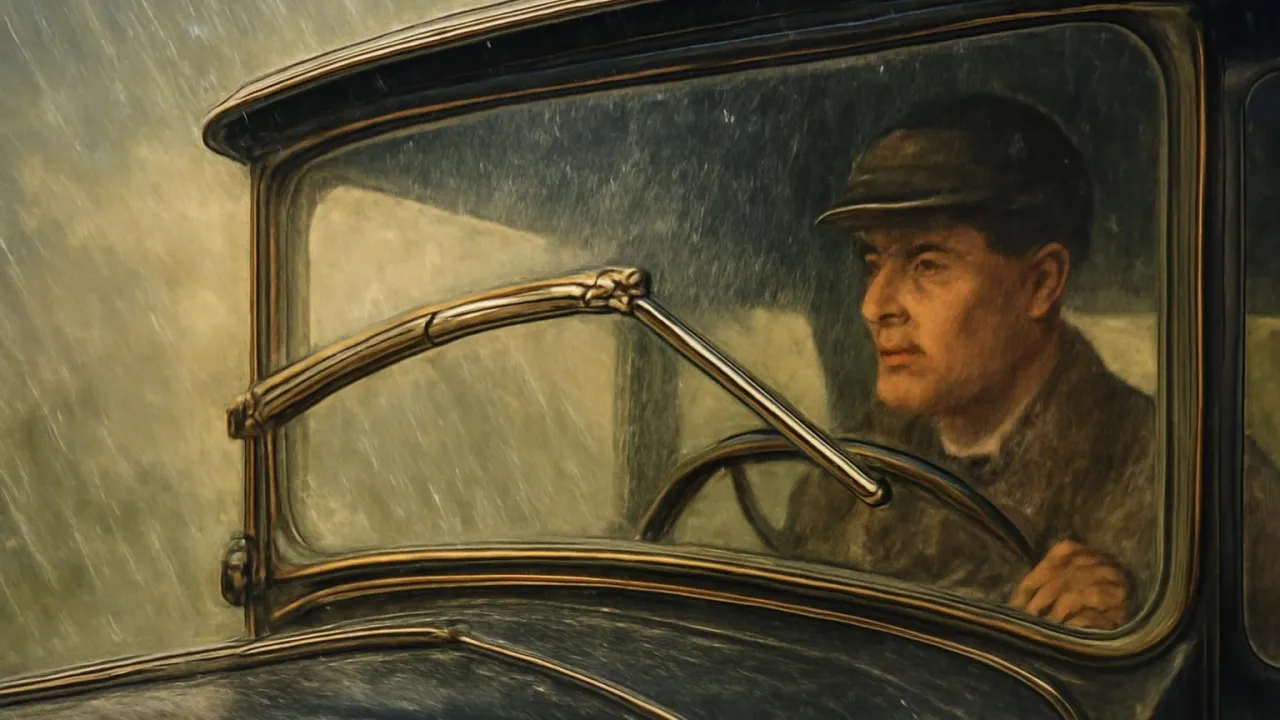
Mary Anderson never got rich from her wiper invention.
✨ Word Sparks (Grade 2 Glossary)
Tap 🔊 to hear
invent
To make something new
handle
A part you hold or turn
storm
Heavy rain and strong wind
🪝
Have you ever heard wipers swish during a stormy ride?
1
Rainy Day Helpers
When rain covers a car’s window, wipers move side to side. These blades quickly push away water, so drivers can see. Without wipers, driving in rain would be scary and hard.
2
A Woman’s Clever Invention
Mary Anderson watched drivers stop in , so she invented the first wiper. Her idea used a inside the car to move a blade. Soon, more cars started using wipers to help people travel safely.
3
Wipers Everywhere
Today, all cars and buses have wipers to clear rain and snow. Some wipers move fast, while others move slow. They help everyone see the road in all kinds of weather.
Some trains and planes also use special wipers or air jets!
✨ Word Sparks (Grade 3 Glossary)
Tap 🔊 to hear
prototype
A first working model of something
patent
A legal right for an invention
friction
Rubbing that helps things move or stop
🪝
Imagine driving through pouring rain—how do you keep your windshield clear?
1
Wipers in Motion
When rain splashes on a windshield, wipers sweep across the glass in a steady rhythm. The rubber blade pushes away water, dirt, and even snow. This action lets drivers see the road clearly, even in bad weather. Without wipers, windows would stay foggy and dangerous.
2
A Problem Solved
Mary Anderson noticed streetcar drivers struggling to see in storms. She designed a with a lever inside the car that moved a spring-loaded blade. Her invention was patented in 1903, but car companies did not use it right away. Still, her idea changed driving forever.
3
How Wipers Work
Windshield wipers use a pivot arm attached to a motor or handle. When activated, the arm swings the blade in an arc across the glass. The rubber edge creates , wiping away water with each vibration. Today’s wipers often have different speeds and even spray cleaning fluid.
4
Wipers Around the World
Now, every vehicle—from tiny cars to giant buses—uses wipers for safety. Some even have special wipers for headlights or back windows. Wipers are essential for safe travel in rain, snow, and mud. They help millions of people drive safely every single day.
Some luxury cars use sensors to turn wipers on automatically when it rains.
✨ Word Sparks (Grade 4 Glossary)
Tap 🔊 to hear
pivot
To turn around a point
mechanism
A set of moving parts
debris
Loose dirt or small pieces
🪝
What would happen if cars had no windshield wipers during a sudden downpour?
1
A Rainy Road Challenge
Before windshield wipers, drivers often had to stop during storms because they could not see through the glass. Rain, snow, and mud would stick to the windshield, making travel dangerous and slow. Drivers sometimes leaned out windows or tried wiping by hand, which was unsafe. The need for a better solution was clear as cars became faster and more common.
2
Mary Anderson’s Ingenious Solution
In 1903, Mary Anderson patented a mechanical windshield wiper after watching streetcar drivers struggle in bad weather. Her device used a spring-loaded arm with a rubber blade, controlled by a lever inside the vehicle. This prototype let drivers clear their windshields without leaving their seats, improving safety. Although her invention was not adopted right away, it inspired future designs.
3
Engineering the Wiper Mechanism
Windshield wipers use a pivoting arm that swings a rubber blade in a sweeping arc. Early wipers were moved by hand, but later versions used electric motors for automatic movement. The blade’s friction against the glass wipes away water and , while some systems include washer fluid for extra cleaning. Modern wipers can adjust speed and pressure, adapting to different weather conditions.
4
A Global Impact on Transportation
Windshield wipers are now standard on cars, buses, trucks, and even some trains and airplanes. Their invention made travel safer and more reliable, especially during storms or snowy weather. Wipers are a small but vital part of automotive engineering, saving lives by keeping drivers’ vision clear. Mary Anderson’s idea continues to help millions of people travel safely around the world.
A modern wiper blade can sweep over 1.5 million times before wearing out!
✨ Word Sparks (Grade 5 Glossary)
Tap 🔊 to hear
hydrophobic
Repels water instead of soaking it up
ultrasonic
Uses sound waves too high for us to hear
arc
A curved path or movement
🪝
If you were designing a car for a monsoon, how would you keep the windshield clear at all times?
1
The Problem of Visibility
In the early days of automobiles, drivers faced a major safety challenge: how to see through rain, sleet, or snow while traveling at increasing speeds. Without windshield wipers, glass surfaces quickly became coated with water, mud, or ice, making it nearly impossible to steer safely. Some drivers tried leaning out the window or stopping frequently to wipe the glass by hand, but these methods were dangerous and impractical. As roads became busier and vehicles faster, the need for a reliable solution grew urgent.
2
Mary Anderson’s Visionary Invention
In 1903, Mary Anderson observed that streetcar drivers in New York struggled to see during storms, inspiring her to invent the first practical windshield wiper. Her patented design featured a spring-tensioned rubber blade attached to a pivoting arm, operated manually by a lever inside the vehicle. This simple yet effective mechanism allowed drivers to clear their windshields without stopping or exposing themselves to harsh weather. Although her invention was initially overlooked by automakers, it laid the groundwork for future advancements in automotive safety.
3
Mechanical and Physical Principles
Windshield wipers operate using principles of mechanical engineering and friction. The wiper arm, connected to a motor or manual lever, pivots in a controlled across the glass. The flexible rubber blade conforms to the curved surface, creating enough friction to remove water, snow, and debris. Modern wipers often use electric motors with variable speeds, pressure sensors, and washer fluid jets to enhance cleaning efficiency. The arc-shaped movement maximizes the area cleared while minimizing streaks and mechanical wear.
4
Evolution and Global Impact
After Anderson’s invention, automatic wipers powered by vacuum, pneumatic, and eventually electric motors became standard in the 1920s and 1930s. Today, nearly all vehicles worldwide rely on advanced wiper systems, including rain sensors that activate wipers automatically and heated blades for icy conditions. Windshield wipers have dramatically improved road safety, reducing accidents caused by poor visibility and enabling travel in all weather. Their impact extends to trains, ships, and aircraft, where clear vision is equally critical.
5
Engineering for the Future
Engineers continue to innovate, developing new materials and smart technologies for wipers. Some luxury vehicles now use glass coatings that repel water, reducing the need for frequent wiping. Others experiment with vibrations or air jets to clear windshields without moving blades. As transportation evolves, the core challenge remains: ensuring drivers and pilots can always see clearly, no matter the weather. Mary Anderson’s simple idea continues to inspire solutions that keep the world moving safely.