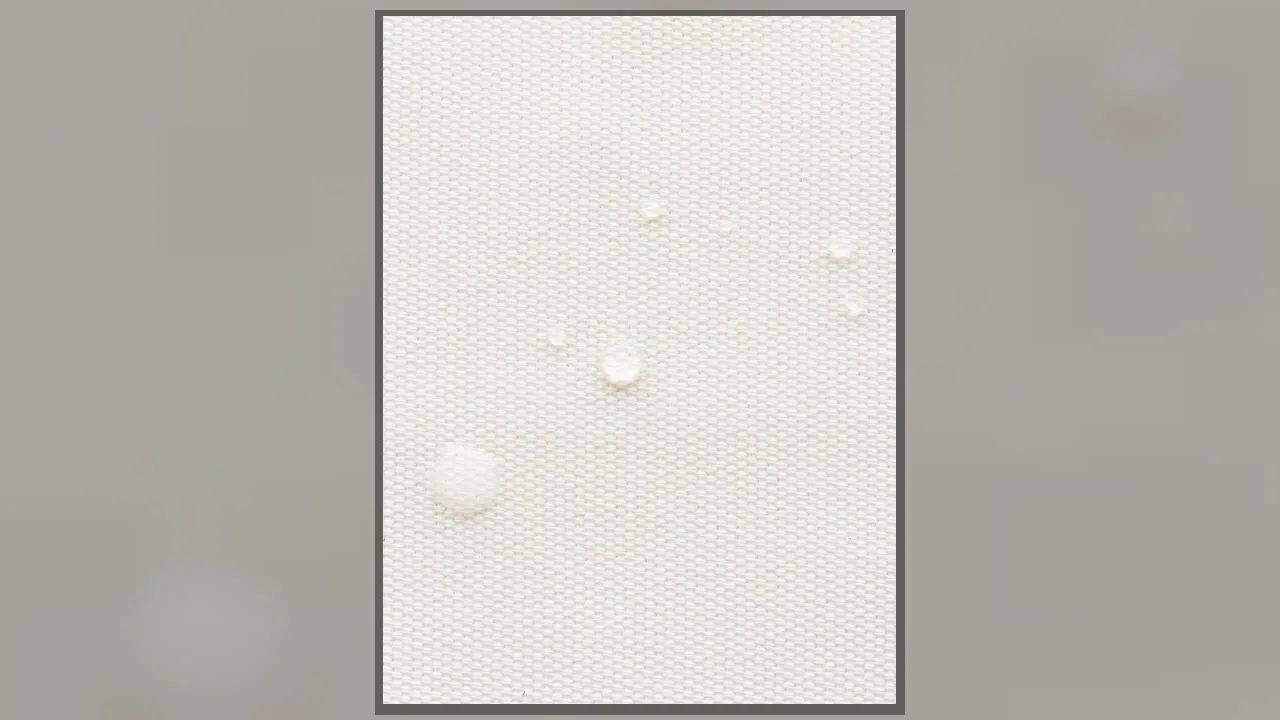
1. Why can't raindrops squeeze through the tiny pores in a Gore-Tex jacket?
2. What CAN escape outward through those tiny pores so you don't feel sticky?
🤯 Mind-Blowing Fact • Grade 2
NASA astronauts wear spacesuits with a tough outer layer of Gore-Tex fibers to help protect them during spacewalks outside the International Space Station!
✨ Word Sparks (Grade 2 Glossary)
Tap 🔊 to hear
membrane
Thin flexible sheet that filters what passes
breathable
Letting air and sweat vapor pass through
microscopic
Too tiny to see without a microscope
🪝
How did one frustrated yank in a laboratory create a fabric worn on snowy mountains and outer space?
1
The Slow-Stretch Problem
In 1969, scientist Bob Gore was trying to stretch warm white plastic rods slowly in his Delaware lab. Every single time he pulled gently, the slippery rod snapped right in two!
2
One Fast Yank!
Frustrated after many tries, Bob gave a heated rod one sudden, super-fast yank with both arms. Instead of breaking, the rod stretched eight times longer across his hands, turning mostly into air pockets!
3
Rain Out, Sweat Out
Rolled into a paper-thin , that stretched web holds billions of tiny pores smaller than raindrops yet larger than water vapor. Laminated inside coats and boots, it blocks howling rain while letting body steam escape.
1. How did Bob Gore accidentally discover expanded PTFE (Gore-Tex) in 1969?
2. Why does wearing a plain rubber raincoat on a steep hike make your shirt damp inside?
🤯 Mind-Blowing Fact • Grade 3
Doctors have safely implanted millions of tiny medical Gore-Tex tubes and patches inside human hearts and arteries because the human body accepts the material without attacking it!
✨ Word Sparks (Grade 3 Glossary)
Tap 🔊 to hear
ePTFE
Stretched slick polymer filled with microscopic pores
fibril
Microscopic thread connecting islands inside a membrane
laminate
Bond thin layers together into strong fabric
🪝
How can one hole be 20,000 times smaller than a water drop yet 700 times bigger than water vapor?
1
Two Forms of Water
Climb a steep, rainy trail and your jacket faces water from two sides at once! Outside, chilly liquid raindrops pelt your shoulders; inside, your warm skin gives off invisible water-vapor gas. Solving both at once took a neat trick of molecular size.
2
Bob Gore's 800-Percent Stretch
Working with polytetrafluoroethylene (PTFE)—the same slick polymer used on nonstick pans—chemical engineer Bob Gore discovered in 1969 that yanking heated PTFE rapidly expanded its volume by 800 percent without tearing.
3
A Web of Nodes and Fibrils
Under an electron microscope, expanded PTFE () looks like millions of tiny islands connected by thin spiderweb strands, leaving 9 billion pores per square inch. Each pore is 20,000 times smaller than a liquid droplet yet 700 times wider than an individual vapor molecule!
4
From Mountaintops to Heart Surgery
Because human bodies do not reject clean PTFE, doctors also use soft tubes of Gore-Tex inside patients as artificial blood vessels and heart patches, while explorers trust it from Antarctica to Mount Everest.
1. Roughly how much smaller is a single Gore-Tex pore than a liquid raindrop?
2. Besides outdoor jackets and boots, what surprising medical job does expanded PTFE perform?
🤯 Mind-Blowing Fact • Grade 4
Stretched ePTFE is over 70 percent pure air by volume, making the waterproof heart inside an expedition parka lighter than a tissue!
✨ Word Sparks (Grade 4 Glossary)
Tap 🔊 to hear
hydrophobic
Repelling liquid water so droplets bead up
surface tension
Cohesive pull holding water droplets into spheres
micrometer
One millionth of a meter in length
🪝
Why does water's own surface tension team up with fluoropolymer chemistry to keep storm-tossed sailors dry?
1
The Size-Exclusion Sieve
Step into an icy squall on a mountain ridge: wind-driven sleet hammers your shell jacket at fifty miles per hour while your muscles generate heat and perspiration inside. Ordinary coated nylon traps that moisture until you chill, whereas an ePTFE membrane acts as a selective molecular sieve.
2
Surface Tension and Hydrophobic Repulsion
Two physical forces guard those nine billion pores per square inch. First, water molecules cling tightly to one another via , bunching into droplets roughly 100 across—far too wide for 0.2-micrometer pores. Second, PTFE is intensely (water-fearing); its low surface energy forces water to bead into spheres rather than wetting into the web.
3
Vapor Diffusion Driven by Warmth
Meanwhile, individual H2O gas molecules measure just 0.0004 across. Warmth and higher humidity next to the wearer's skin create a vapor-pressure gradient that pushes single gas molecules straight through the air-filled tortuous maze of ePTFE nodes and fibrils to the drier outside air.
4
Sandwiching Delicate Films for Rugged Duty
Because pure ePTFE film is thinner than a human hair—around 10 to 30 —manufacturers laminate it between tough outer nylon shells treated with durable water repellent (DWR) and soft inner linings, sealing stitched needle holes with heat-welded waterproof tape.
1. Along with tiny pore size, what property of PTFE helps stop liquid water from soaking into the membrane?
2. What drives sweat vapor outward from inside a breathable shell jacket?
🤯 Mind-Blowing Fact • Grade 5
To say 'waterproof' in extreme mountain testing, technical storm membranes must withstand the pressure of a column of water over 90 feet tall without letting a single drop seep through!
✨ Word Sparks (Grade 5 Glossary)
Tap 🔊 to hear
porosity
Percentage of empty air space inside material
oleophobic
Repelling oils and greasy substances from soaking
vapor-pressure gradient
Difference in moisture gas pressure driving flow
🪝
Why did heating a fluoropolymer rod and stretching it at supersonic strain rates flip normal material mechanics upside down?
1
Counterintuitive Polymer Physics in 1969
Conventional materials thin down and snap when pulled faster, so when Robert W. Gore tried slowly stretching heated polytetrafluoroethylene (PTFE) rods by just 10% in October 1969, repeated brittle fractures seemed unavoidable. Out of frustration, Gore yanked a heated rod violently—applying an extreme strain rate—and watched it expand nearly 800% into a tough, snow-white microporous solid without necking down!
2
Crystallite Unwinding into Nodes and Fibrils
Virgin PTFE consists of folded ribbon-like carbon chains armored completely by electronegative fluorine atoms. Below its 327 °C crystalline melt point, slow pulling shears chains apart; rapid high-strain stretching, however, smoothly unspools folded crystallites into microscopic nanoscale fibrils bridging dense PTFE nodes, producing expanded PTFE (ePTFE) with 70% to 85% void and 1.4 billion pores per square centimeter.
3
Young–Laplace Capillary Entry Pressure
Why can't wind-driven rain penetrate pores averaging 0.2 micrometers in diameter? By the Young–Laplace equation, forcing a non-wetting liquid (contact angle > 110° on low-surface-energy fluoropolymers) into sub-micron capillaries demands enormous hydrostatic entry pressures—often exceeding 28 meters of water head (275 kilopascals)—far surpassing fierce storm impacts.
4
Knudsen Diffusion and Contamination Defense
Individual water-vapor molecules (~0.4 nanometers wide) diffuse freely across the air-filled lattice driven by trans-membrane partial-pressure gradients. Because skin oils and surfactants can lower water's surface tension and wet pure ePTFE, apparel engineers bond an ultra-thin polyurethane layer that blocks oils while transmitting vapor via molecular solution-diffusion.
5
Biomedical, Aerospace, and Next-Generation PFAS-Free Membranes
Beyond technical mountaineering shells and NASA extravehicular spacesuits, ePTFE serves in vascular grafts, industrial baghouse dust filters, and low-loss coaxial radar cables. To eliminate persistent fluorochemical environmental footprints, materials scientists in the 2020s developed expanded polyethylene (ePE) membranes that match ePTFE's microporous storm protection with zero fluorocarbons.