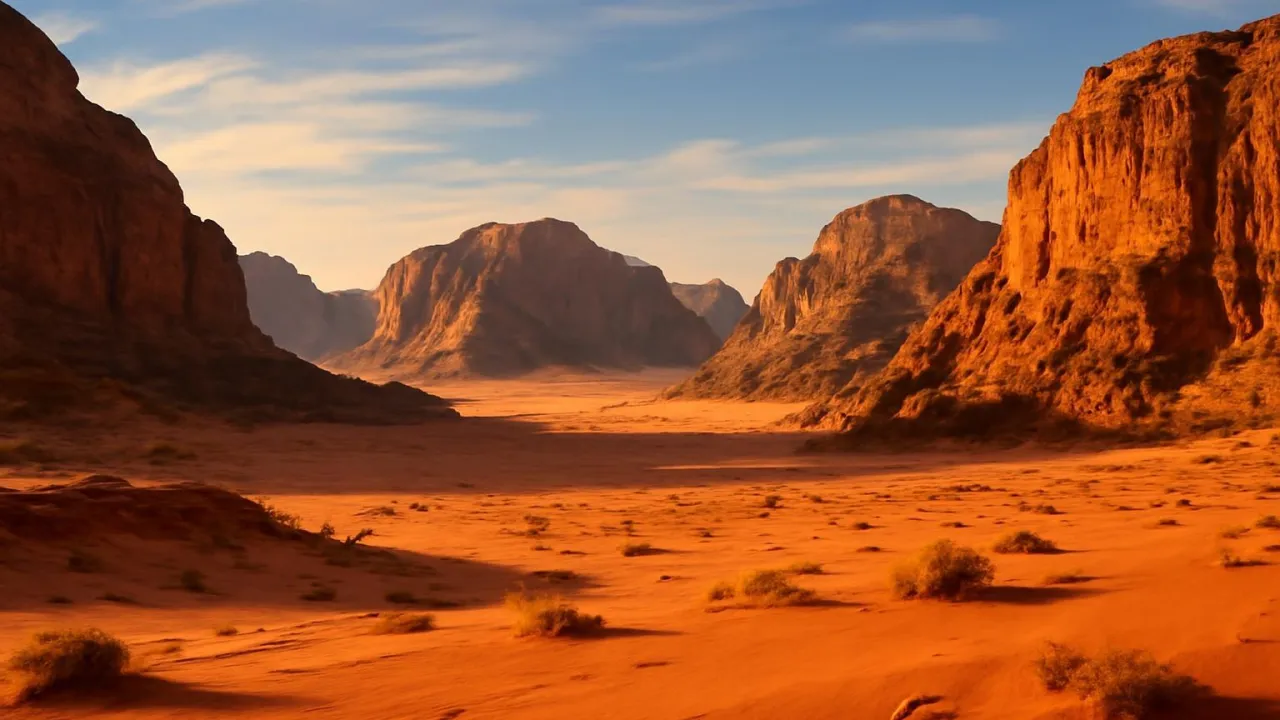
Wadi Rum Desert Valley
Jordanโs Red Sandstone Maze of Wonders
Wadi Rumโs rocks have shapes like bridges and castles.
What if you walked on soft red sand under giant rocky walls?
1 Red Rocks and Sand
The sand looks bright and red. Tall rocks rise up high. The sun shines on the .
2 Desert Sounds
Wind whistles between the rocks. Sometimes, you hear a camelโs feet. It is quiet and wide.
3 A Place to Explore
People ride jeeps or camels here. They look for cool caves and arches. The is big and open.
1. What color is the sand in Wadi Rum?
2. How do people explore Wadi Rum?
Some cliffs in Wadi Rum are taller than 20 school buses stacked up!
Can you imagine walking where the rocks glow red at sunset?
1 A Land of Red and Gold
Wadi Rum shines with red sand and tall cliffs. The rocks turn gold and orange at sunset. People come from all over to see the colors. It feels like standing on another planet.
2 Desert Adventures
Visitors ride camels or jeeps to explore the wide valley. They find caves and stone hidden in the rocks. The wind makes soft whistling sounds all day. Sometimes, you can spot ancient drawings on the stone walls.
3 A Place Full of History
people have lived here for many years. They know the desertโs secrets and stories. Wadi Rum has even been in famous movies. People love to camp under the bright stars at night.
1. What happens to Wadi Rumโs rocks at sunset?
2. Who are the Bedouin people?
Wadi Rumโs tallest cliff, Jebel Umm ad Dami, is Jordanโs highest mountain.
What if you could climb a giant stone arch in the middle of a glowing desert?
1 A Maze of Red Sandstone
Wadi Rumโs desert valley is filled with red sandstone towers and deep canyons. The landscape was shaped by wind and water over millions of years. Huge cliffs rise above the soft, shifting sand, creating a maze of natural wonders. The valleyโs colors change from pink to gold as the sun moves.
2 Natural Arches and Ancient Art
Some of Wadi Rumโs most famous features are its natural stone arches. These arches formed when wind and rain wore away weaker rocks, leaving strong bridges behind. On the valleyโs walls, you can find โancient carvings made by people thousands of years ago. These carvings tell stories of camels, hunters, and desert life.
3 Desert Life and Survival
The Bedouin people have lived in Wadi Rum for centuries, adapting to the harsh desert. They use tents made from goat hair and know where to find water hidden in the rocks. Camels are important for travel, carrying supplies across the wide, sandy valley. At night, the sky above Wadi Rum is filled with bright stars.
4 A Place for Adventure
Today, visitors come to Wadi Rum for hiking, climbing, and camping under the stars. The valleyโs unique echoes make every shout bounce between the cliffs. Movies like 'The Martian' were filmed here because the land looks like Mars. Wadi Rumโs beauty and history make it a true wonder of the world.
1. How were Wadi Rumโs natural arches formed?
2. Why do movies film in Wadi Rum?
Some petroglyphs in Wadi Rum are over 4,000 years old, showing ancient desert life.
Can you picture the echo of your voice bouncing off ancient red cliffs in a desert older than the pyramids?
1 A Desert Shaped by Time
Wadi Rumโs dramatic landscape was formed over 500 million years by powerful forces of erosion. Wind, rain, and shifting sand slowly carved the and granite, creating towering cliffs, deep canyons, and natural stone arches. The valley stretches across 278 square miles, with cliffs that reach heights of 2,100 feet. The colors of the rocks shift from rose to gold depending on the time of day.
2 Natureโs Sculptures and Ancient Stories
Wadi Rum is famous for its natural arches, such as the Burdah Rock Bridge, and its mushroom-shaped rock formations. These features were sculpted by wind and water, leaving behind breathtaking examples of natural engineering. The valleyโs walls are decorated with thousands of petroglyphs and inscriptions, some dating back more than 4,000 years. These ancient carvings reveal stories of early humans, camels, and desert hunts.
3 Living in the Harsh Desert
For centuries, Bedouin tribes have called Wadi Rum home, mastering survival in this challenging environment. They build tents from woven goat hair, find hidden water sources, and travel by camel across the sand. The Bedouin culture is rich with oral stories, music, and traditions passed down through generations. At night, the desertโs clear skies make Wadi Rum one of the best places in the world for stargazing.
4 A World Heritage Wonder
Wadi Rum is protected as a World Heritage Site, recognized for its natural beauty and cultural importance. The valley attracts adventurers who come to hike, climb, and camp beneath the stars. Its unique properties cause sounds to echo dramatically between the cliffs, adding to the sense of wonder. Wadi Rumโs striking landscape has also appeared in many famous films, inspiring visitors from around the globe.
1. What makes Wadi Rumโs landscape so dramatic?
2. Why do people visit Wadi Rum at night?
Wadi Rum contains over 25,000 ancient petroglyphs and 20,000 inscriptions, revealing secrets of early desert life.
What scientific secrets could you uncover if you trekked across the silent, sunlit canyons of Wadi Rumโs ancient desert?
1 A Geological Tapestry Woven by Time
Wadi Rumโs breathtaking landscape is a result of over 500 million years of geological evolution, shaped primarily by the relentless forces of wind and water erosion. The valleyโs sandstone and granite formations were gradually sculpted into towering cliffs, deep canyons, and intricate natural arches, with some cliffs rising up to 2,100 feet (650 meters) above the desert floor. The areaโs unique colorationโranging from deep reds to golden huesโis due to iron oxide minerals within the rock, which oxidize and reflect sunlight at different angles throughout the day. These shifting colors and dramatic landforms offer scientists valuable insights into rock processes and ancient climate patterns.
2 Natural Arches and Acoustic Marvels
Among Wadi Rumโs most remarkable features are its natural stone arches, such as the Burdah Rock Bridge, which spans over 115 feet (35 meters). These arches formed through a combination of mechanical and chemical , as wind-driven sand and occasional rainfall eroded weaker rock layers, leaving behind resilient bridges. The valleyโs steep cliffs and canyons also create unique acoustic effects, allowing sounds to echo and powerfully between rock faces. This phenomenon has fascinated both scientists and visitors, who often test the echoes by shouting or clapping among the cliffs.
3 A Living Record of Human History
Wadi Rumโs walls are covered with more than 25,000 petroglyphs and 20,000 inscriptions, some of which date back over 4,000 years. These ancient carvings, created by early desert peoples, depict camels, hunters, and mysterious symbols, providing a rare glimpse into prehistoric life and migration routes. The Bedouin tribes who have inhabited the valley for centuries possess deep knowledge of the desertโs resources, using traditional techniques to find water, build durable tents, and navigate the harsh terrain. Their oral histories and customs continue to shape Wadi Rumโs living culture today.
4 Global Significance and Modern Exploration
Recognized as a UNESCO World Heritage Site since 2011, Wadi Rum is celebrated for both its natural and cultural significance. The valley attracts scientists, archaeologists, and adventurers from around the world, who study its geology, biodiversity, and ancient artifacts. Wadi Rumโs Mars-like landscape has made it a popular filming location for movies such as 'The Martian' and 'Lawrence of Arabia,' drawing attention to its extraordinary scenery. Ecotourism and responsible travel are helping to preserve the delicate balance between human activity and the desertโs fragile ecosystem.
5 A Desert of Discovery and Wonder
Today, Wadi Rum offers countless opportunities for scientific research, outdoor adventure, and cultural exchange. Visitors can hike, climb, or ride camels across the vast red sands, explore hidden canyons, and camp under one of the worldโs clearest night skies. The interplay of geological, acoustic, and human history makes Wadi Rum a living laboratory for learning about Earthโs past and present. As you stand in the valleyโs silence, surrounded by ancient cliffs, you become part of a story that stretches back millions of years.
1. How does iron oxide affect Wadi Rumโs rocks?
2. Why is Wadi Rum important to scientists and historians?