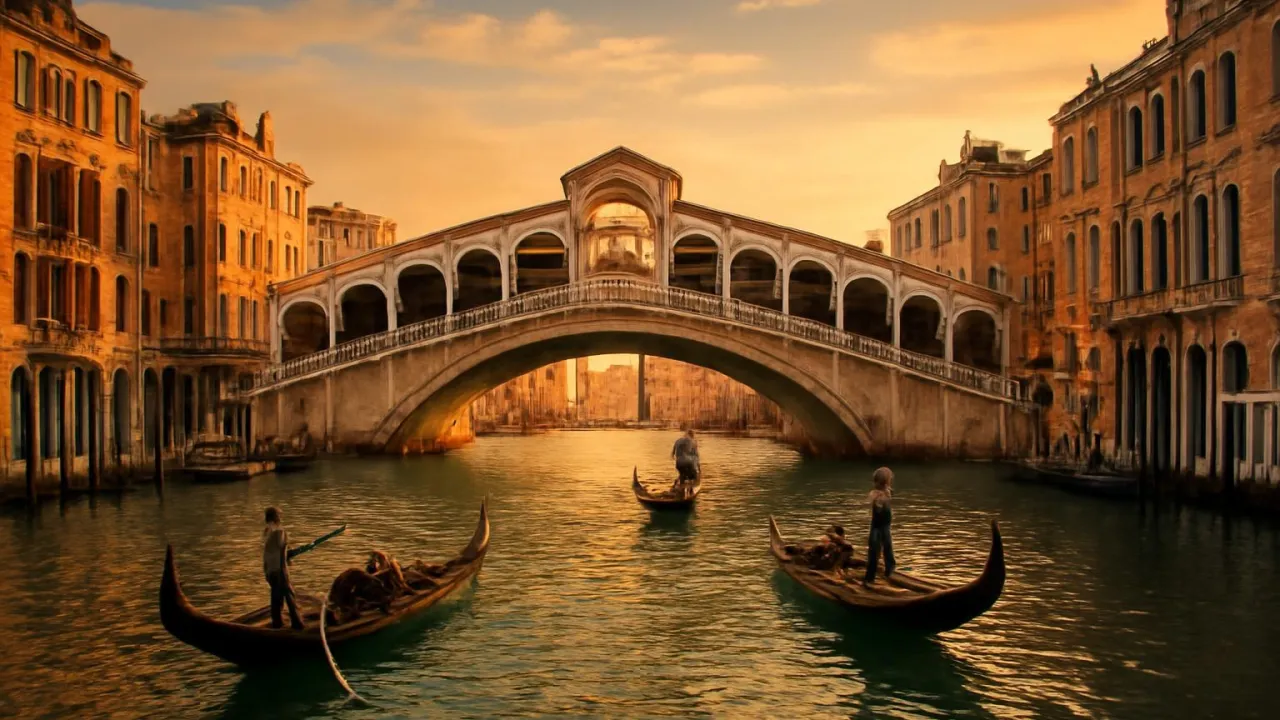
The Rialto Bridge was built without any modern machines or cranes!
✨ Word Sparks (Grade 2 Glossary)
Tap 🔊 to hear
Venice
A city built on water in Italy
bridge
Something that lets you cross over water
stone
A hard material used to build things
🪝
Can you imagine living in a city where boats pass your window?
1
Life on the Grand Canal
has a huge canal for boats. People ride gondolas and water buses every day. The canal is like a busy street, but it is all water.
2
The Strong Rialto Bridge
The Rialto is made of and has a big arch. It lets people walk over the canal while boats move under it. The bridge is strong and has lasted for centuries.
3
Color and Sound Everywhere
The canal is lined with colorful houses and shops. You hear water splashing and people talking as gondolas glide by. The is always full of people and excitement.
Venice’s buildings and bridges rest on over 1 million wooden piles driven into the mud!
✨ Word Sparks (Grade 3 Glossary)
Tap 🔊 to hear
vibration
A shaking or moving back and forth
foundation
The base that holds something up
lagoon
A shallow body of water near the sea
🪝
What if your school bus floated down a sparkling canal each morning?
1
Venice: The Floating City
Venice is famous for its winding canals instead of roads. The Grand Canal is the city's main waterway, curving through the heart of Venice. People travel by gondolas, water taxis, and vaporettos instead of cars. The city feels magical with water everywhere you look.
2
The Rialto Bridge’s Arch
The Rialto Bridge is the oldest stone bridge crossing the Grand Canal. Its strong stone arch was designed to support crowds and busy markets. The arch shape helps spread weight across the bridge, making it sturdy and stable. Boats and gondolas pass underneath, gliding through the archway.
3
Building on Water
Venice stands on wooden piles driven deep into muddy ground. These piles keep the buildings from sinking into the soft earth. The Rialto Bridge’s uses hundreds of wooden supports for stability. This clever engineering lets the city float above the ’s shifting waters.
4
Sights, Sounds, and Markets
The Grand Canal is lined with colorful palaces and lively markets. You hear the splash of oars, the ring of church bells, and voices from busy shops. The Rialto Bridge has shops built right on it, selling souvenirs and snacks. Every day, people and visitors fill the bridge with excitement.
The Rialto Bridge’s single arch was once considered an engineering risk, but it has lasted over 400 years!
✨ Word Sparks (Grade 4 Glossary)
Tap 🔊 to hear
erosion
When water or wind wears things away
Istrian limestone
A strong white rock from Italy
pile
A long pole driven into the ground
🪝
Can you picture a city where the streets ripple with water and bridges float above boats?
1
Venice’s Canal Maze
Venice is a city built on more than 100 small islands, all connected by a maze of canals. The Grand Canal is the largest and most important, curving in a giant S-shape through the city. Instead of cars, people use boats to travel, making Venice feel like a floating wonderland. The canal’s banks are lined with centuries-old palaces, their reflections shimmering in the moving water.
2
Rialto Bridge: Renaissance Marvel
The Rialto Bridge, completed in 1591, is the oldest stone bridge over the Grand Canal. Its single stone arch spans 48 meters, designed to distribute heavy loads from markets and crowds. The bridge is built from , a strong rock that resists from water and salt. Shops line both sides of the bridge, making it a lively hub for Venetians and visitors alike.
3
Engineering on Unstable Ground
Venice’s buildings and bridges rest on millions of wooden driven deep into muddy lagoon soil. These piles, made from water-resistant alder and larch wood, create a stable foundation by locking together underground. The Rialto Bridge’s foundation uses more than 12,000 wooden piles to support its massive stone arch. This ingenious engineering keeps the bridge and nearby buildings safe from sinking or tilting.
4
Life and Culture Along the Canal
The Grand Canal is not just a waterway, but a center of daily life and celebration. Gondoliers sing as they row, market sellers call out from their stalls, and church bells echo across the water. The Rialto Bridge has been the heart of Venice’s trade and festivals for centuries, connecting people from all over the world. Today, millions visit each year to experience its beauty, history, and vibrant culture.
1. Why does the Rialto Bridge use Istrian limestone?
2. What helps Venice’s buildings stay upright on soft ground?
🤯 Mind-Blowing Fact • Grade 5
The Rialto Bridge’s massive stone arch was once considered so risky that some architects predicted it would collapse—yet it has endured for more than four centuries!
✨ Word Sparks (Grade 5 Glossary)
Tap 🔊 to hear
resilience
The ability to stay strong and last
petrified
Turned into stone over a long time
civil engineering
Designing and building big structures like bridges
🪝
Imagine the echo of church bells and gondoliers’ songs drifting beneath a marble arch over a watery highway—how did engineers make this possible for centuries?
1
Venice’s Aquatic Architecture
Venice’s Grand Canal forms the city’s main aquatic artery, winding for 2.4 miles in a dramatic S-shape through Italy’s Veneto region. The city itself is constructed atop a mosaic of 118 islands, all interconnected by more than 400 bridges and a labyrinth of canals. Instead of cars or buses, Venetians rely on gondolas, vaporettos, and water taxis to traverse their unique urban landscape. The constant interplay between land and water shapes every aspect of life, from transportation to building design.
2
The Engineering Genius of the Rialto Bridge
The Rialto Bridge, completed in 1591, is a masterpiece of Renaissance engineering and one of the most recognizable landmarks in Venice. Its single stone arch spans 48 meters (157 feet), constructed from thousands of blocks of dense Istrian limestone. The arch’s design distributes weight efficiently, allowing the bridge to support heavy pedestrian and commercial traffic without collapsing. At the time, many doubted a single-arch stone bridge could withstand the forces of gravity and vibration from bustling markets, but its has proven legendary.
3
Building Foundations in a Lagoon
Venice’s buildings and bridges, including the Rialto, are supported by millions of wooden piles driven deep into the lagoon’s muddy bed. These piles, typically made from water-resistant alder and larch, become over time as mineral-rich water replaces the wood’s organic material. The Rialto Bridge alone rests on more than 12,000 piles, creating a stable base that prevents sinking and resists the erosive forces of tides and boat traffic. This innovative foundation system is a triumph of early .
4
Cultural and Economic Impact
For centuries, the Grand Canal and Rialto Bridge have served as Venice’s commercial and social heart. The bridge became the city’s main marketplace, lined with shops and bustling with merchants from across Europe and Asia. The canal enabled the movement of goods, people, and ideas, transforming Venice into a powerful trading empire. Today, the area remains a vibrant center for tourism, art, and cultural exchange, attracting millions of visitors each year who marvel at its architectural and historical legacy.
5
Challenges and Preservation
Venice faces ongoing challenges from rising sea levels, increased boat traffic, and the effects of erosion and pollution on its ancient structures. Engineers and conservationists use advanced monitoring, underwater repairs, and careful restoration to preserve the Rialto Bridge and the city’s historic canals. The Grand Canal and Rialto Bridge stand as enduring symbols of human ingenuity, , and the delicate balance between civilization and nature in a city built on water.