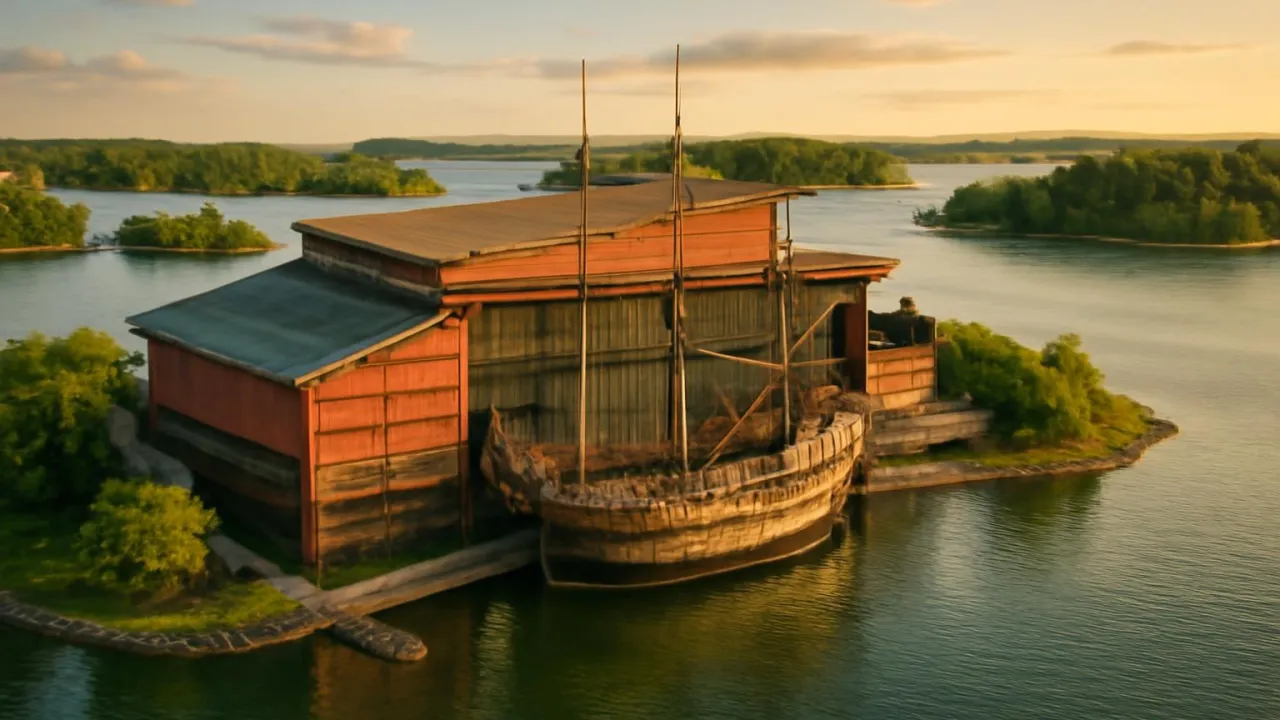
Vasa Museum & Stockholm Archipelago
A Sunken Ship and Swedenโs Island Maze
The Vasa was hidden underwater for 333 years!
What if you found a giant ship under the sea?
1 A Big Ship Under Water
The Vasa was a huge . It sank long ago. People found it deep underwater. Now it sits in a .
2 Islands All Around
The is near many . Boats sail between these islands. The water sparkles in the sun. Birds fly high above.
3 Come and See
You can visit the . You can see the real . You can look at old things. It feels like a sea adventure.
1. Where was the Vasa found?
2. What can you see at the museum?
The Vasa has over 700 carved wooden sculptures on its sides!
Have you ever imagined seeing a real sunken ship up close?
1 The Lost Ship
Long ago, the Vasa ship sank in the sea. It was covered by mud and water for hundreds of years. People worked hard to lift the ship out. Now, it stands inside a big museum.
2 Islands and Boats
The museum is in Stockholm, near many tiny green islands. These islands are called an , and boats travel between them every day. Visitors love to ride boats and watch the sparkling water.
3 A Special Visit
At the museum, you can see the Vasaโs wooden sides and tall . You can also look at old objects found on the ship. It feels like stepping back in time to a sea adventure.
1. What is an archipelago?
2. What can you see on the Vasa?
The Vasaโs wood is so well-preserved that you can still see the original carvings from 1628!
Can you imagine discovering a giant wooden ship after hundreds of years underwater?
1 A Ship from the Past
The Vasa was a warship built in Sweden almost 400 years ago. On its very first voyage in 1628, it tipped over and sank in Stockholmโs harbor. For centuries, the ship lay hidden in cold, dark mud at the bottom of the Baltic Sea. In 1961, scientists carefully raised the Vasa to the surface.
2 A Museum Like No Other
Today, the Vasa Museum lets visitors see the real ship up close. The museum keeps the ship safe from light and moisture, which can cause and damage. You can walk around the ship and look at the carved wooden figures and tall masts. It feels like stepping into a time machine from the 1600s.
3 The Stockholm Archipelago
The museum sits near the Stockholm Archipelago, a maze of over 30,000 islands. These islands were shaped by during the last Ice Age, leaving behind rocky shores and green forests. Boats and ferries glide between the islands, making the area lively and full of adventure. The archipelago is a special place for wildlife and people.
4 How Did the Vasa Survive?
The cold, low-oxygen water of the Baltic Sea helped the Vasaโs wood. Scientists used special chemicals to stop the wood from drying out and cracking. The museum controls temperature and humidity to keep the ship safe for future generations. Thanks to science and engineering, the Vasa is the worldโs best-preserved ship from the 1600s.
1. Why did the Vasa survive so long underwater?
2. How were the archipelago islands formed?
The Vasa Museum attracts more visitors each year than any other museum in Scandinavia!
What secrets would you find if you explored a shipwreck hidden for centuries beneath icy waters?
1 The Vasaโs Dramatic Journey
In 1628, the Vasa set sail as one of Swedenโs most powerful warships, but it tragically sank just minutes into its first voyage. For 333 years, the Vasa rested in the cold, low-oxygen mud of Stockholmโs harbor, protected from most forms of erosion and decay. In 1961, marine engineers and led a complex operation to raise the ship from the Baltic Sea. The Vasaโs recovery became one of the worldโs greatest salvage stories.
2 A Museum Built for a Ship
The Vasa Museum was specially designed to preserve the fragile wooden ship and its hundreds of carved sculptures. Engineers created a climate-controlled environment to manage humidity and temperature, preventing further deterioration. Visitors can walk around multiple levels to view the shipโs hull, cannons, and intricate decorations up close. The museum displays artifacts, tools, and even clothing found with the ship, offering a vivid window into 17th-century Swedish life.
3 Stockholmโs Island Labyrinth
The museum stands at the edge of the Stockholm Archipelago, a network of over 30,000 islands formed by retreating glaciers after the last Ice Age. These islands, with their rocky coasts and dense forests, create a unique habitat for birds, seals, and people alike. Ferries and small boats weave through narrow channels, connecting villages and nature reserves across the archipelago. This landscape is a favorite destination for explorers, artists, and scientists.
4 Science Behind the Preservation
The Vasaโs survival is due to both natural and scientific factors. The Baltic Seaโs cold, brackish water lacks shipworm, a creature that destroys wood in saltier seas. After raising the ship, conservators sprayed it with , a chemical that replaces water in the wood and prevents shrinking. Today, advanced monitoring systems track the shipโs condition, and ongoing research helps protect this rare piece of history.
1. Why doesnโt the Baltic Sea have shipworm?
2. What do visitors see at the Vasa Museum?
The Vasa contains over 98% of its original wood, making it the most complete ship of its era ever found.
Imagine uncovering a perfectly preserved 17th-century warship and exploring a maze of islands shaped by ancient iceโwhat stories would you discover?
1 The Vasa: Swedenโs Sunken Time Capsule
In 1628, the Vasa, a grand warship commissioned by King Gustavus Adolphus, set out on its maiden voyage but catastrophically capsized and sank within minutes due to design flaws and overloading. For more than three centuries, the ship remained entombed in the cold, low-oxygen sediments of Stockholm harbor, its wooden structure shielded from destructive organisms and erosion. The Vasaโs rediscovery in the 1950s sparked a massive engineering and archaeological effort, culminating in its dramatic salvage in 1961. Today, the Vasa stands as the worldโs most complete and best-preserved 17th-century warship, offering an unparalleled glimpse into early modern naval engineering and maritime life.
2 Engineering the Vasa Museum
The Vasa Museum was meticulously engineered to house and conserve the fragile ship, which measures 226 feet (69 meters) in length and contains over 700 hand-carved sculptures. The buildingโs climate-control systems maintain stable humidity and temperature levels to prevent the wood from shrinking, warping, or developing mold. Engineers installed advanced sensors to monitor the shipโs condition, while conservators continually analyze the effects of salts and acids released from the wood. The museumโs multi-level walkways allow visitors to study the ship from keel to mast, while interactive exhibits reveal the science behind its preservation.
3 Stockholm Archipelago: A Glacial Masterpiece
Surrounding Stockholm and the museum lies the Stockholm Archipelago, a sprawling natural wonder formed by glacial retreat after the last Ice Age, approximately 10,000 years ago. The archipelago comprises more than 30,000 islands, skerries, and rocky outcrops, stretching over 50 miles (80 kilometers) into the Baltic Sea. These islands are characterized by rugged granite shores, dense pine forests, and diverse ecosystems supporting seals, seabirds, and rare plants. Ferries, kayaks, and sailing boats navigate the intricate waterways, connecting communities and offering endless opportunities for exploration and scientific study.
4 Science and Innovation in Preservation
The Vasaโs extraordinary state of preservation is attributed to the Baltic Seaโs unique chemistryโits brackish, low-oxygen water prevents shipworm infestations and slows bacterial decay. After recovery, conservators treated the ship with polyethylene glycol (PEG), a that penetrates the woodโs cellular structure and replaces water, preventing collapse as the wood dries. This process took nearly two decades and required continuous scientific monitoring. Today, researchers use digital modeling, X-ray imaging, and chemical analysis to study the shipโs ongoing preservation challenges and to develop new techniques for conserving maritime heritage worldwide.
5 Cultural and Global Significance
The Vasa Museum is Scandinaviaโs most visited museum, attracting over a million visitors annually and serving as a hub for maritime research and education. The shipโs story highlights the importance of learning from engineering failures and the value of international collaboration in cultural heritage preservation. The Stockholm Archipelago, meanwhile, is recognized for its ecological richness and is protected as a UNESCO . Together, the Vasa and the archipelago symbolize Swedenโs deep connection to the sea, blending natural beauty, scientific discovery, and lessons from the past into a living classroom for the world.
1. What chemical was used to preserve the Vasaโs wood after it was raised?
2. Why is the Stockholm Archipelago considered a biosphere reserve?