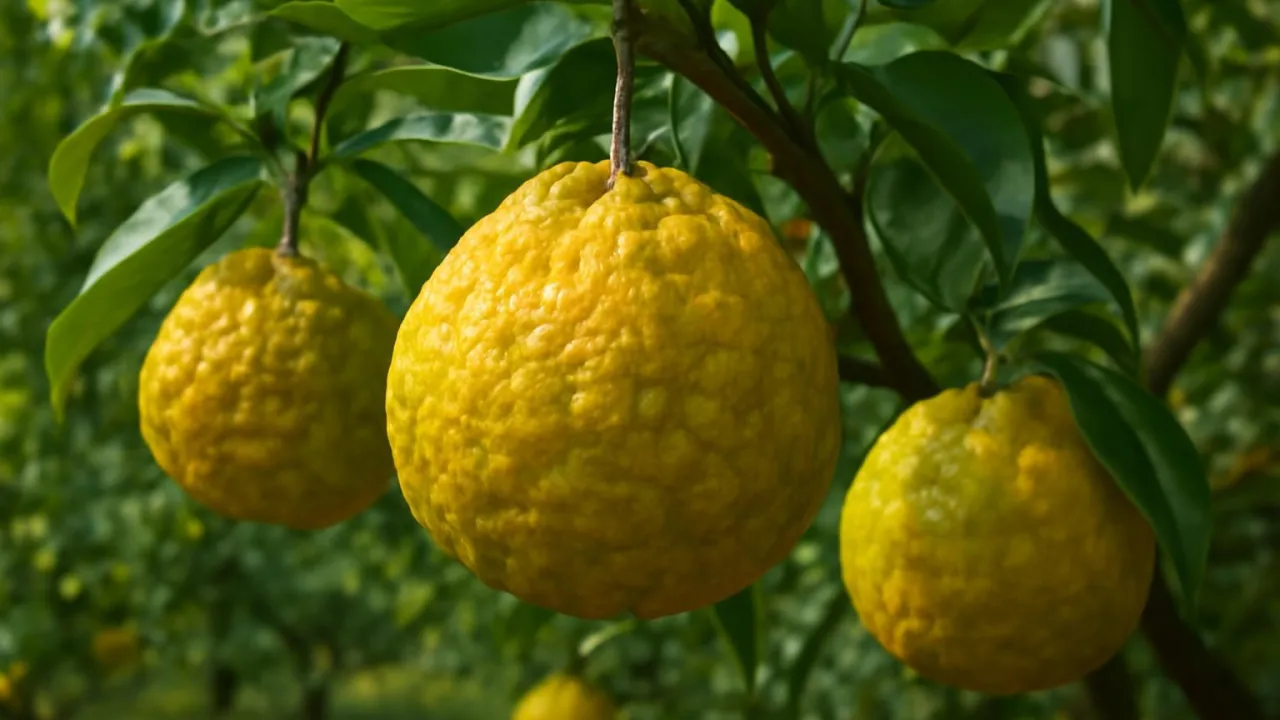
Ugli fruit is a natural hybrid of three citrus fruits: grapefruit, orange, and tangerine!
✨ Word Sparks (Grade 2 Glossary)
Tap 🔊 to hear
hybrid
A mix of two or more different plants or animals
tropical
Warm places near the equator with lots of sun
vitamin
A nutrient that helps your body stay healthy
🪝
Have you ever seen a fruit that looks ugly but tastes great?
1
Ugli Fruit’s Unique Look
The ugli fruit has thick, wrinkly skin that is yellow and green. It is round and about the size of a grapefruit. Its rough skin helps protect the juicy fruit inside from insects and sun damage.
2
Where Ugli Fruit Grows
Ugli fruit trees grow best in warm, places like Jamaica. They need full sunlight and plenty of water to grow healthy fruits. Farmers pick the fruit when it is ripe and ready to eat.
3
Tasty and Healthy Fruit
This fruit tastes sweet and tangy, a mix of orange, grapefruit, and tangerine flavors. It is full of C, which helps keep people healthy. Many people enjoy eating ugli fruit fresh or in juices.
Ugli fruit’s thick, wrinkly skin is a natural camouflage that helps protect it from predators.
✨ Word Sparks (Grade 3 Glossary)
Tap 🔊 to hear
camouflage
Colors or shapes that help hide something
hybridization
When two plants mix to make a new kind
immune system
Body parts that fight sickness and germs
🪝
What makes the ugli fruit look so wrinkly but taste so sweet?
1
Appearance and Adaptation
The ugli fruit has thick, rough, and wrinkly skin that helps protect it from pests and sun damage. Its uneven surface is an adaptation to its tropical environment. This helps it blend with leaves and branches. The fruit is usually yellow-green and round, about six inches wide.
2
Where It Grows and Thrives
Ugli fruit trees grow in warm tropical climates, mainly in Jamaica. They need plenty of sunlight and regular watering to produce juicy fruits. The trees are part of citrus orchards where farmers carefully care for them. The warm weather helps the fruit develop its unique flavor.
3
Taste and Nutrition
Ugli fruit tastes like a mix of grapefruit, orange, and tangerine with a sweet and tangy flavor. It is rich in vitamin C, which supports the . The juicy flesh inside is easy to peel and eat. This fruit is popular for fresh eating and making juices.
4
Interesting Citrus Hybrid
Ugli fruit is a natural hybrid, meaning it comes from crossing three citrus fruits: grapefruit, orange, and tangerine. This gives it unique traits like thick skin and sweet taste. It is part of the citrus family, which includes many common fruits. Hybrid fruits often have advantages like better flavor or pest resistance.
Ugli fruit’s tough skin helps it last longer after harvest, reducing food waste in tropical markets.
✨ Word Sparks (Grade 4 Glossary)
Tap 🔊 to hear
biodiversity
Many different kinds of plants and animals living together
seed dispersal
How seeds spread to grow new plants far away
sustainable
Using resources carefully to protect nature
🪝
How does the ugli fruit’s wrinkly skin help it survive in tropical ecosystems?
1
Protective Skin and Survival
The ugli fruit’s thick, wrinkly skin acts as a natural shield against insects and harsh sunlight, helping it survive in tropical climates. This tough outer layer reduces water loss and prevents damage from predators. Because of this adaptation, the fruit can grow larger and stay fresh longer. Its rough texture also makes it harder for animals to eat the fruit before it is ripe.
2
Role in Tropical Food Webs
Ugli fruit trees provide food for many animals such as birds and insects, which help spread the fruit’s seeds. This supports forest growth and . Humans also harvest ugli fruit for fresh eating and juice production, linking the fruit to local agriculture. The fruit’s vitamin-rich flesh supports both wildlife and human health.
3
Growing Conditions and Geography
Ugli fruit grows best in tropical regions like Jamaica, where warm temperatures and high humidity provide ideal conditions. The trees require full sun and regular watering to produce juicy fruits. While it is mostly grown in Jamaica, the fruit is also cultivated in other warm climates. Its ability to thrive in these areas makes it an important crop for tropical farmers.
4
Human Impact and Agriculture
Farmers carefully cultivate ugli fruit trees to maximize fruit quality and yield, using practices to protect the environment. The fruit’s popularity has increased demand, encouraging more plantations. However, habitat loss and climate change can threaten tropical agriculture. Efforts to maintain healthy ecosystems help ensure that ugli fruit continues to grow well.
1. How does the ugli fruit’s skin help it survive?
2. What role do animals play with ugli fruit?
🤯 Mind-Blowing Fact • Grade 5
Ugli fruit’s thick rind and hybrid genetics give it a longer shelf life than most citrus fruits.
✨ Word Sparks (Grade 5 Glossary)
Tap 🔊 to hear
hybridization
Crossing two plants to make a new kind
antioxidants
Natural helpers that protect cells from harm
genetic diversity
Many different genes in a plant family
🪝
What scientific marvels make the ugli fruit a unique citrus hybrid with valuable traits?
1
Taxonomy and Botanical Origins
Ugli fruit, scientifically known as Citrus reticulata × Citrus paradisi, is a natural hybrid between a tangerine and a grapefruit. This combines the genetic traits of three citrus species, resulting in a fruit with thick, rough skin and a unique flavor profile. It belongs to the Rutaceae family, which includes many economically important citrus fruits. The fruit was first discovered growing wild in Jamaica during the early 20th century.
2
Physiological Adaptations and Mechanics
The ugli fruit’s thick, wrinkled rind functions as a protective barrier against ultraviolet radiation and insect predation. Its skin contains oils that deter pests and reduce water loss, helping the fruit maintain moisture in tropical heat. Internally, the fruit’s juicy segments are rich in vitamin C and , which protect cells from damage. The peel is relatively easy to remove despite its tough appearance, facilitating consumption.
3
Conservation and Agricultural History
Since its discovery, ugli fruit has been cultivated selectively to improve yield, flavor, and pest resistance. Jamaican farmers have played a key role in preserving the fruit’s through sustainable agricultural practices. Despite its limited geographic range, the fruit’s commercial popularity has expanded globally. Conservation efforts focus on maintaining healthy orchards and adapting cultivation to climate change challenges.
4
Ecological and Economic Significance
Ugli fruit contributes to tropical ecosystems by providing food for wildlife, which aids in seed dispersal and forest regeneration. Economically, it supports local farmers through domestic sales and export markets. The fruit’s ability to resist pests reduces the need for chemical pesticides, benefiting environmental health. Its unique flavor also encourages culinary innovation and consumer interest in exotic fruits.
5
Quantitative Comparisons and Growth
Typically, ugli fruit measures 4 to 6 inches (10 to 15 centimeters) in diameter and weighs between 8 and 12 ounces (225 to 340 grams). It grows on trees that can reach heights of 15 to 20 feet (4.5 to 6 meters). The fruit’s thick rind can tolerate temperatures up to 95 degrees Fahrenheit (35 degrees Celsius). Compared to other citrus fruits, ugli fruit has a longer shelf life due to its protective skin.