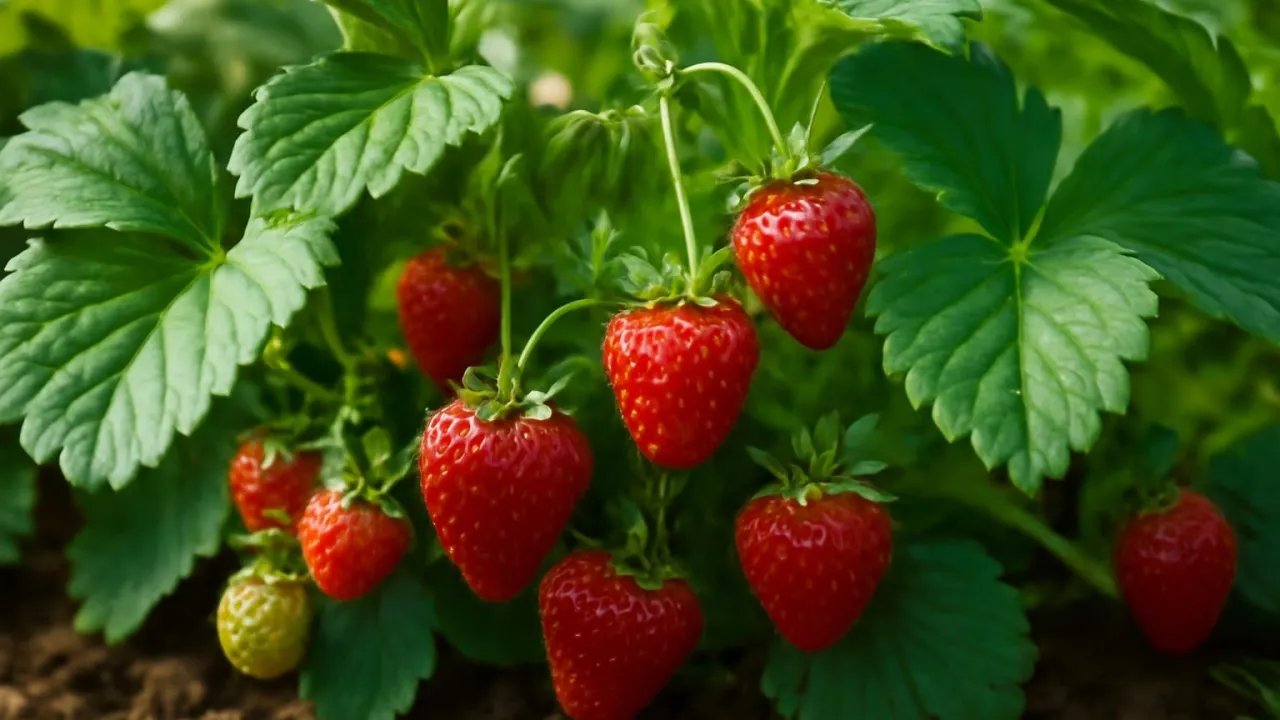
Strawberries are the only fruit with seeds on the outside, not inside!
✨ Word Sparks (Grade 2 Glossary)
Tap 🔊 to hear
pollination
When bees help flowers make fruit
fruit
The sweet part of a plant you can eat
seed
A tiny part that can grow a new plant
🪝
Have you ever noticed how strawberries show their seeds outside?
1
Strawberries Are Bright and Sweet
Strawberries grow bright red and smell very sweet. They have many tiny on their outside. Birds and insects like to eat these juicy .
2
How Strawberries Grow
Strawberry plants grow low to the ground in sunny places. They start as small flowers that bees visit often. After , the flowers turn into strawberries.
3
Special Strawberry Features
Strawberries are special because their are outside the . This helps the seeds spread when animals eat the berries. People grow strawberries in gardens and farms.
1. What do animals do to help strawberry seeds spread?
2. What part of the strawberry plant do bees visit?
🤯 Mind-Blowing Fact • Grade 3
Strawberries are accessory fruits with seeds called achenes on their outside surface.
✨ Word Sparks (Grade 3 Glossary)
Tap 🔊 to hear
accessory fruit
Fruit made from parts besides the flower’s ovary
achenes
Tiny fruits on strawberry skin with one seed inside
pollinator
An animal that helps flowers make fruit
🪝
Did you know strawberries are not true berries by botanical rules?
1
Strawberry’s Unique Fruit
Strawberries are called because the red part is not the ovary. The tiny seeds on the outside are called . Each achene is actually a separate fruit with one seed inside. This unusual structure helps strawberries spread their seeds.
2
How Strawberries Grow and Adapt
Strawberry plants grow low and spread runners to make new plants. Their leaves help catch sunlight for photosynthesis. Flowers attract like bees, which help with fertilization. This process leads to fruit development, ensuring the plant’s survival.
3
Strawberries in Their Habitat
Strawberries grow best in temperate climates with rich soil and good drainage. They need full sun and regular watering to thrive. Their bright red color and sweet smell attract animals, which helps spread seeds. This adaptation helps them survive in many environments.
4
Strawberry’s Role in Ecosystems
Strawberries provide food for many animals like birds and insects. They also support that help other plants grow. Humans cultivate strawberries for food and economic value. This plant plays an important role in food webs and agriculture.
Strawberries are the only fruits with seeds on the outside, aiding seed dispersal by animals.
✨ Word Sparks (Grade 4 Glossary)
Tap 🔊 to hear
achenes
Tiny fruits on the strawberry’s outside with one seed
pollination
Bees help flowers make fruit by moving pollen
ecosystem
A community of plants, animals, and their environment
🪝
How do strawberries spread their seeds without having seeds inside?
1
Strawberries’ Special Fruit Structure
Strawberries are unique because their seeds, called , grow on the outside of the red fruit. The red part is an enlarged stem called a receptacle, which supports seed spread. This structure helps animals easily find and eat the fruit. When animals eat strawberries, they help scatter the seeds in new locations.
2
Growing Conditions and Geographic Range
Strawberries thrive in temperate zones with well-drained, fertile soil and full sunlight. They require moderate watering and cooler temperatures to produce sweet fruits. Wild strawberries grow in forests and meadows across North America and Europe. Cultivated varieties are grown worldwide on farms and gardens.
3
Ecological Roles and Human Impact
Strawberries provide food for many animals such as birds, insects, and mammals, supporting local food webs. Pollinators like bees rely on strawberry flowers for nectar, which helps and fruit production. Humans cultivate strawberries extensively for fresh fruit and processed products, affecting through farming practices. Sustainable farming helps protect pollinators and soil health.
4
Cause and Effect in Strawberry Growth
When bees pollinate strawberry flowers, the fruit develops fully with many seeds on the outside. If is poor, fruits may be misshapen or small. Proper sunlight and water cause strawberries to grow sweet and juicy. Without these conditions, plants produce fewer fruits and weaker runners for spreading.
2. What happens if strawberry flowers are not well pollinated?
🤯 Mind-Blowing Fact • Grade 5
Strawberries are unique accessory fruits with seeds called achenes on the outside, unlike most fruits.
✨ Word Sparks (Grade 5 Glossary)
Tap 🔊 to hear
aggregate accessory fruit
Fruit from many small parts plus extra flower parts
stolons
Runners that spread and grow new strawberry plants
achene
Tiny fruit with one seed on strawberry’s surface
🪝
What makes the strawberry’s fruit structure unique among flowering plants?
1
Scientific Classification and Fruit Type
Strawberries belong to the genus Fragaria in the Rosaceae family, known for their . Unlike true berries, the fleshy red part is an enlarged receptacle, while the actual fruits are tiny on the surface. This botanical distinction highlights strawberries as accessory fruits, a rare adaptation in angiosperms.
2
Physiological Mechanics of Growth
Strawberry plants propagate via called runners, which root to form genetically identical clones. Photosynthesis in trifoliate leaves produces carbohydrates that fuel flower and fruit development. Pollination by bees transfers pollen between flowers, enabling fertilization and formation on the receptacle surface. Fruit ripening involves sugar accumulation and pigment changes, producing the characteristic red color.
3
Conservation and Agricultural History
Wild strawberries have been harvested for centuries, but modern garden strawberries originated from hybridization of North American and European species in the 18th century. Intensive cultivation has improved fruit size and flavor but also increased vulnerability to pests and diseases. Conservation efforts focus on preserving wild genetic diversity and promoting sustainable farming to protect pollinators and soil ecosystems.
4
Quantitative Comparisons and Environmental Needs
Strawberry plants typically grow 15 to 30 centimeters tall and produce fruits weighing 5 to 12 grams each. Optimal growth occurs at temperatures between 60 and 80 degrees Fahrenheit, with full sun exposure and consistent moisture. The plant’s runner growth rate can reach several centimeters per week, enabling rapid colony expansion. Fruit sugar content varies but averages around 7 to 10 percent by weight.
5
Ecological and Economic Importance
Strawberries serve as a vital food source for numerous wildlife species, contributing to local biodiversity and food webs. Pollinators such as honeybees and bumblebees depend on strawberry flowers for nectar, supporting ecosystem health. Economically, strawberries rank among the top soft fruits globally, with millions of tons produced annually. Their cultivation impacts agricultural practices, requiring integrated pest management and soil conservation.