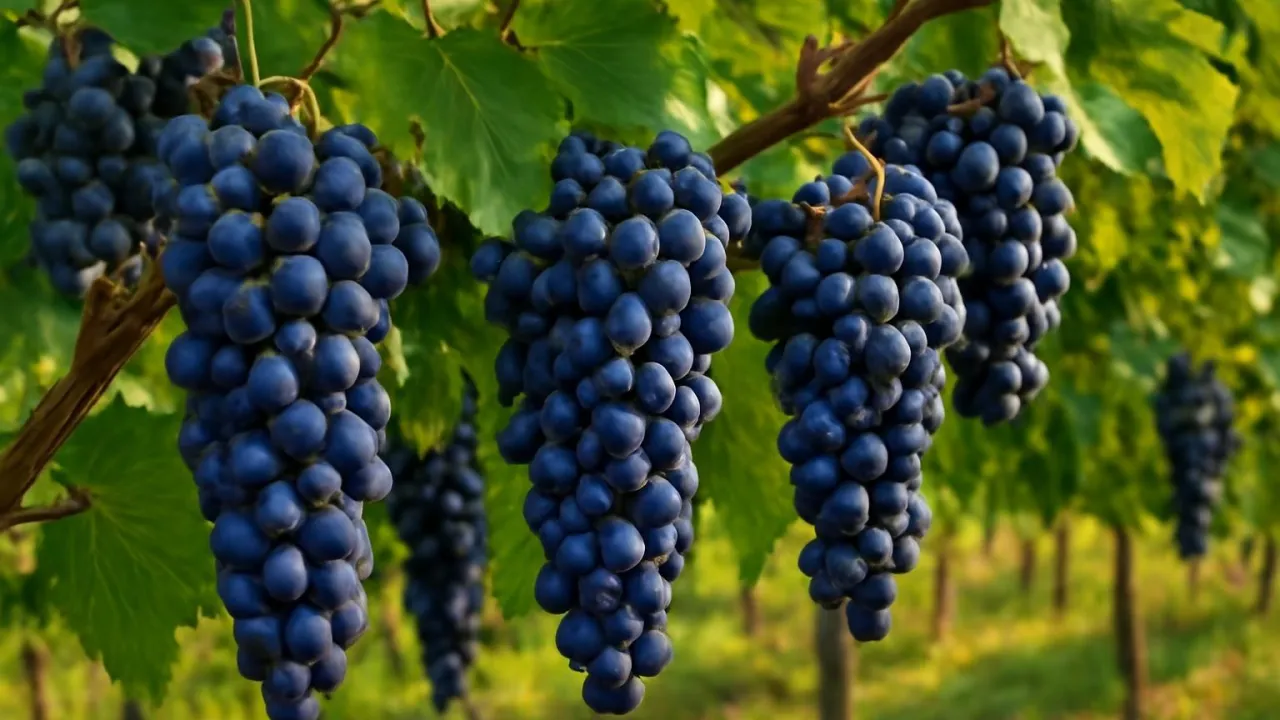
Concord grapes are used to make grape jelly, juice, and even candy!
✨ Word Sparks (Grade 2 Glossary)
Tap 🔊 to hear
vineyard
A place where grapes grow on many vines
skin
The outer part that covers the grape
tart
A sharp, sour taste like lemon
🪝
Did you know Concord grapes have a thick skin that slips off easily?
1
What Concord Grapes Look Like
Concord grapes are round and blue with thick that slips off easily. They grow in bunches on long vines. The grapes have a shiny, waxy coating that protects them.
2
Where Concord Grapes Grow
These grapes grow best in the northeastern United States where there is plenty of sun. They need good soil and water to grow healthy vines. Farmers often grow them in .
3
Why People Love Concord Grapes
Concord grapes taste sweet and a little , making them perfect for juice and jelly. Their strong fruity flavor is very popular. Kids and adults enjoy eating them fresh too.
Concord grapes’ slip-skin helps animals eat them easily and spread their seeds far away!
✨ Word Sparks (Grade 3 Glossary)
Tap 🔊 to hear
adaptation
A trait that helps plants survive better
pollination
When insects help flowers make fruit
nutrients
Food from soil that plants need to grow
🪝
Have you ever wondered why Concord grapes have a thick, slip-skin?
1
Appearance and Adaptation
Concord grapes have thick, blue skins that protect them from pests and weather. Their slip-skin peels off easily, helping animals eat them and spread seeds. This helps the plant survive and grow in forests and vineyards.
2
Growing Environment
These grapes thrive in temperate climates with warm summers and cold winters. They grow on woody vines that climb trees or trellises to reach sunlight. The vines absorb and water from the soil to support grape development.
3
Life Cycle and Pollination
Concord grapes start as small flowers that insects pollinate. After , grapes grow in clusters and ripen in late summer. The fruit provides food for many animals, which helps spread the seeds through droppings.
4
Human Uses and Flavor
People harvest Concord grapes to make juice, jelly, and wine. Their strong fruity flavor is unique and popular worldwide. The thick skin also helps keep the grapes fresh during transport and storage.
Concord grapes help spread seeds through animals, supporting forest growth and biodiversity.
✨ Word Sparks (Grade 4 Glossary)
Tap 🔊 to hear
ecosystem
A community of plants and animals living together
symbiosis
A helpful relationship between living things
biodiversity
Many different kinds of plants and animals
🪝
What role do Concord grapes play in their ecosystems and human life?
1
Ecological Role and Adaptations
Concord grapes serve as a food source for many animals, including birds and insects, which helps maintain local food webs. Their thick, slip-skin protects the fruit from harsh weather and pests, allowing the plant to reproduce successfully. This adaptation also encourages animals to disperse seeds, supporting forest regeneration.
2
Growth Conditions and Geographic Range
These grapes flourish in temperate regions of the northeastern United States where summers are warm and winters cold. They require well-drained soil, adequate sunlight, and moderate water to grow healthy vines. Farmers cultivate Concord grapes widely in vineyards, contributing to local agriculture and economy.
3
Human Uses and Economic Impact
Concord grapes are harvested for juice, jelly, and wine production, supporting many industries. Their unique flavor and thick skin make them ideal for transport and storage. The cultivation of Concord grapes provides jobs and benefits rural communities, illustrating an important symbiotic relationship between humans and plants.
4
Challenges and Conservation
Despite their hardiness, Concord grapes face threats from pests and diseases that can reduce yields. Sustainable farming practices and pest management help protect vineyards. Conserving native grape varieties maintains and ensures healthy for future generations.
2. Why is conserving native grape varieties important?
🤯 Mind-Blowing Fact • Grade 5
Concord grapes’ natural wax bloom protects them from water loss and helps keep them fresh longer.
✨ Word Sparks (Grade 5 Glossary)
Tap 🔊 to hear
phylloxera
Tiny insect that harms grapevine roots
bloom
Natural wax coating on grape skin
antioxidants
Substances that protect cells from damage
🪝
How do the unique features of Concord grapes influence their biology and human use?
1
Scientific Classification and Origin
Concord grapes belong to the species Vitis labrusca, native to the northeastern United States. They are part of the Vitaceae family, which includes many grapevine species. This species was first cultivated in Concord, Massachusetts, in the 19th century, and has since become a staple in American fruit agriculture.
2
Physiological Mechanics and Adaptations
The thick, slip-skin of Concord grapes is a physiological adaptation that protects the fruit from fungal infections and insect damage. This skin contains a natural wax called that helps reduce water loss. The grapevine’s woody stems support vigorous growth and enable the plant to climb and reach sunlight efficiently.
3
Conservation and Agricultural History
Concord grapes have been selectively bred for disease resistance and flavor, helping them thrive in varied climates. However, they still face threats from pests like grape and fungal diseases. Conservation efforts focus on maintaining genetic diversity to ensure long-term vineyard sustainability.
4
Quantitative Comparisons and Growth
Clusters of Concord grapes typically measure 2 to 4 inches in length and weigh about 100 to 200 grams. The vines can grow up to 30 feet long under ideal conditions. These grapes ripen in late summer, usually at temperatures between 70 and 85 degrees Fahrenheit, optimizing sugar content and flavor.
5
Economic and Nutritional Importance
Concord grapes contribute significantly to the juice and jelly markets, with millions of pounds harvested annually in the United States. They are rich in and vitamins, offering health benefits beyond their sweet taste. Their cultivation supports rural economies and preserves agricultural heritage, making them valuable worldwide. Additionally, Concord grapes have a unique slip-skin texture that distinguishes them from other grape varieties.