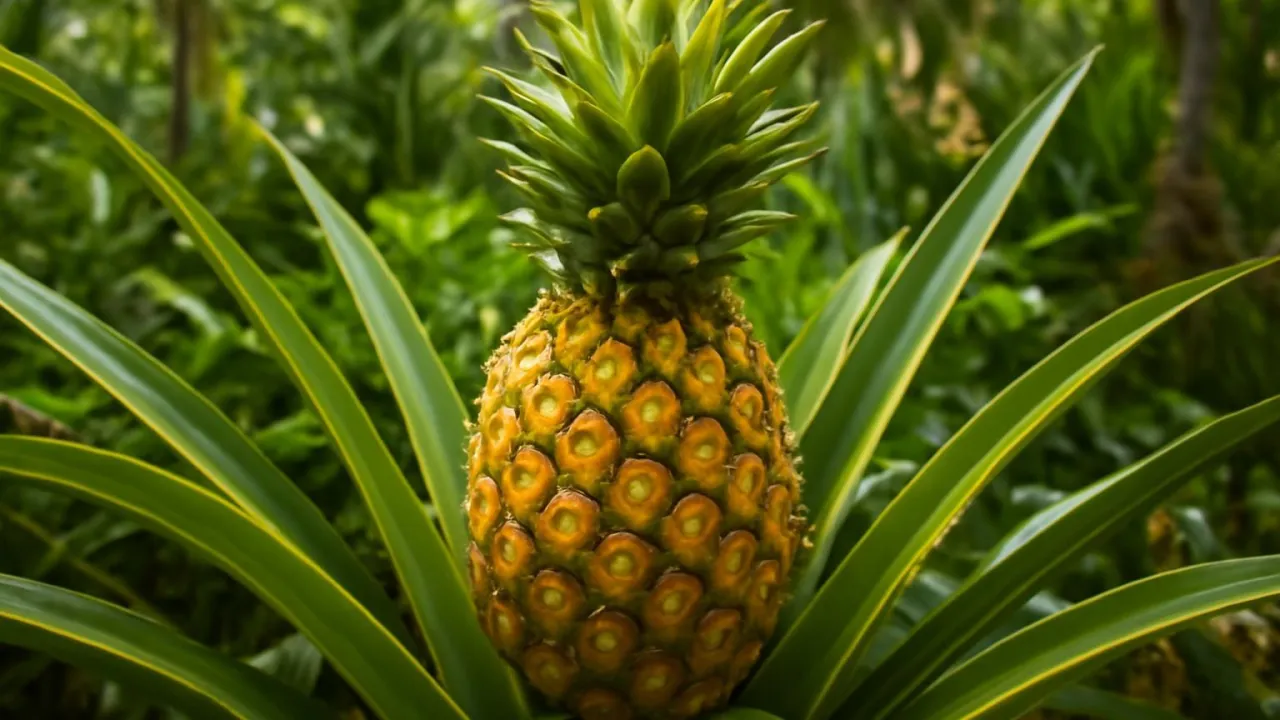
A pineapple is not just one fruit but many flowers fused into one big fruit!
✨ Word Sparks (Grade 2 Glossary)
Tap 🔊 to hear
tropical
Warm places near the equator
flowers
Parts of plants that make fruit
juicy
Full of tasty liquid inside
🪝
Have you ever seen a fruit that wears a spiky green crown?
1
Pineapple’s Home
Pineapples grow in places where it is warm and sunny. They need plenty of sunlight and water to grow well. Farmers plant them in fields and wait for the fruit to get big and sweet.
2
How Pineapples Grow
Each pineapple grows from many small that join together. This makes the fruit look spiky and rough on the outside. The leaves on top are sharp and green, like a crown.
3
Tasty and Juicy Fruit
Pineapples taste sweet and a little sour, and they are very . People eat them fresh, in fruit salads, or drink pineapple juice. They are a popular treat loved by many.
Pineapples grow from many flowers fused together, making one large fruit with spiky skin!
✨ Word Sparks (Grade 3 Glossary)
Tap 🔊 to hear
photosynthesis
How plants use sunlight to make food
seed dispersal
How seeds spread to grow new plants
adaptation
A change that helps plants survive
🪝
Did you know a pineapple is made of many tiny flowers fused into one fruit?
1
Pineapple’s Tropical Habitat
Pineapples thrive in tropical climates where temperatures stay warm year-round. They grow best in places with plenty of sunlight and well-drained soil. The warm weather helps the fruit develop its sweet flavor. Pineapples are often found on farms in countries like Brazil and Costa Rica.
2
Unique Growth and Structure
Unlike many fruits, a pineapple forms from many flowers that merge into a single fruit. This fusion creates the pineapple’s tough, spiky skin which protects it from predators. The green leaves on top help the plant collect sunlight for . This helps the pineapple survive in its environment.
3
Role in the Ecosystem
Pineapples provide food for many animals and insects that live in tropical forests. Their sweet taste attracts birds and small mammals who help spread seeds. This process is called and helps new pineapple plants grow. Pineapples also contribute nutrients to the soil when their leaves and fruit decay.
4
Delicious and Nutritious Fruit
The pineapple’s juicy flesh is rich in vitamins like vitamin C and manganese. People enjoy eating pineapple fresh or using it in cooking and drinks. Its sweet and tangy flavor makes it popular worldwide. Pineapples also contain enzymes that help digestion when eaten.
Pineapples’ spiky skin and sharp leaves protect them from animals and help them survive in hot, dry climates.
✨ Word Sparks (Grade 4 Glossary)
Tap 🔊 to hear
herbivores
Animals that eat plants
pollination
How flowers get pollen to make seeds
irrigation
Giving water to plants on farms
🪝
How does a pineapple’s spiky armor help it survive in tropical forests?
1
Tropical Origins and Growth
Pineapples originate from tropical regions in South America, especially Brazil and Paraguay, where warm temperatures and abundant sunlight promote healthy growth. They thrive in well-drained, sandy soils that prevent root rot. Because pineapples require full sun and moderate water, farmers carefully manage to optimize fruit sweetness and size.
2
Physical Adaptations for Protection
The pineapple’s tough, spiky skin serves as a defense mechanism against and pests that might eat the fruit before it ripens. This protective armor reduces damage and allows the fruit to mature fully. Additionally, the sharp, waxy leaves at the top help reduce water loss and deter animals from climbing the plant.
3
Role in Ecosystems and Human Use
Pineapples play an important role in tropical ecosystems by providing food for birds, insects, and mammals, which in turn assist with seed dispersal and . Humans cultivate pineapples extensively for their sweet fruit, which is consumed fresh, canned, or juiced worldwide. The cultivation of pineapples also impacts local economies and agricultural biodiversity.
4
Geographic Distribution and Cultivation
Today, pineapples are grown in tropical and subtropical regions globally, including Hawaii, the Philippines, Thailand, and parts of Africa. Their ability to adapt to different soils and climates has expanded their range. However, they still require warm temperatures and cannot survive frost, limiting their natural distribution.
1. Why does the pineapple have spiky skin and sharp leaves?
2. Where are pineapples grown today?
🤯 Mind-Blowing Fact • Grade 5
Pineapples are a multiple fruit formed from many flowers fused together, taking up to two years to ripen fully.
✨ Word Sparks (Grade 5 Glossary)
Tap 🔊 to hear
inflorescence
A group of flowers growing closely together
rosette
Leaves arranged in a circle at the plant base
genetic diversity
Variety of genes in plants for survival
🪝
What makes the pineapple’s unique growth and structure a marvel of tropical botany?
1
Taxonomy and Botanical Classification
The pineapple, scientifically named Ananas comosus, belongs to the Bromeliaceae family, which includes many tropical plants adapted to warm climates. Unlike typical fruits, the pineapple is a multiple fruit formed by the fusion of numerous individual flowers called , creating a single large composite fruit. This botanical structure distinguishes pineapples from simple fruits like apples or berries.
2
Physiological Mechanics of Growth
Pineapple plants grow from a central stem with a of tough, waxy leaves designed to reduce water loss in hot environments. Photosynthesis occurs in these leaves, providing energy for fruit development. The fruit itself develops from many flowers whose ovaries fuse, forming the characteristic spiny skin that protects the soft, edible interior. This complex growth process can take 18 to 24 months until the fruit is ripe.
3
Conservation and Agricultural History
Originally native to South America, pineapples were spread globally by explorers and have become a major commercial crop in tropical regions. Conservation efforts focus on preserving of wild pineapple species to maintain disease resistance and adaptability. Modern farming techniques include controlled irrigation and pest management to improve yield while reducing environmental impact.
4
Quantitative Comparisons and Growth Facts
A mature pineapple fruit typically weighs between 2 and 6 pounds (0.9 to 2.7 kilograms) and measures about 12 inches (30 centimeters) in height. Pineapple plants can tolerate temperatures ranging from 60 to 95 degrees Fahrenheit (15 to 35 degrees Celsius). The fruit’s sugar content increases as it ripens, reaching up to 16 percent, which gives it its sweet flavor.
5
Ecological and Economic Importance
Pineapples contribute to tropical ecosystems by supporting pollinators such as hummingbirds and bees, which are essential for biodiversity. Economically, pineapples are a vital export crop for many tropical countries, supporting livelihoods and local economies. Their versatile use in food, beverages, and even cosmetics highlights their broad cultural and commercial significance worldwide.