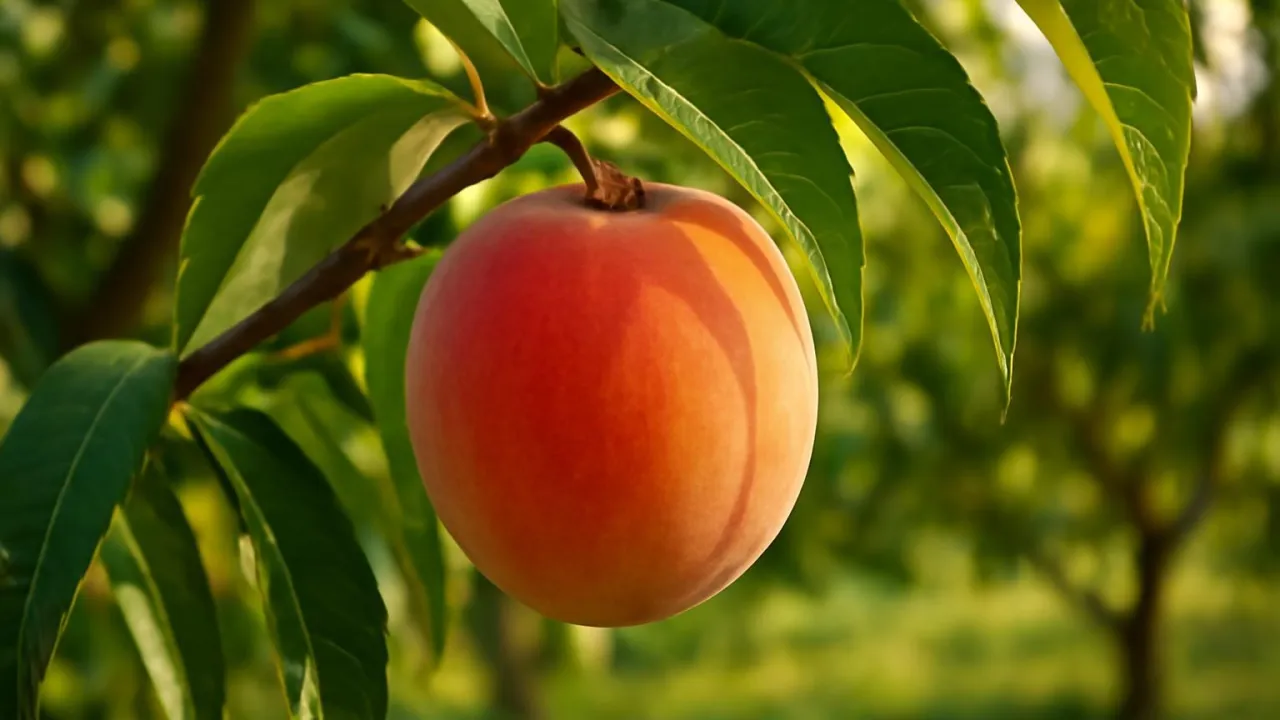
Peach fuzz helps keep the fruit safe from insects and sun damage.
✨ Word Sparks (Grade 2 Glossary)
Tap 🔊 to hear
flesh
The soft part you eat inside fruit
bloom
When flowers open on a tree
ripe
Ready to eat and tastes sweet
🪝
Have you ever tasted a peach that is soft and very sweet?
1
Peach Tree and Fruit
Peach trees grow in warm places and need lots of sunlight. Their fruits have fuzzy skin and juicy inside. People love to eat peaches fresh or in desserts.
2
Growing Peaches
Peach trees pretty pink flowers in spring before fruits grow. The fruit starts small and green, then turns yellow and orange when . It takes several months for peaches to fully grow and become sweet.
3
Special Peach Features
The fuzzy skin protects the peach from bugs and too much sun. Inside, the juicy tastes sweet and helps animals like birds and squirrels eat it. Peaches also have a hard pit in the center.
Peach fuzz is an adaptation that protects the fruit from pests and harsh sunlight.
✨ Word Sparks (Grade 3 Glossary)
Tap 🔊 to hear
pollination
When bees help flowers make fruit
adaptation
A way plants or animals survive better
nutrients
Good stuff inside food that helps growth
🪝
Did you know the peach’s fuzzy skin helps it survive in nature?
1
Peach Tree Habitat
Peach trees grow best in temperate climates with warm summers and cold winters. They need full sunlight to produce sweet fruit and enough water to stay healthy. Farmers plant peaches in orchards where the soil drains well.
2
Life Cycle of a Peach
In spring, peach trees bloom with pink flowers that attract pollinators like bees. After , small green fruits develop and grow larger through summer. By late summer, peaches ripen with fuzzy skin and juicy flesh ready to eat.
3
Adaptations of the Peach
The fuzzy skin acts as a natural defense against insects and sun damage, which helps the fruit survive. Inside, the sweet juicy flesh provides to animals that eat the fruit and spread its seeds. The hard pit protects the seed inside.
4
Peach Uses and Importance
Peaches are enjoyed fresh, canned, or baked into desserts worldwide. They provide food for wildlife and humans alike. Their cultivation supports farmers and contributes to local economies in many regions.
Peach fuzz reduces water loss and protects the fruit from harmful insects and sun damage.
✨ Word Sparks (Grade 4 Glossary)
Tap 🔊 to hear
dormancy
A resting time for trees in winter
dispersal
How seeds spread to new places
pollinators
Animals that help flowers make fruit
🪝
How does the fuzzy skin of a peach help it survive in different environments?
1
Peach Tree Environment
Peach trees thrive in temperate zones where winters are cold enough to trigger , and summers are warm for fruit ripening. They require well-drained soil and plenty of sunlight to grow healthy fruits. Without these conditions, peaches may not develop their signature sweetness and quality.
2
Growth and Life Cycle
In early spring, peach trees produce pink blossoms that attract such as bees, which are essential for fruit development. After successful pollination, the fruit forms and gradually enlarges throughout the warm months. By late summer, peaches ripen, developing fuzzy skin and sweet, juicy flesh ready to eat.
3
Ecosystem Role and Adaptations
The peach’s fuzzy skin acts as a protective barrier against pests and excessive sunlight, reducing water loss and damage. This adaptation helps the fruit survive until animals eat it, aiding seed . Peaches provide food for many animals, playing a key role in local food webs and biodiversity.
4
Human Impact and Distribution
Humans cultivate peaches worldwide, especially in the United States, China, and Europe, impacting agricultural economies. Farming practices influence peach quality and yield, while habitat changes can affect wild peach relatives. Sustainable farming helps preserve peach diversity and ecosystem health for future generations.
Peach fuzz not only protects the fruit but also reduces water loss by limiting evaporation through tiny hairs.
✨ Word Sparks (Grade 5 Glossary)
Tap 🔊 to hear
transpiration
Water loss from plants through tiny leaf pores
dormancy
A resting phase plants enter to survive winter
chilling hours
Cold hours needed to wake up fruit buds
🪝
What unique biological features allow peaches to thrive in temperate climates worldwide?
1
Scientific Classification and Origins
The peach, scientifically known as Prunus persica, belongs to the Rosaceae family and originated in northwest China. It was later cultivated and spread across Asia, Europe, and the Americas due to its desirable fruit qualities. This species thrives in temperate climates with distinct seasonal changes and requires specific conditions to flourish.
2
Physiological Adaptations and Growth
Peach trees undergo a winter period requiring to break bud rest and initiate flowering. Their fuzzy skin contains tiny hairs that reduce and protect against ultraviolet radiation and insect predation. The fruit’s juicy flesh contains sugars and antioxidants that attract animals for seed dispersal, ensuring species survival.
3
Conservation and Agricultural History
Peach cultivation has a rich history dating back thousands of years, with selective breeding improving fruit size, flavor, and disease resistance. Modern agriculture faces challenges like climate change and pests, prompting research into sustainable practices and genetic diversity conservation to maintain peach production worldwide and protect wild relatives.
4
Quantitative Growth and Environmental Needs
Peach trees typically grow between 15 and 25 feet tall, requiring 600 to 900 below 45°F (7°C) annually for proper bud development. Fruits mature in approximately 3 to 5 months after flowering, weighing around 5 to 7 ounces (140 to 200 grams). Optimal growth occurs in well-drained soils with pH between 6.0 and 7.5, ensuring nutrient availability.
5
Ecological and Economic Importance
Peaches contribute significantly to global fruit markets and support diverse ecosystems by providing food for wildlife and humans. Their role in food webs includes interactions with pollinators, seed dispersers, and predators. Sustainable peach farming balances economic benefits with environmental stewardship to ensure long-term viability and biodiversity preservation.