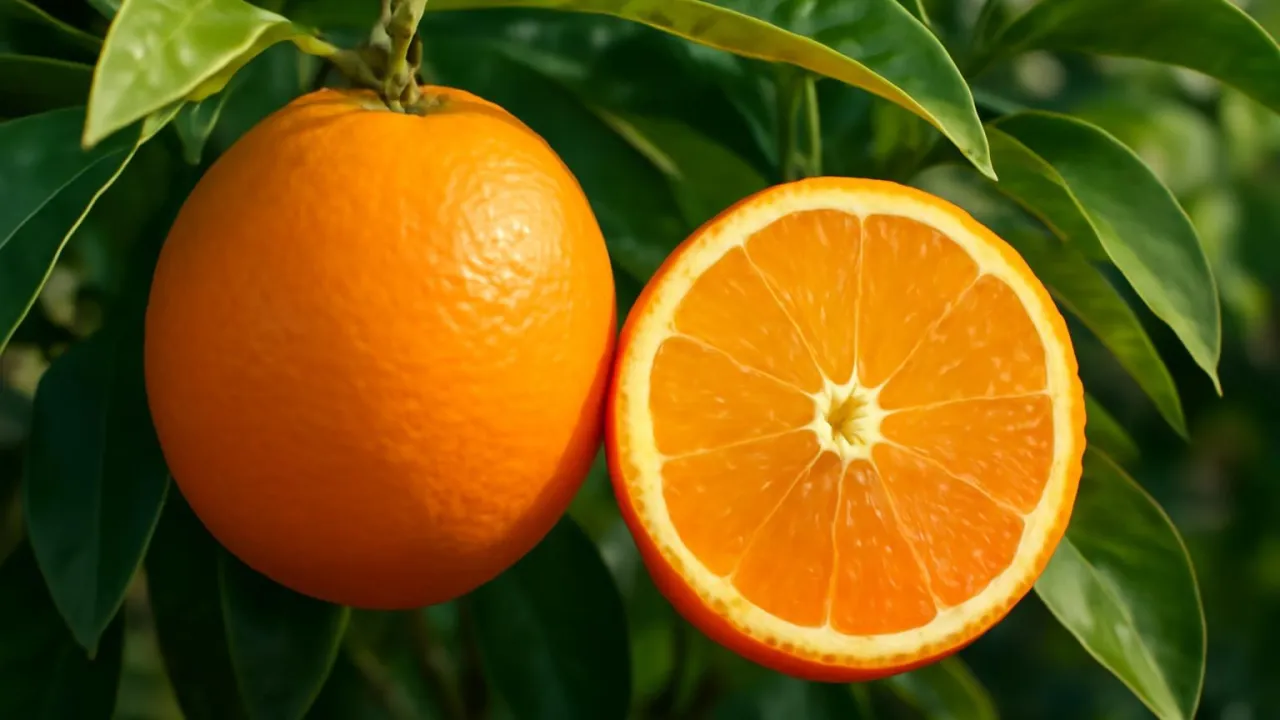
Navel oranges are seedless because of the tiny orange inside their belly!
✨ Word Sparks (Grade 2 Glossary)
Tap 🔊 to hear
juicy
Full of tasty liquid inside the fruit
ripe
Ready to eat because it is fully grown
belly button
A small round spot like on your tummy
🪝
Have you ever seen an orange with a little orange inside it?
1
Bright and Juicy Fruit
Navel oranges are bright orange and very . They grow on trees that love warm weather. People eat them fresh or drink their juice.
2
Where They Grow
Navel orange trees grow best in sunny, warm places. They need plenty of water and rich soil to grow strong. Farmers pick the oranges when they are and sweet.
3
The Navel Surprise
Each navel orange has a small second orange inside it. This tiny orange looks like a . It is a special feature not found in other oranges.
Navel oranges are naturally seedless because the tiny second fruit inside stops seed growth.
✨ Word Sparks (Grade 3 Glossary)
Tap 🔊 to hear
pollinators
Animals like bees that help flowers make fruit
nutrients
Food parts plants need to grow strong
adaptation
A special feature that helps plants survive
🪝
Did you know navel oranges have a secret fruit hidden inside their peel?
1
Navel Orange Traits
Navel oranges have bright orange skin that is thick and easy to peel. Their juicy flesh is sweet and seedless, making them perfect for eating fresh. The thick skin helps protect the fruit from pests and weather damage.
2
Growing in Warm Places
These oranges grow best in subtropical climates where sunlight is strong and temperatures are warm. The trees need rich soil and regular watering to absorb for healthy growth. They bloom white flowers that attract like bees.
3
The Navel Inside
A unique feature of the navel orange is a small, undeveloped second fruit inside its base. This smaller orange looks like a belly button, which is why it is called a navel. This makes the fruit seedless and easy to eat.
4
How Navel Oranges Help
Navel oranges provide vitamin C, which helps keep people healthy and strong. They also support farmers by being a popular fruit sold worldwide. Their thick skin helps reduce spoilage during shipping to distant markets.
The tiny second fruit inside navel oranges causes seedlessness, making them popular worldwide.
✨ Word Sparks (Grade 4 Glossary)
Tap 🔊 to hear
seedless
Fruit that does not have seeds inside
ecosystem
All plants and animals living in one place
cultivate
To grow plants for food or use
🪝
How does the navel orange’s secret fruit help it grow and thrive worldwide?
1
Adaptations for Survival
Navel oranges have thick, protective skin that helps prevent damage from insects and harsh weather conditions, which increases their chances of survival. Their nature is caused by the small second fruit inside, an adaptation that makes them easier to eat and more popular with consumers.
2
Role in Ecosystems and Agriculture
These oranges provide important nutrients like vitamin C to humans and animals, supporting health and well-being. The trees also offer shelter and food for various insects and birds, playing a role in local food webs. Farmers navel oranges extensively because they are easy to grow and sell well in markets worldwide.
3
Geographic Distribution
Originally from Brazil, navel oranges are now grown in subtropical regions such as California, Florida, and Mediterranean countries. They require warm temperatures and plenty of sunlight, which limits their growth to specific climates. Their ability to resist spoilage during transport helps them reach global markets efficiently.
4
Cause and Effect of Seedlessness
The presence of the small second fruit inside the navel orange prevents seed development, which causes the fruit to be . This seedlessness encourages more people to eat navel oranges, increasing demand and cultivation. As a result, farmers produce more trees to meet worldwide consumption needs.
Navel oranges develop seedless fruit due to a natural mutation causing a tiny second fruit inside.
✨ Word Sparks (Grade 5 Glossary)
Tap 🔊 to hear
parthenocarpy
Fruit grows without seeds or fertilization
grafting
Joining parts of two plants to grow one
cultivar
A plant variety grown for special traits
🪝
What unique biological traits make the navel orange a seedless fruit loved worldwide?
1
Taxonomy and Botanical Context
The navel orange, Citrus sinensis, belongs to the Rutaceae family, which includes many citrus fruits like lemons and grapefruits. Unlike many other fruits, the navel orange is a botanical fruit with a unique internal structure caused by a mutation. This mutation produces a secondary, undeveloped fruit inside the main fruit, giving it the characteristic 'navel' appearance.
2
Physiological Mechanics of Seedlessness
The seedlessness of the navel orange results from a form of , where the fruit develops without fertilization. The small secondary fruit inside prevents seed formation by disrupting normal ovule development. This physiological adaptation makes the fruit easier to eat and more desirable commercially, as consumers prefer seedless citrus.
3
Conservation and Agricultural History
Navel oranges were first discovered in Brazil in the early 19th century and introduced to California in the 1870s, where they became a major commercial crop. Their seedless trait required propagation through rather than seeds, ensuring genetic consistency. Conservation efforts focus on protecting these from diseases like citrus greening that threaten global citrus production.
4
Quantitative Comparisons and Growth Conditions
Navel oranges typically measure between 3 and 6 inches in diameter and weigh about 5 to 7 ounces (140 to 200 grams). They require subtropical climates with temperatures ranging from 55 to 100 degrees Fahrenheit (13 to 38 degrees Celsius) and at least 40 inches (100 cm) of annual rainfall or irrigation. Their thick peel helps reduce water loss and protects against pests during shipping over thousands of miles.
5
Economic and Nutritional Importance
Navel oranges are a major source of vitamin C, providing about 70 milligrams per medium fruit, which supports immune health. They contribute significantly to the global citrus market, with millions of tons produced annually. Their seedless nature and sweet flavor have made them a preferred variety for fresh consumption and juice production worldwide.