🇺🇸 U.S. HISTORY
🏛️ Constitutional Decennial Enumeration • Article I, Section 2 (Since 1790)
VA History & Social Science SOL K.1, 1.2, 2.4, VS.1–VS.10, USI & USII
U.S. Census Every 10 Years
America's Giant Once-a-Decade Count of Every Neighbor
Grade 1 • Early Reader • 60 words
⏳ Era / StatehoodFirst Count in 1790 • Every Year Ending in '0'
🗺️ Region / CapitalAll 50 States, D.C. & U.S. Territories (331+ Million People)
📜 Key MilestoneDivides 435 House Seats & Guides Community Funding
⚡ Historical SparkCounts every person living in America once a decade to keep representation fair
🤯 Mind-Blowing Fact • Grade 1
America's big count always happens in years that end with a zero—like 2010, 2020, and 2030!
✨ Word Sparks (Grade 1 Glossary)
Tap 🔊 to hear
census
An official count of every person living somewhere
decade
A period of exactly ten years
resident
A person who lives in a community
🪝
How do you count more than three hundred million neighbors?
1
The Big Ten-Year Count
One, two, three, four! Every ten years, America counts every person living in our country. Babies, kids, parents, and grandparents all count!
2
Horses to Computers
Long ago in 1790, helpers rode horses from farm to farm with paper lists. Today families answer fast by mail or online.
3
Helping Towns Grow
Knowing how many people live in each town helps build enough schools, roads, fire stations, and parks!
1. How often does the United States hold its big national Census?
2. How does the Census help your hometown neighborhood?
🤯 Mind-Blowing Fact • Grade 2
In the very first U.S. Census in 1790, Virginia was the most populous state in America with nearly 750,000 residents!
✨ Word Sparks (Grade 2 Glossary)
Tap 🔊 to hear
confidential
Kept private and protected by strict rules
populous
Having a large number of people living there
accurate
Careful, exact, and free of mistakes
🪝
Why did the Founders put a ten-year headcount right near the very start of the U.S. Constitution?
1
Written Into Article I
Open the U.S. Constitution to Article I, Section 2, and you will spot a math job! Because seats in the House of Representatives depend on how many people live in each state, the Founders ordered an official count—called the Census—every ten years.
2
From 1790 to Today
In 1790, Secretary of State Thomas Jefferson oversaw America's very first Census. Riders on horseback spent eighteen months counting 3.9 million people, and Virginia had the largest population of any state! By 2020, America had grown past 331 million residents.
3
Fair Voices and Safe Secrets
Census totals decide how many Representatives each state sends to Congress and guide funding for libraries, highways, and hospitals. By law, personal family answers stay private for seventy-two years!
1. Who supervised the very first U.S. Census in 1790?
2. Which chamber of Congress adjusts each state's number of seats after every ten-year Census?
🤯 Mind-Blowing Fact • Grade 3
Each decade in Alaska, the very first person in America is counted in January in a remote Arctic village while snowy ground is still frozen firm enough for dogsleds and snowmobiles to reach!
✨ Word Sparks (Grade 3 Glossary)
Tap 🔊 to hear
tabulate
To count and organize numbers into neat totals
distribute
To divide and share resources across communities
inhabitants
People who make their home in a place
🪝
How did counting millions of Americans for the 1890 Census accidentally spark the modern computer age?
1
A World First for Democracy
Imagine a brand-new country promising that political power will follow people wherever they move! In 1787, the United States became the first modern nation to require a regular census in its constitution so fast-growing frontier states would earn fair seats in Congress instead of staying outnumbered by older states.
2
Counting on Horseback and Dogsled
Beginning in August 1790, U.S. Marshals bought their own paper and rode muddy trails to tally 3.9 million . Today, Census takers still travel by bush plane, boat, and even dogsled in remote Alaskan villages so every single resident—citizen and noncitizen alike—is counted where they live.
3
Punch Cards Rescue the Count
Counting the 1880 Census by hand took nearly eight whole years! For the 1890 Census, inventor Herman Hollerith built an electric machine that read holes punched in paper cards—a breakthrough that later grew into the computer company IBM.
4
Shaping Representation and Communities
Every decade, Census numbers divide the 435 House seats among the fifty states and help hundreds of billions of dollars for public schools, bridges, clinics, and emergency responders.
1. Why did inventor Herman Hollerith build an electric punch-card machine for the 1890 Census?
2. Why does the U.S. Census start early in winter in remote parts of Alaska?
🤯 Mind-Blowing Fact • Grade 4
In 1951, the U.S. Census Bureau turned on UNIVAC I—the first commercial general-purpose electronic computer in America, weighing 16,000 pounds—to help crunch 1950 Census data!
✨ Word Sparks (Grade 4 Glossary)
Tap 🔊 to hear
enumeration
Counting items or people one by one
reapportionment
Reassigning the 435 House seats after each Census
genealogy
Tracing a family's ancestors through historical records
🪝
How does a ten-minute Census questionnaire answered on April 1 shape American democracy and family history for generations?
1
Constitutional Mandate in Article I
Look closely at Article I, Section 2 of the U.S. Constitution, which directs an 'actual ' within three years after Congress first met and 'within every subsequent Term of ten Years.' Earlier empires had counted people mainly to collect taxes or draft soldiers, which made citizens hide from counters! America flipped that purpose upside down: being counted gave your state stronger representation in the U.S. House of Representatives and the Electoral College.
2
Census Day and Reapportionment
Centered around April 1—official Census Day—in every year ending in zero, the U.S. Census Bureau counts the 'whole number of persons in each State,' as clarified by the Fourteenth Amendment in 1868. Because Congress capped the House of Representatives at 435 voting seats in 1929, states growing faster than the national average gain seats while slower-growing states lose seats—though every state is guaranteed at least one Representative.
3
Drawing Fair Districts and Guiding Budgets
Within each state, including Virginia, lawmakers and bipartisan commissions use block-by-block Census data to redraw congressional and state legislative districts of roughly equal population. Federal and state agencies also rely on Census figures to allocate funds for Title I classrooms, rural broadband, highways, and children's health programs.
4
The 72-Year Privacy Rule
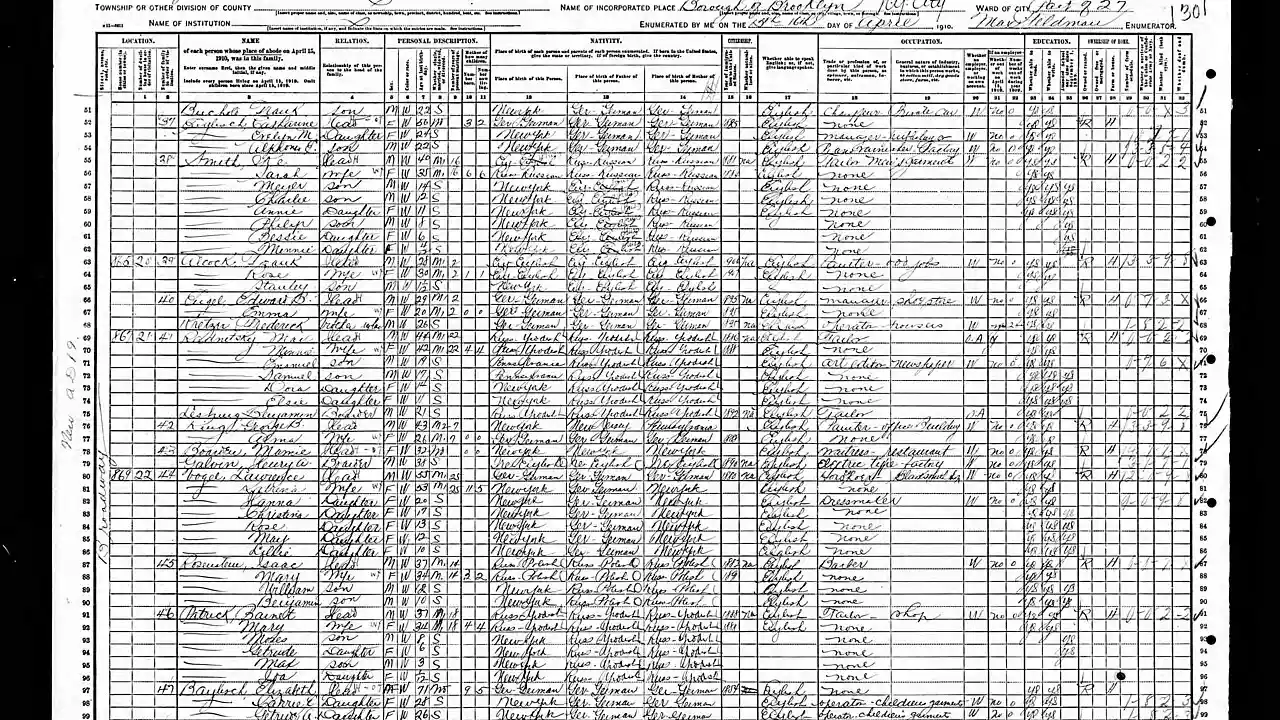
Under Title 13 of the U.S. Code, Census workers take a lifetime oath never to share an individual's personal data. Only after seventy-two years does the National Archives release historic schedules—creating a goldmine for family historians!
1. How did the U.S. Constitution make citizens eager rather than afraid to be counted in the Census?
2. How long are individual personal Census records kept strictly confidential before opening at the National Archives?
🤯 Mind-Blowing Fact • Grade 5
Tracking the U.S. 'center of population'—the exact balance point if America were a flat map and every resident weighed the same—shows it has marched steadily west and south from Maryland in 1790 all the way to southern Missouri in 2020!
✨ Word Sparks (Grade 5 Glossary)
Tap 🔊 to hear
mandate
An official requirement commanded by law or constitution
demographic
Statistical facts describing human populations and communities
redistricting
Redrawing voting district boundaries to equalize populations
🪝
Why did James Madison champion tying legislative representation to a decennial mathematical count—and how has that count tracked 230+ years of American transformation?
1
Preventing 'Rotten Boroughs' in 1787
In eighteenth-century Britain, parliamentary districts stayed frozen for centuries, allowing nearly empty 'rotten boroughs' to outvote bustling industrial cities! Determined to prevent permanent regional dominance in America, James Madison and fellow Framers wrote Article I, Section 2, mandating a decennial 'actual Enumeration' so political power would automatically shift westward and cityward alongside the American people. Amended by Section 2 of the Fourteenth Amendment (1868)—which abolished the infamous Three-Fifths Clause and required counting the 'whole number of persons in each State'—the Census embodies equal representation.
2
From 3.9 Million to Over 331 Million
In 1790, U.S. Marshals tallied 3,929,214 inhabitants across sixteen states and territories, with Virginia ranking first at 747,610 residents and the nation's geographic center of population sitting in Kent County, Maryland. Twenty-three censuses later, in 2020, the U.S. Census Bureau recorded 331,449,281 state residents, and the population center had migrated more than 850 miles southwest into Wright County, Missouri!
3
The Method of Equal Proportions
Since the Permanent Apportionment Act of 1929 fixed the House at 435 voting Representatives, statisticians apply a precise mathematical formula called the Method of Equal Proportions. First, all fifty states receive one guaranteed seat; seats 51 through 435 are then assigned sequentially by priority values calculated from each state's total resident population.
4
Catalyst for Computing Innovation
Necessity repeatedly turned the Census Bureau into a technology pioneer: Herman Hollerith's electromechanical punch-card tabulator accelerated the 1890 count, and in 1951 the Bureau commissioned UNIVAC I, ushering civilian government into the digital computing era.
5
Redistricting, Funding, and Title 13 Privacy
Today, decennial Census data underpins equal-population legislative ('one person, one vote'), allocates over $1.5 trillion annually across federal assistance formulas, and remains shielded under Title 13 confidentiality for seventy-two years until released for historical and genealogical scholarship.