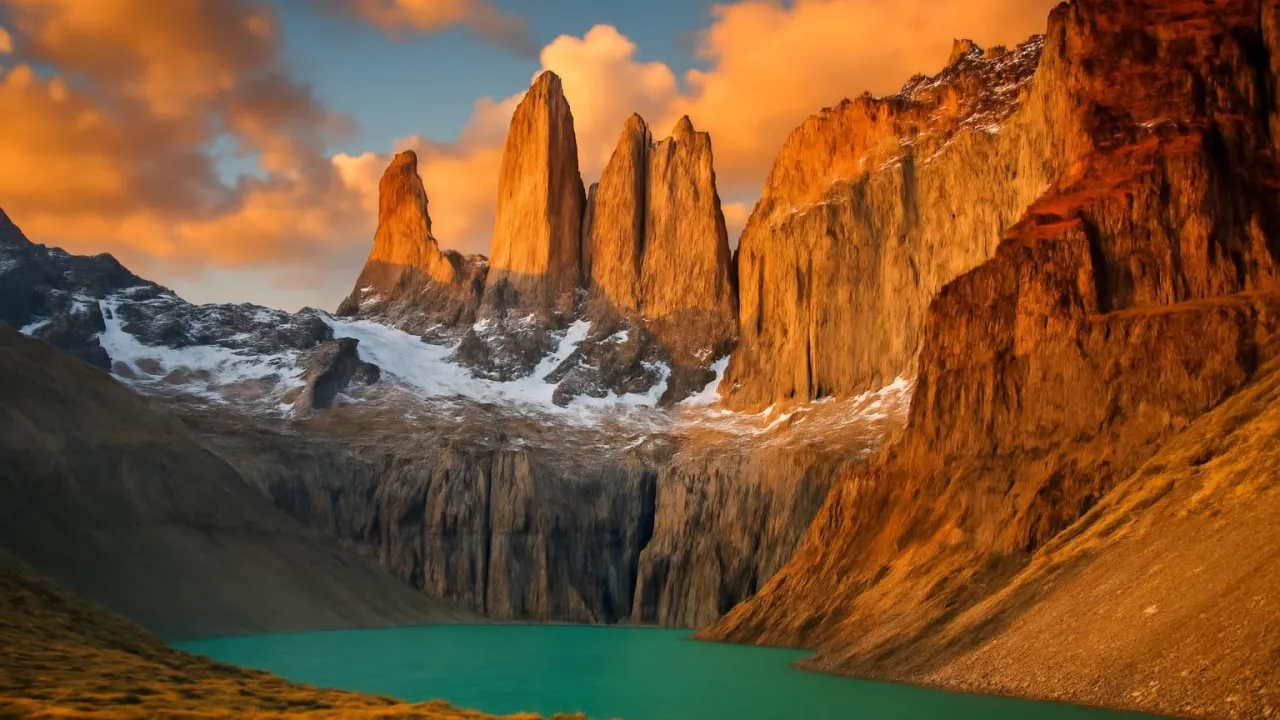
The word 'Paine' means 'blue' in the native Tehuelche language!
✨ Word Sparks (Grade 2 Glossary)
Tap 🔊 to hear
spike
A long, pointy shape
glacier
A slow-moving river of ice
wildlife
Animals living free in nature
🪝
Can you imagine standing under giant stone spikes in the wind?
1
Rocks That Touch the Clouds
The Torres del Paine Towers reach high into the sky, looking sharp and grand. Their gray stone faces shine in the sunlight, and sometimes clouds swirl around their tops. People come from far away to see these amazing towers. They are some of the tallest rocks in Patagonia.
2
Made by Ice and Wind
Long ago, huge and strong winds shaped these towers. The ice slowly carved the rock into tall, steep . Today, snow still covers parts of the towers, and cold winds blow all around. Blue lakes and wild animals fill the land below.
3
A Place to Explore
Hikers love to visit the park and walk rocky trails. Some people camp by the lakes and watch the sunrise on the towers. The view is so beautiful that many people take pictures to remember it. Everyone feels amazed by the wild, windy land.
The granite of the towers is over 12 million years old!
✨ Word Sparks (Grade 3 Glossary)
Tap 🔊 to hear
granite
A very hard, gray rock
erosion
When wind or water wears away rock
spires
Tall, thin, pointed peaks
🪝
What would it feel like to stand where wind, ice, and stone meet in Patagonia?
1
The Mighty Towers of Stone
The Torres del Paine Towers rise sharply above the Patagonian plains, their walls glowing in the sunlight. These three —South, Central, and North—look like giant stone fingers reaching for the sky. Their steep sides make them famous among climbers and explorers. From far away, the towers seem to touch the clouds.
2
Carved by Glaciers and Time
Millions of years ago, glaciers moved slowly over the land, grinding and shaping the hard . The freezing and thawing of water helped crack the rock, creating the towers’ sharp, vertical faces. This process is called , and it continues even today. Wind whistles through the valleys, carrying bits of sand that polish the stone.
3
A Wild and Windy Home
The towers stand in Torres del Paine National Park, surrounded by blue lakes, icy rivers, and grasslands. Many animals, like guanacos and condors, live in this wild place. The weather changes quickly, with sudden storms and strong winds. Visitors must be prepared for cold, rain, and sun all in one day.
4
Exploring the Patagonian Wonder
Hikers travel from around the world to walk the park’s famous trails. Some camp near the lakes to see the sunrise paint the towers orange and pink. The towers are a symbol of wild Patagonia, showing how nature’s power can shape the land. Every year, thousands of people come to see this natural monument up close.
2. What kind of animals might you see near the towers?
🤯 Mind-Blowing Fact • Grade 4
Patagonian winds can be so strong they sometimes knock hikers off their feet!
✨ Word Sparks (Grade 4 Glossary)
Tap 🔊 to hear
tectonic
Related to Earth's moving crust plates
biosphere
All living things and their environments
conservation
Protecting nature for the future
🪝
Can you picture icy winds swirling around ancient stone towers that have stood for millions of years?
1
Granite Giants Above Patagonia
The Torres del Paine Towers, three dramatic granite spires, rise steeply above the wild Patagonian steppe. Their names—South, Central, and North—describe their positions in the landscape, each reaching heights of up to 8,200 feet (2,500 meters). The towers’ sheer vertical walls glow orange and pink at sunrise, creating a breathtaking spectacle for all who visit. These natural monuments are among the most iconic sights in Chile’s Torres del Paine National Park.
2
How Glaciers and Erosion Sculpted the Towers
Over 12 million years ago, powerful forces pushed molten rock upward, forming the granite deep underground. As glaciers scraped over the land, they carved away softer rocks, leaving the harder granite exposed. The process of erosion—where wind, ice, and water wear away stone—shaped the towers’ sharp edges and steep faces. Even today, freezing and thawing cracks the rock, while windblown sand continues to polish the granite.
3
A Wild World of Wind and Wildlife
The towers stand in a region famous for unpredictable weather, where fierce Patagonian winds can reach over 70 miles per hour. The park is home to guanacos, foxes, pumas, and soaring Andean condors, all adapted to the harsh climate. Turquoise lakes and braided rivers fill the valleys below, fed by glacial meltwater from the surrounding peaks. The land’s wild beauty attracts adventurers, scientists, and photographers from around the globe.
4
Exploring and Protecting a Natural Wonder
Thousands of hikers visit Torres del Paine National Park each year, following trails that offer stunning views of the towers and the surrounding wilderness. Some camp overnight to witness the towers glowing at dawn, while others study the geology and unique ecosystems. The park is protected as a UNESCO Reserve, helping to preserve its rare plants, animals, and landscapes for future generations. The Torres del Paine Towers remind us of nature’s power and the importance of .
1. Why do the towers glow orange and pink at sunrise?
2. How does the park help protect the towers?
🤯 Mind-Blowing Fact • Grade 5
The Central Tower of Paine is one of the most technically challenging big-wall climbs on Earth, with nearly 3,000 feet of sheer granite!
✨ Word Sparks (Grade 5 Glossary)
Tap 🔊 to hear
tectonic uplift
When Earth's plates push land upward
abrasion
Wearing down by rubbing or scraping
microclimate
A small area with its own special weather
🪝
What secrets could you uncover if you trekked beneath the wind-carved granite towers of Patagonia, where geology and weather shape the land?
1
Geological Origins: Granite Born of Fire and Ice
The Torres del Paine Towers are monumental granite spires formed by a combination of and glacial sculpting over millions of years. Deep beneath the Patagonian steppe, magma slowly cooled and crystallized into hard granite during the Miocene epoch, over 12 million years ago. Later, powerful tectonic forces pushed this granite upward, creating the backbone of the Paine Massif. As the Andes rose, repeated glaciations carved away softer sedimentary rocks, leaving the resistant granite exposed as the iconic towers we see today. Each tower—South, Central, and North—stands as a testament to the dynamic forces that continue to shape our planet.
2
The Mechanics of Erosion: Nature’s Sculpting Tools
Glaciers played a crucial role in the towers’ formation, grinding and polishing the granite with immense pressure and movement. Freeze-thaw cycles, where water seeps into cracks and expands upon freezing, have fractured the rock and created the towers’ vertical faces. Wind-driven further smooths and sharpens the spires, as sand and ice particles act like natural sandpaper. Even today, the process of erosion continues, gradually altering the towers’ shape over time. This ongoing interplay of ice, wind, and temperature highlights the constant evolution of mountainous landscapes.
3
Climate, Weather, and the Patagonian Ecosystem
Torres del Paine National Park is renowned for its extreme and unpredictable climate, shaped by proximity to the Southern Patagonian Ice Field. Fierce westerly winds, often exceeding 70 miles per hour, sweep across the plains and valleys, influencing both the landscape and the living organisms that inhabit it. The region’s unique support a remarkable diversity of flora and fauna, including guanacos, Andean condors, pumas, and rare orchids. Glacial meltwater feeds turquoise lakes and braided rivers, sustaining the park’s vibrant ecosystems year-round. Adaptation is crucial for survival in this challenging environment.
4
Human Exploration and Cultural Significance
For centuries, indigenous peoples such as the Aonikenk (Tehuelche) revered the towers as sacred landmarks, naming them for their striking blue hues—'Paine' means 'blue' in their language. European explorers first mapped the region in the late 19th century, and the park was officially established in 1959 to protect its unique geology and biodiversity. Today, Torres del Paine is a UNESCO Biosphere Reserve, attracting scientists, mountaineers, and eco-tourists from around the world. The towers symbolize both the wild spirit of Patagonia and the importance of preserving natural wonders for future generations.
5
Engineering Challenges and Conservation Efforts
Managing tourism and conservation in Torres del Paine presents complex challenges, as thousands of visitors trek the park’s rugged trails each year. Park managers must balance access with preservation, using boardwalks, designated campsites, and strict regulations to minimize erosion and human impact. Scientific research on glacial retreat, climate change, and ecosystem health informs ongoing protection strategies. By studying the towers’ geology and the region’s changing climate, scientists gain valuable insights into Earth’s past and future. The Torres del Paine Towers remind us of the delicate balance between exploration and stewardship in our natural world.