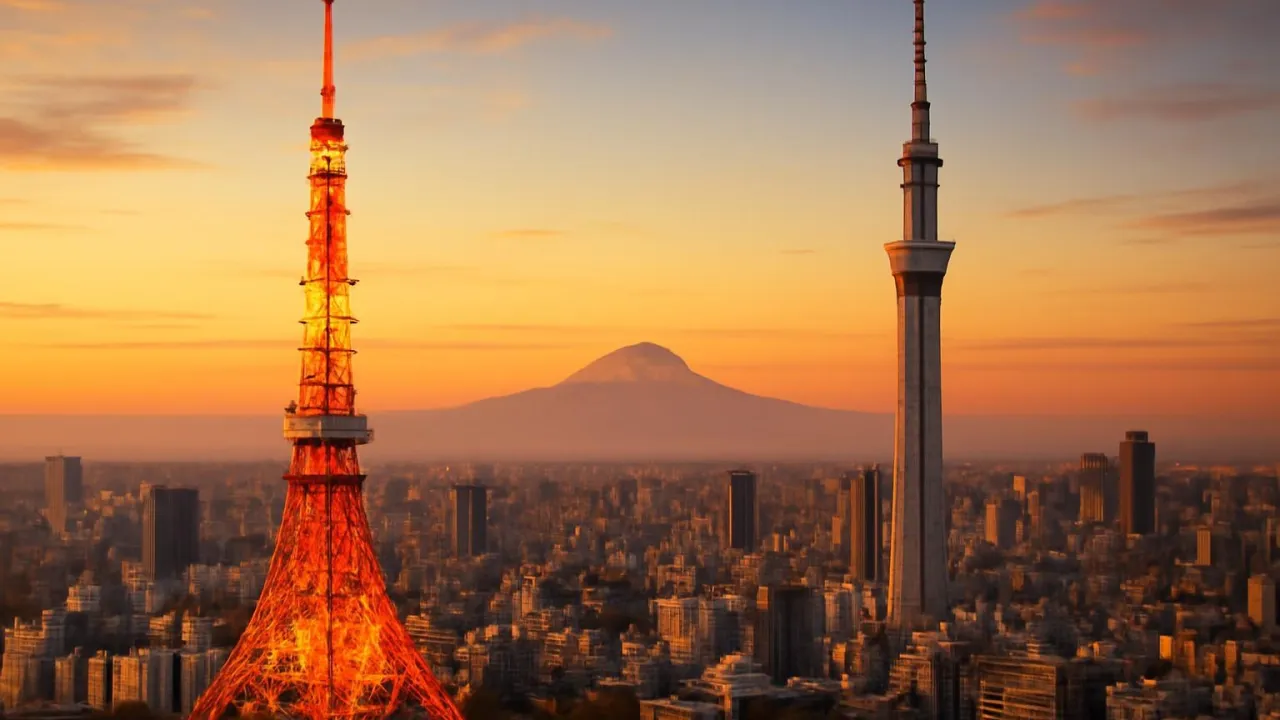
Tokyo Tower was inspired by the Eiffel Tower in France!
✨ Word Sparks (Grade 2 Glossary)
Tap 🔊 to hear
elevator
A moving box that goes up
sparkle
To shine with bright flashes
souvenir
A small gift to remember a place
🪝
Have you ever wondered what Tokyo looks like from the clouds?
1
Two Towers, One City
Tokyo Tower and Skytree both reach high above the city. At night, they with colorful lights, making the city shine. People come from all over to see them.
2
Riding to the Top
Fast zoom you up inside the towers. When you look out, you can see tiny cars, parks, and even Mount Fuji on clear days. The view stretches for miles and miles.
3
Fun and Food
Inside, there are shops, restaurants, and places to play. Families eat tasty treats and buy fun . Many people take photos to remember their visit.
1. What can you see from the towers on clear days?
2. What do families often do at the towers?
🤯 Mind-Blowing Fact • Grade 3
Tokyo Skytree’s name comes from its height: 634 can be read as “Musashi,” an old name for Tokyo’s region.
✨ Word Sparks (Grade 3 Glossary)
Tap 🔊 to hear
observation deck
A high place to look out
vibration
A quick shaking or moving
lattice
A crisscross pattern of metal
🪝
What does it feel like to stand above a city of millions?
1
Two Towers Touching the Sky
Tokyo Tower and Tokyo Skytree are famous for their towering heights. Tokyo Tower was finished in 1958 and stands 333 meters tall, shining bright orange and white. Tokyo Skytree, built in 2012, reaches an amazing 634 meters, making it the tallest structure in Japan.
2
Amazing City Views
Visitors ride elevators to the high above the city. Through giant glass windows, you can spot tiny trains, winding rivers, and even Mount Fuji on a clear day. The towers are designed to withstand strong winds and earthquakes, keeping everyone safe as they enjoy the view.
3
Engineering Marvels
Tokyo Tower is made from steel and was inspired by the Eiffel Tower’s design. Tokyo Skytree uses a special tripod base and control to stay steady during earthquakes. Both towers send out TV and radio signals, helping people all over Tokyo stay connected.
4
A Place for Fun
Inside the towers, there are shops, restaurants, and even aquarium exhibits. People love to take photos and buy souvenirs to remember their visit. At night, colorful lights turn the towers into sparkling beacons across the city.
1. What helps Tokyo Skytree stay safe in earthquakes?
2. Why do the towers send out signals?
🤯 Mind-Blowing Fact • Grade 4
Tokyo Skytree was built using earthquake-resistant technology inspired by ancient Japanese pagodas.
✨ Word Sparks (Grade 4 Glossary)
Tap 🔊 to hear
seismic
Related to shaking from earthquakes
antenna
A tall stick that sends signals
typhoon
A huge, powerful storm
🪝
Imagine riding an elevator so high you can see the curve of the Earth—how do these towers stay standing?
1
Twin Icons of Tokyo
Tokyo Tower and Tokyo Skytree are two of the most recognizable structures in Japan’s capital city. Tokyo Tower, completed in 1958, was built as a symbol of Japan’s postwar rebirth and stands 333 meters tall. Tokyo Skytree, finished in 2012, reaches an astonishing 634 meters and is the tallest tower in Japan. Both towers attract millions of visitors each year, eager to experience their breathtaking views.
2
Engineering Against the Elements
Tokyo Tower’s lattice steel frame was inspired by the Eiffel Tower, but it is painted bright orange and white for aviation safety. Tokyo Skytree features a unique tripod base and advanced vibration control systems, making it incredibly stable during earthquakes and . Engineers used computer models to test how both towers would handle strong winds and forces, ensuring their safety for everyone inside.
3
The Science of Broadcasting
Both towers are vital for Tokyo’s communication networks, sending out TV and radio signals across the city. The height of Tokyo Skytree allows signals to travel farther and more clearly, especially in a city filled with tall buildings. Special at the top of each tower help reduce signal interference, keeping millions of people connected every day.
4
A Hub of Culture and Fun
Inside both towers, visitors can find observation decks, restaurants, and interactive exhibits about science and Tokyo’s history. Skytree even has a planetarium and aquarium, making it a favorite spot for families. At night, the towers light up with colorful displays, celebrating holidays and special events across the city.
2. What inspired the Skytree’s earthquake safety design?
🤯 Mind-Blowing Fact • Grade 5
Tokyo Skytree’s tuned mass damper, inspired by pagodas, can reduce earthquake sway by up to 50%.
✨ Word Sparks (Grade 5 Glossary)
Tap 🔊 to hear
tuned mass damper
A device that helps stop big shaking
broadcast
To send signals out everywhere
panoramic
A wide view all around you
🪝
If you could design a tower to withstand earthquakes and broadcast signals across a city, how would you do it?
1
Sky-High Marvels in Tokyo
Rising above the sprawling cityscape, Tokyo Tower and Tokyo Skytree have become enduring symbols of Japan’s innovation and resilience. Tokyo Tower, completed in 1958, was constructed as a sign of hope and technological progress after World War II, reaching 333 meters (1,092 feet) with a steel lattice structure. Tokyo Skytree, finished in 2012, soars to 634 meters (2,080 feet), making it not only the tallest structure in Japan but also the second tallest in the world at its opening.
2
Engineering for Earthquakes and Wind
Both towers are feats of advanced engineering, designed to endure Japan’s frequent earthquakes and typhoons. Tokyo Tower uses a lattice design inspired by the Eiffel Tower, but with steel sourced from American tanks left after the Korean War. Tokyo Skytree’s engineers incorporated a central reinforced concrete column and a tripod base, along with a system that mimics the flexible sway of ancient wooden pagodas, allowing the tower to absorb seismic energy and minimize vibration.
3
Broadcasting Technology and Urban Impact
Tokyo Tower originally served as the city’s main television and radio broadcasting center, but as Tokyo’s skyline filled with taller buildings, signal interference became a problem. The construction of Tokyo Skytree solved this by providing a much higher platform for digital antennas, ensuring clear, uninterrupted signals for over 13 million residents. Both towers are now crucial hubs for telecommunications, disaster alerts, and even weather monitoring.
4
Cultural, Scientific, and Economic Significance
Beyond their technical roles, these towers are cultural icons, attracting over 10 million visitors annually. Skytree’s observation decks offer views up to 75 kilometers, while its complex includes a planetarium, aquarium, and science exhibits. Tokyo Tower’s lower floors house museums and event spaces, blending entertainment with education. Their nightly illuminations celebrate everything from cherry blossom season to the Olympics, uniting Tokyo’s people in shared moments of wonder.
5
Legacy and Future Innovations
The legacy of Tokyo Tower and Skytree extends beyond architecture, influencing global tower design and disaster preparedness. Engineers worldwide study Skytree’s earthquake-resistant features and Tokyo Tower’s historic construction methods. As Tokyo continues to grow, these towers remain beacons of safety, communication, and creativity, inspiring future generations to reach new heights in science, engineering, and culture.