The cable car floor spins so everyone can see the view!
✨ Word Sparks (Grade 2 Glossary)
Tap 🔊 to hear
summit
The highest part of a mountain
tablecloth
Clouds covering Table Mountain’s top
trail
A path for walking or hiking
🪝
Can you imagine walking on a mountain that looks like a giant table?
1
A Mountain Like No Other
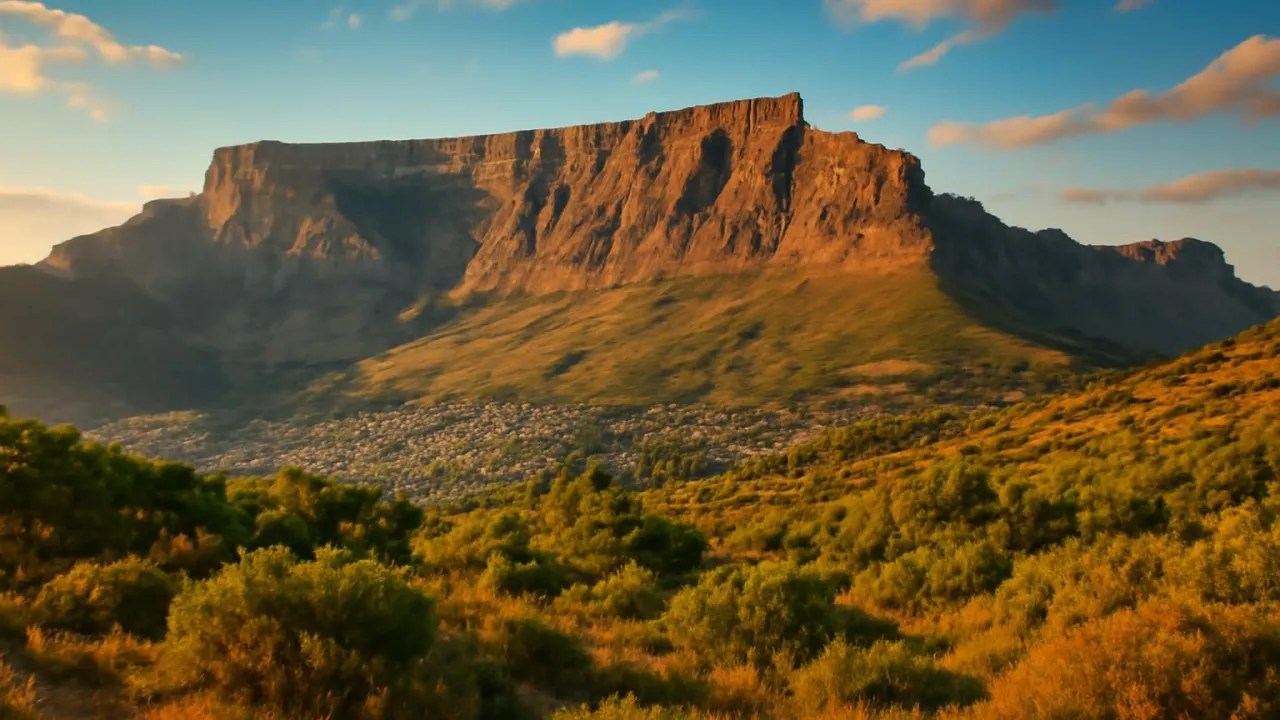
Table Mountain stands tall above Cape Town, and its top is wide and flat. People can see its flat shape from almost anywhere in the city. It is one of the most famous sights in South Africa.
2
Clouds and Views
Sometimes, a blanket of clouds called the '' covers the . The clouds roll over the edges and make the mountain look magical. Visitors love to watch the clouds move and change shape.
3
Adventure to the Top
People can hike up steep or ride a spinning cable car to the . From the top, you can see the city, the ocean, and even faraway mountains. Many animals and plants live on Table Mountain too.
Table Mountain is older than the Himalayas and the Rockies!
✨ Word Sparks (Grade 3 Glossary)
Tap 🔊 to hear
erosion
Slow wearing away by wind or water
sandstone
A hard rock made from sand
summit
The very top part of a mountain
🪝
What secrets could a flat-topped mountain reveal if you stood on its edge?
1
A Table in the Sky
Rising high above Cape Town, Table Mountain’s stretches out flat and wide. Its unique shape comes from millions of years of by wind and rain. The mountain’s flat top makes it look like a giant stone table from far away. Tourists and locals love to spot it from anywhere in the city.
2
Nature’s Blanket
A famous cloud called the 'tablecloth' often drapes over the . This happens when moist air from the ocean cools and condenses as it climbs the mountain. The cloud flows gently over the edge, creating a magical, moving blanket. Sometimes, the tablecloth disappears as quickly as it arrives.
3
Climbing and Exploring
People reach the by hiking steep trails or riding a rotating cable car. The cable car’s floor spins, giving everyone a full view of the city, ocean, and distant peaks. At the top, visitors discover rare plants and animals found nowhere else. Table Mountain is part of a special region called the Cape Floral Kingdom.
4
How It Was Formed
Table Mountain is made mostly of , which resists better than softer rock. Over millions of years, wind and water wore away the softer layers, leaving the hard, flat . This process is called erosion, and it shapes many landforms on Earth. Today, Table Mountain stands as a monument to nature’s slow, powerful forces.
1. What creates the 'tablecloth' cloud on Table Mountain?
2. Why is Table Mountain so flat on top?
🤯 Mind-Blowing Fact • Grade 4
Table Mountain is one of the oldest mountains on Earth, formed before dinosaurs existed!
✨ Word Sparks (Grade 4 Glossary)
Tap 🔊 to hear
sandstone
A tough rock made from pressed sand
erosion
When wind or water slowly wears rock away
phenomenon
Something amazing that happens in nature
🪝
If you could stand atop a mountain’s flat summit, what ancient stories might the rocks tell?
1
A Landmark Above the Sea
Table Mountain towers above Cape Town, easily recognized by its remarkably flat summit stretching nearly two miles wide. Its shape results from millions of years of , where wind and rain slowly wore away softer rocks, leaving the hard top behind. The mountain’s steep cliffs drop dramatically to the city and ocean below, making it a natural beacon for sailors and explorers. Today, Table Mountain is a symbol of South Africa and a UNESCO World Heritage Site.
2
The Famous Tablecloth
One of Table Mountain’s most magical features is the 'tablecloth'—a thick cloud that sometimes spills over its summit. This occurs when moist ocean air is forced up the mountain’s slopes, cooling and condensing into clouds as it rises. The resulting cloud flows over the flat top and down the cliffs, looking like a white tablecloth being spread. The tablecloth can appear and vanish quickly, depending on the weather and wind direction.
3
Exploring the Summit
Visitors can hike up challenging trails or ride a rotating cable car to reach the summit. The cable car’s floor turns slowly, giving everyone a 360-degree view of Cape Town, Table Bay, and the distant mountains. At the top, explorers find unique plants and animals that belong to the Cape Floral Kingdom, one of the world’s richest plant regions. Over 1,500 plant species thrive here, many found nowhere else on Earth.
4
Geology and Ancient History
Table Mountain’s rocks are mostly , formed from ancient river sand over 260 million years ago. The mountain’s flatness is due to the hard sandstone resisting , while softer rocks below wore away. Fossils found in the rocks tell stories of ancient creatures and changing climates. Table Mountain’s dramatic landscape has shaped local cultures and inspired legends for thousands of years.
Table Mountain’s rocks are over 260 million years old—older than the Atlantic Ocean itself!
✨ Word Sparks (Grade 5 Glossary)
Tap 🔊 to hear
orographic lift
When air rises up a mountain and forms clouds
endemic
A species found only in one place
plateau
A large, flat area on top of a mountain
🪝
If you could journey back millions of years, what forces would you witness shaping Table Mountain’s iconic silhouette?
1
A Geological Masterpiece Above Cape Town
Table Mountain rises 3,563 feet (1,086 meters) above sea level, dominating the skyline of Cape Town with its instantly recognizable flat-topped silhouette. This landmark is part of the Cape Fold Belt, a range formed by tectonic forces during the breakup of the supercontinent Gondwana. The mountain’s summit stretches nearly two miles (3 kilometers) across, making it one of the world’s widest flat-topped mountains. Its imposing cliffs and broad have served as a navigational landmark for sailors for centuries.
2
The Science Behind the Tablecloth
The famous 'tablecloth' is a meteorological phenomenon caused by , where moist Atlantic air is forced up the mountain’s slopes. As the air rises, it cools and condenses, forming a thick, flowing cloud that spills over the summit and cascades down the cliffs. The process is influenced by wind speed, humidity, and temperature differences between the ocean and the land. This dramatic spectacle can appear and vanish within minutes, captivating visitors and inspiring local legends.
3
Erosion and Ancient Formation
Table Mountain’s geology tells a story stretching back over 260 million years. Its flat summit is composed mainly of hard Table Mountain Sandstone, which resists erosion far better than the underlying shale and granite. Over millions of years, the softer rocks eroded away, leaving the resilient sandstone exposed. The mountain’s vertical cliffs and horizontal layers reveal the slow, powerful processes of weathering and erosion that have shaped its form since before the age of dinosaurs.
4
Unique Biodiversity and Global Significance
The mountain is the centerpiece of the Cape Floral Kingdom, the smallest yet richest of the world’s six floral kingdoms. Over 1,500 plant species grow on Table Mountain, including rare proteas, ericas, and many species found nowhere else. This incredible biodiversity supports a variety of animals, from rock hyraxes and lizards to sunbirds and butterflies. Table Mountain’s ecological importance led to its designation as a UNESCO World Heritage Site, protecting its habitats for future generations.
5
Cultural Impact and Modern Exploration
For centuries, Table Mountain has influenced the culture, mythology, and identity of Cape Town’s people. Indigenous Khoisan legends describe the mountain as a sacred place, while early explorers used it as a guide to safe harbor. Today, millions visit each year, hiking challenging trails or riding the state-of-the-art rotating cableway to the summit. The panoramic views stretch across the city, ocean, and distant peaks, making Table Mountain a symbol of natural wonder, resilience, and South African pride.