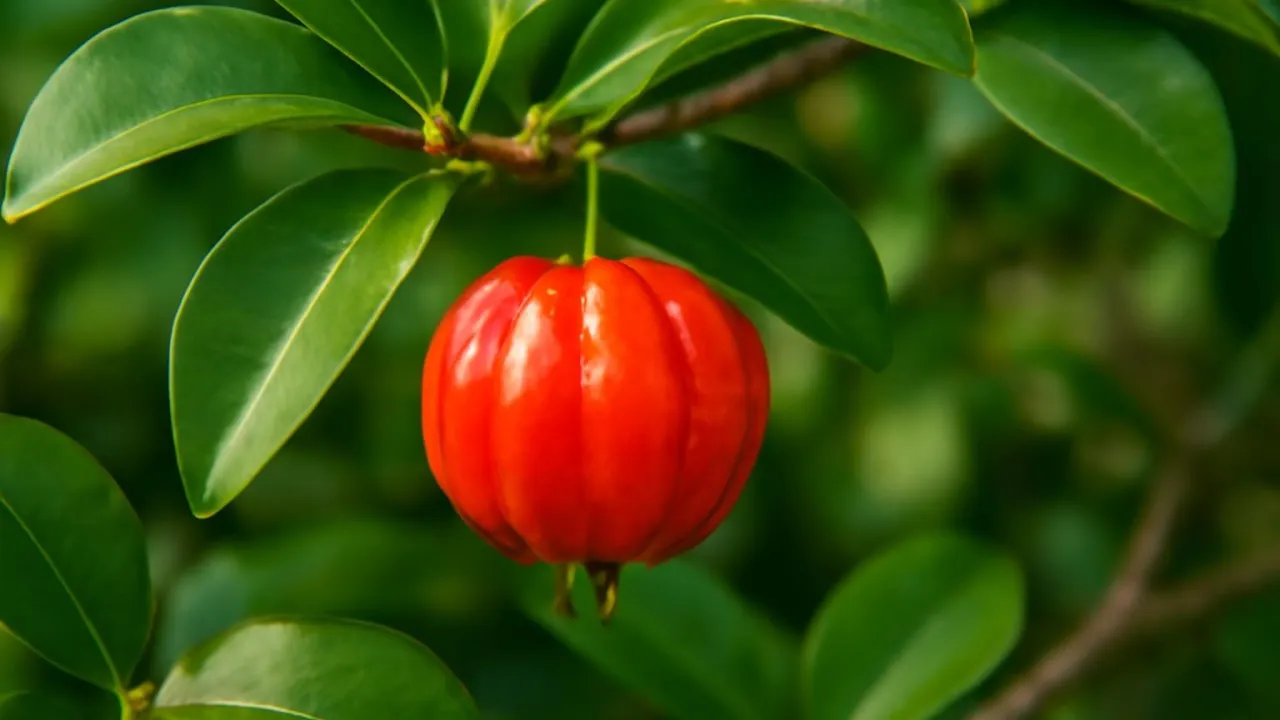
Surinam cherry fruits change from green to bright red as they ripen on the tree.
✨ Word Sparks (Grade 2 Glossary)
Tap 🔊 to hear
ripe
Ready to eat and sweet
seeds
Tiny parts that grow new plants
shiny
Bright and smooth like glass
🪝
Have you ever seen a cherry that looks bumpy and shiny on a tree?
1
Bright and Bumpy Fruit
The Surinam cherry is bright red and bumpy when it is . It grows on small trees that can reach twelve feet tall. The skin makes it easy to spot in the sunlight.
2
Warm Places to Grow
This cherry grows best in warm places like South America and the Caribbean. It needs plenty of sun and moderate water to grow well. Birds often eat the fruit and help spread the .
3
Sweet and Sour Taste
The fruit tastes both sweet and sour, making it special. People eat it fresh or use it to make jams and jellies. It is a tasty treat enjoyed by many.
The Surinam cherry’s bumpy skin is an adaptation that helps protect it from some animals.
✨ Word Sparks (Grade 3 Glossary)
Tap 🔊 to hear
pollination
When bees help flowers make fruit
predator
An animal that eats other animals
adaptation
A change that helps plants survive
🪝
Did you know the Surinam cherry’s bumpy skin helps protect it from animals?
1
Unique Bumpy Skin
The Surinam cherry has a bumpy, bright red skin that helps it stand out. This rough texture may protect it from some . Its shiny surface reflects sunlight, attracting birds and animals. These animals help spread the fruit’s seeds.
2
Growing in Warm Habitats
This fruit grows in tropical regions like South America and the Caribbean. It thrives in warm climates with plenty of sunlight and moderate rainfall. The Surinam cherry shrub can grow up to twelve feet tall. It adapts well to different soil types.
3
Life Cycle and Pollination
The Surinam cherry flowers attract bees and other pollinators that help fertilize the fruit. After , the fruit develops and changes color from green to red. This change signals ripeness to animals. The seeds inside the fruit help new plants grow.
4
Tasty and Tangy Flavor
The fruit tastes sweet and sour, making it popular for jams and fresh eating. Its tangy flavor is due to natural acids and sugars. People enjoy the fruit for its unique taste and bright color. It also contains vitamins that help keep people healthy.
1. What helps pollinate the Surinam cherry flowers?
2. Why does the fruit change color from green to red?
🤯 Mind-Blowing Fact • Grade 4
Surinam cherry trees support many animals and insects by providing food and shelter in tropical ecosystems.
✨ Word Sparks (Grade 4 Glossary)
Tap 🔊 to hear
symbiosis
A helpful relationship between living things
dispersal
Spreading seeds far from the parent plant
biodiversity
Many different plants and animals living together
🪝
How does the Surinam cherry’s bright color affect its role in the ecosystem?
1
Bright Color and Seed Dispersal
The Surinam cherry’s bright red color attracts many birds and animals, which eat the fruit. When these animals consume the fruit, they help disperse the seeds far from the parent plant. This seed allows the cherry to spread across tropical regions. The bumpy skin also helps protect the fruit during this process.
2
Ecosystem Role and Symbiosis
Surinam cherry trees provide food for birds and insects, creating a symbiotic relationship. Pollinators like bees visit the flowers to collect nectar, helping the tree reproduce. The tree’s presence supports local by offering shelter and nourishment. Humans also cultivate the tree for its tasty fruit and ornamental value.
3
Geographic Distribution and Growth
Native to tropical South America and the Caribbean, the Surinam cherry thrives in warm climates with moderate rainfall. It grows as a shrub or small tree up to twelve feet tall. The plant adapts well to various soil types and tolerates some drought. This adaptability helps it survive in different ecosystems.
4
Cause and Effect of Ripening
As the fruit ripens, it changes color from green to bright red, signaling animals to eat it. This causes seed , which helps the plant reproduce and grow new trees. If animals do not eat the fruit, the seeds remain near the parent plant, limiting spread. Therefore, the fruit’s ripening process directly affects the plant’s survival.
The Surinam cherry’s bright red fruit contains pigments that attract birds, helping spread seeds over kilometers.
✨ Word Sparks (Grade 5 Glossary)
Tap 🔊 to hear
frugivorous
Animals that eat mostly fruit
carotenoids
Pigments that give plants orange color
taxonomy
Science of naming and grouping living things
🪝
What fascinating adaptations make the Surinam cherry a successful tropical fruit tree?
1
Scientific Classification and Taxonomy
The Surinam cherry, scientifically named Eugenia uniflora, belongs to the Myrtaceae family. This family includes aromatic trees and shrubs mostly found in tropical and subtropical regions. The genus Eugenia contains many species valued for their edible fruits and essential oils. Understanding its helps scientists study its ecological role and potential uses.
2
Physiological Adaptations and Mechanics
The Surinam cherry’s bumpy, ribbed fruit skin provides physical protection against pests and mechanical damage. Its bright red pigmentation results from and anthocyanins, which attract birds for seed dispersal. The plant’s leaves have oil glands that deter herbivores and reduce water loss. These adaptations improve survival in tropical climates with variable rainfall.
3
Ecological Role and Conservation Status
Surinam cherry trees play a vital role in tropical ecosystems by providing food and habitat for birds, insects, and mammals. Their fruits support species, promoting seed dispersal and forest regeneration. While not currently endangered, habitat loss and invasive species can threaten local populations. Conservation efforts focus on preserving natural habitats and sustainable cultivation.
4
Botanical History and Human Uses
Native to South America and the Caribbean, the Surinam cherry has been cultivated for centuries by indigenous peoples. It is now grown worldwide in tropical and subtropical gardens for its ornamental beauty and edible fruit. The fruit is used in jams, jellies, and beverages, valued for its unique sweet-tart flavor. Botanical studies continue to explore its medicinal and culinary potential.
5
Quantitative Comparisons and Growth Metrics
The Surinam cherry shrub typically grows up to twelve feet (3.5 meters) tall, with fruits measuring about one inch (2.5 cm) in diameter. Its seeds are dispersed by birds that can travel several kilometers, aiding in wide distribution. The fruit ripens within three to four weeks, changing from green to bright red. Optimal growth occurs at temperatures between 68°F and 86°F (20°C to 30°C).