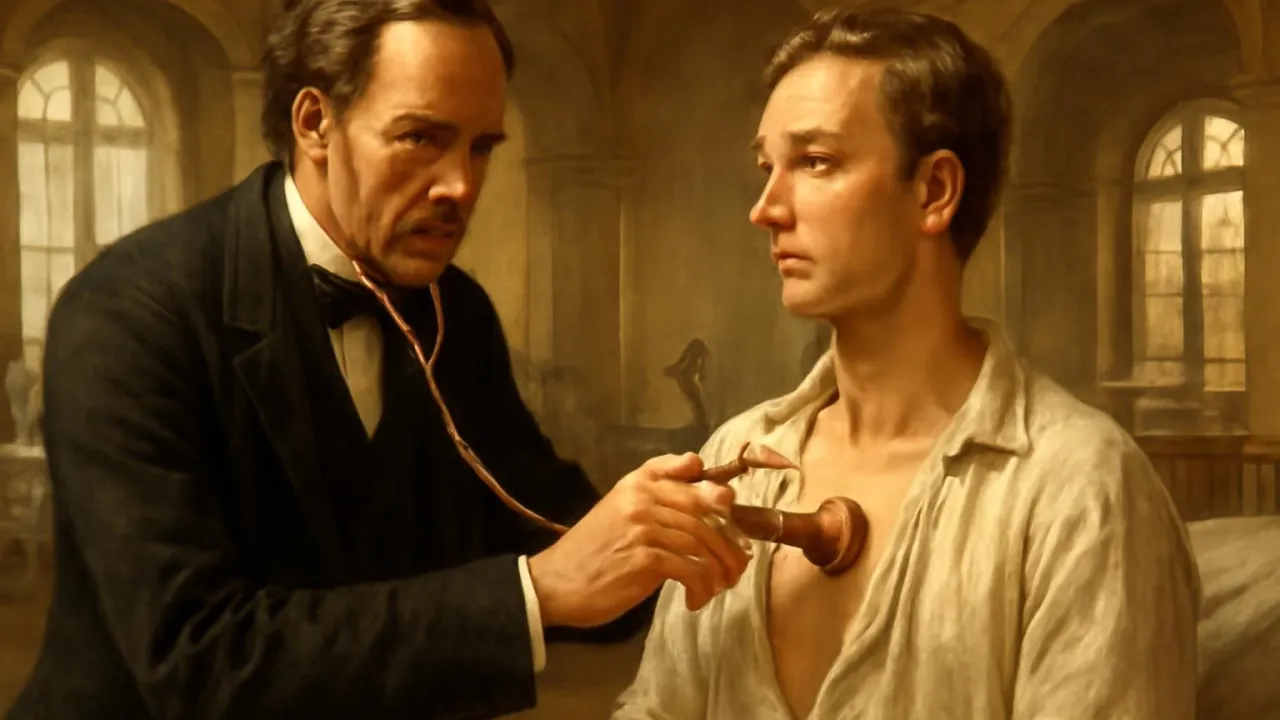
Doctors can hear your lungs fill with air using a stethoscope!
✨ Word Sparks (Grade 2 Glossary)
Tap 🔊 to hear
heartbeat
The sound your heart makes
lungs
Body parts that help you breathe
invention
Something new that someone creates
🪝
Have you ever wondered how doctors hear your heartbeat?
1
Listening Like a Doctor
Doctors use stethoscopes to listen to your heart and . The round part goes on your chest, and the ear tips go in their ears. Sound travels up the tube, so doctors can hear what is happening inside your body.
2
How It Helps
The stethoscope helps doctors hear , breaths, and even tummy gurgles. If your heart beats too fast or slow, the doctor can tell. This helps doctors know if you are healthy or need help.
3
A Clever Invention
A doctor in France made the first stethoscope from wood in 1816. Today, stethoscopes are made with plastic and metal, and they help doctors all around the world.
Some electronic stethoscopes can record your heartbeat and play it back!
✨ Word Sparks (Grade 3 Glossary)
Tap 🔊 to hear
vibration
A quick back-and-forth movement
acoustic
Related to sound and hearing
diaphragm
The flat part that picks up sound
🪝
What if you could hear the secret music inside your own body?
1
The Magic of Listening
Doctors use stethoscopes to listen to the sounds inside your body. The chest piece picks up from your heart and lungs. These vibrations travel through the hollow tube to the doctor’s ears. It’s like a secret pathway for sound waves.
2
How It Works
When your heart beats, it creates . The stethoscope’s round end, called the , catches these vibrations. The tube carries the sound to the earpieces, making it louder and clearer. This helps doctors hear every thump and whoosh.
3
From Wood to Modern Marvel
René Laennec invented the first stethoscope in 1816, using a wooden tube. He wanted to listen to patients’ hearts without putting his ear on their chest. Today’s stethoscopes use plastic and metal, and some even have electronic parts.
4
Why It Matters
Stethoscopes help doctors detect problems like irregular heartbeats or lung issues. They are used in hospitals, clinics, and ambulances around the world. This simple tool has saved millions of lives. It’s a symbol of trust between doctors and patients.
1. What part of the stethoscope catches sound vibrations?
2. Why did Laennec invent the stethoscope?
🤯 Mind-Blowing Fact • Grade 4
Some stethoscopes can connect to smartphones and send heart sounds to doctors far away!
✨ Word Sparks (Grade 4 Glossary)
Tap 🔊 to hear
resonance
When sound vibrates and gets louder
diagnostic
Used to find out what’s wrong
frequency
How fast a sound wave moves
🪝
Imagine hearing the soft thump of a heart without touching your ear to someone’s chest—how could that be possible?
1
A Window Into the Body
The stethoscope lets doctors listen to the hidden sounds of the human body, such as heartbeats, lung breaths, and stomach gurgles. When a doctor places the chest piece on a patient, it picks up acoustic vibrations from inside. These vibrations travel through the stethoscope’s hollow tubes, reaching the doctor’s ears with amplified clarity. This allows doctors to detect subtle changes that might signal illness or health.
2
Engineering the Sound
The stethoscope’s design uses the science of and sound conduction. The flat diaphragm vibrates when it touches the skin, picking up high- sounds like heartbeats. The bell side is shaped to catch lower-frequency sounds, such as certain heart murmurs. The flexible tubing prevents sound from escaping, so doctors can hear even faint noises. This clever engineering makes the stethoscope a powerful tool.
3
A Revolutionary Invention
In 1816, French doctor René Laennec invented the first stethoscope, which was a simple wooden tube. Before this, doctors had to place their ear directly on a patient’s chest, which was uncomfortable and not very effective. Laennec’s invention started a wave of improvements, leading to the double-earpiece stethoscopes we see today. Modern versions may even include electronic sensors to record and analyze sounds.
4
Changing Medicine Around the World
Stethoscopes are now used by healthcare professionals everywhere, from busy city hospitals to remote rural clinics. They help doctors diagnose illnesses early, improving care for millions of people each year. The stethoscope has become a universal symbol of medicine and trust. Its invention marked a turning point in how doctors understand and care for the human body.
1. How does the stethoscope’s tubing help doctors hear?
2. What was the first stethoscope made from?
🤯 Mind-Blowing Fact • Grade 5
The world’s most advanced digital stethoscopes can detect heart murmurs with over 90% accuracy using AI algorithms.
✨ Word Sparks (Grade 5 Glossary)
Tap 🔊 to hear
auscultation
Listening to body sounds with a tool
resonance
When sound vibrates and gets stronger
diagnostics
Tests and tools to find out what’s wrong
🪝
What if a simple tube could unlock the mysteries of your heart and lungs for a doctor to hear?
1
The Science of Listening Inside
When a doctor places a stethoscope’s chest piece on your body, they are using a sophisticated acoustic device designed to amplify internal sounds. The diaphragm, a thin, flat disc, vibrates in response to pressure waves produced by your heart, lungs, or digestive system. These vibrations travel through airtight flexible tubing, minimizing sound loss and distortion. The earpieces are engineered to fit snugly, channeling the sound directly into the doctor’s ears. This process allows for the detection of subtle differences in rhythm, pitch, and intensity—key clues for diagnosing health conditions.
2
Engineering Marvel: Diaphragm, Bell, and Resonance
The stethoscope typically features two listening surfaces: the diaphragm and the bell. The diaphragm is best for high-frequency sounds, such as normal heartbeats and lung airflow, while the bell is designed for low-frequency sounds like certain heart murmurs. The principle of is crucial—when the chest piece is pressed against the skin, it creates a sealed chamber that enhances specific sound frequencies. Modern stethoscopes use materials like stainless steel and advanced polymers to optimize acoustic performance, and some digital models even filter background noise or record sounds for analysis.
3
A Breakthrough in Medical History
René Laennec’s invention of the stethoscope in 1816 revolutionized medical . Before this, doctors relied on immediate , placing their ear directly on the patient’s chest, which was uncomfortable and limited by social customs. Laennec’s wooden monaural stethoscope provided a respectful, effective way to hear internal sounds. Over the next two centuries, the design evolved into the familiar binaural (two-earpiece) stethoscope, with flexible tubing and interchangeable chest pieces. The stethoscope’s impact on medicine was so profound that it became an essential part of every physician’s toolkit.
4
Global Impact and Modern Innovations
Today, stethoscopes are used by millions of healthcare professionals worldwide, from pediatricians to veterinarians. They play a vital role in early detection of diseases like pneumonia, heart valve disorders, and asthma. In resource-limited settings, a simple stethoscope can be the most important diagnostic instrument available. Recent innovations include electronic stethoscopes that amplify faint sounds, Bluetooth-enabled devices that transmit heartbeats across continents, and even smartphone apps that analyze acoustic patterns for remote diagnosis.
5
The Stethoscope’s Enduring Symbolism
Beyond its technical function, the stethoscope has become a global symbol of medical care, compassion, and trust. It represents a bridge between science and human connection, allowing doctors to listen not just to the body, but to the stories and concerns of their patients. From Laennec’s wooden tube to today’s digital marvels, the stethoscope’s evolution mirrors the progress of medicine itself. Its legacy continues to inspire curiosity, innovation, and hope in every new generation of healers.