🇺🇸 U.S. HISTORY
🏛️ 20th U.S. State • Magnolia State
VA History & Social Science SOL K.1, 1.2, 2.4, VS.1–VS.10, USI & USII
State of Mississippi
Great River Steamboats, Magnolia Blossoms, and Blues Music
Grade 1 • Early Reader • 71 words
⏳ Era / StatehoodDecember 10, 1817 (20th U.S. State)
🗺️ Region / CapitalSoutheast / Deep South Region • Capital: Jackson
📜 Key MilestoneMississippi River Delta, Blues Music Heritage & Rocket Testing
⚡ Historical SparkNamed after North America's greatest river system and birthplace of American blues music
🤯 Mind-Blowing Fact • Grade 1
The first teddy bear was inspired in 1902 when President Theodore Roosevelt refused to harm a bear during a trip to Mississippi!
✨ Word Sparks (Grade 1 Glossary)
Tap 🔊 to hear
blossom
Open flower growing on a tree branch
paddlewheel
Big spinning wheel pushing a river boat
blues
Expressive music style born in the South
🪝
Can you spell a state with four S's, four I's, and two P's?
1
Roll Along the Great River!
Chug, chug, splash! Big paddle boats ride the wide Mississippi River. That mighty river gave the State of Mississippi its famous long name!
2
Sweet Magnolia Flowers
Big white magnolia smell lemony and sweet in warm sunshine. Jackson is the state capital. Sandy beaches line the warm Gulf coast down south.
3
Guitars and Giant Rockets
Strum a guitar! Mississippi musicians created soulful songs loved everywhere. Scientists here even test giant space rocket engines that roar like thunder!
1. Which state flower gives Mississippi its nickname, the Magnolia State?
2. Which city is the state capital of Mississippi?
🤯 Mind-Blowing Fact • Grade 2
Scientists at NASA's Stennis Space Center in southern Mississippi test-fire giant Moon rocket engines so powerful they shake the air for miles!
✨ Word Sparks (Grade 2 Glossary)
Tap 🔊 to hear
barge
Long flat boat carrying heavy river cargo
bluff
High steep riverbank overlooking the water
gospel
Joyful choral music with rich vocal harmony
🪝
How did a stuffed toy bear get its start in the woods of Mississippi?
1
Named for the Great River
Listen to acoustic guitars strumming while river glide past tall green ! Native peoples called the winding western river 'Misi-ziibi,' meaning Great River, and Mississippi took that grand name. Warm breezes blow north from the Gulf of Mexico across pine woods and blooming magnolia trees.
2
Ancient Trails and Capital Jackson
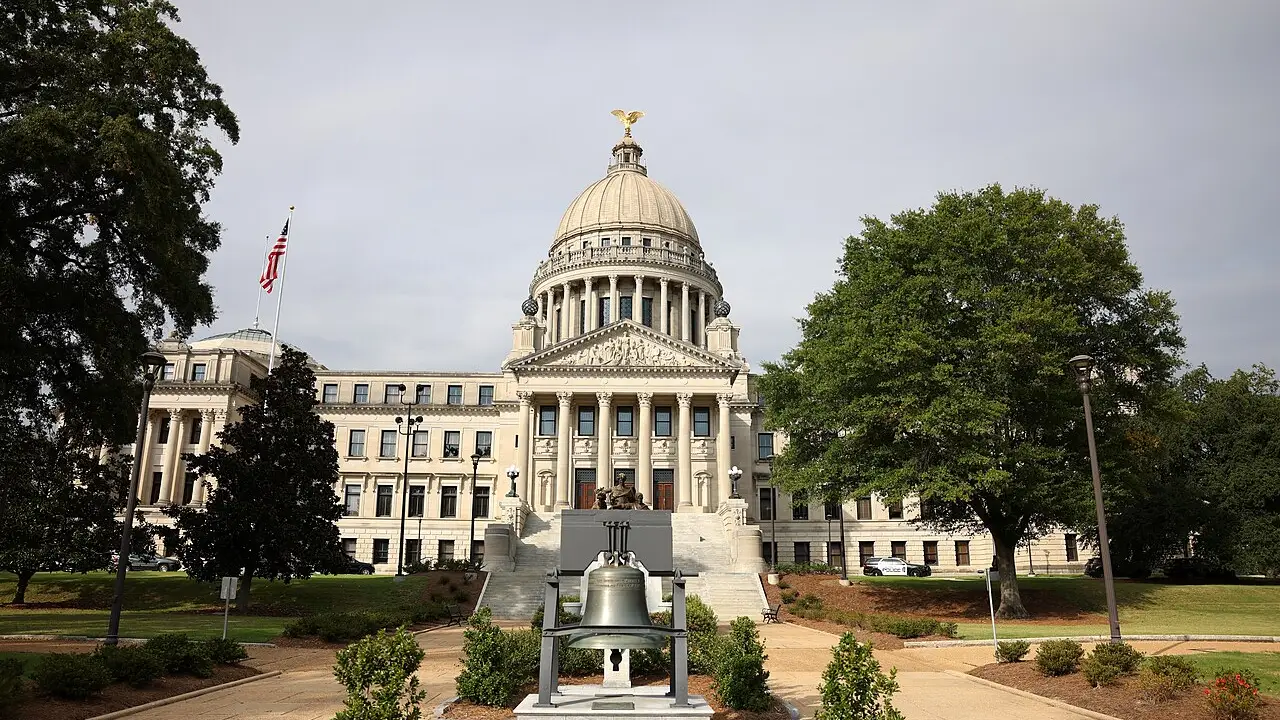
Choctaw, Chickasaw, and Natchez peoples walked a famous forest footpath called the Natchez Trace for hundreds of years. Mississippi became the twentieth U.S. state on December 10, 1817, and lawmakers built the state capital at Jackson along the Pearl River.
3
Music, Catfish, and Teddy Bears
In 1902, President 'Teddy' Roosevelt visited Mississippi and kindly spared a black bear, inspiring toymakers to sew the very first Teddy's Bear! Today, Mississippi leads America in farm-raised catfish and celebrates its gift of blues, , and early rock-and-roll music.
1. What does the Indigenous name behind 'Mississippi' mean?
2. Which president's kindness toward a bear in Mississippi inspired the toy teddy bear?
🤯 Mind-Blowing Fact • Grade 3
Emerald Mound near Natchez, Mississippi covers eight acres—making it the second-largest Pre-Columbian earthen mound in the United States!
✨ Word Sparks (Grade 3 Glossary)
Tap 🔊 to hear
alluvial
Rich soil left behind by overflowing rivers
mound
Large shaped hill built carefully from earth
barrier
Offshore sandy island shielding mainland coasts
🪝
Why is flat, fertile northwest Mississippi famous around the world for both soil and song?
1
Floodplains and Barrier Islands
Watch the muddy, powerful Mississippi River curl in giant loops along the state's western border! Over thousands of years, spring floods spread rich dark soil across northwest Mississippi, forming the flat plain known as the Mississippi Delta. Farther south, white-sand islands shelter the Mississippi Sound along the Gulf of Mexico.
2
Mound Builders and the Natchez Trace
Long before European explorers arrived, Indigenous builders raised huge earthen ceremonial like Emerald Mound near Natchez. Choctaw and Chickasaw travelers connected villages along the 444-mile Natchez Trace trail. Admitted on December 10, 1817, as the twentieth state, Mississippi established its capital in Jackson, named for Andrew Jackson.
3
Vicksburg on the High Bluffs
During the Civil War, Vicksburg perched high on bluffs overlooking a sharp river bend. When Union forces led by Ulysses S. Grant captured Vicksburg in July 1863, the Union gained control of the entire Mississippi River—a major turning point of the war.
4
Birthplace of America's Music
In the twentieth century, Delta musicians like B.B. King and Muddy Waters shaped blues music, while Tupelo native Elvis Presley helped launch rock and roll worldwide.
1. Why was the July 1863 capture of Vicksburg, Mississippi a major turning point in the Civil War?
2. What historic 444-mile footpath linked Natchez, Mississippi toward Tennessee?
🤯 Mind-Blowing Fact • Grade 4
In 1964 at the University of Mississippi Medical Center in Jackson, Dr. James Hardy performed innovative early organ transplant research that advanced modern thoracic surgery!
✨ Word Sparks (Grade 4 Glossary)
Tap 🔊 to hear
floodplain
Flat valley floor covered during high rivers
loess
Fine fertile silt piled up by wind
propulsion
Forward pushing force driving a space rocket
🪝
How did Mississippi's river bluffs, fertile floodplains, and courageous voices leave a lasting mark on American history and culture?
1
Rivers, Loess Bluffs, and Piney Woods
Despite its name, the 'Mississippi Delta' is actually a vast leaf-shaped alluvial tucked between the Mississippi and Yazoo Rivers in the northwest part of the state—over two hundred miles north of where the river truly empties into the Gulf! Bordering that flat plain rise steep hills of wind-blown silt called bluffs, while central prairies, rolling Piney Woods, and twenty-six miles of Gulf mainland beach complete Mississippi's 48,432 square miles.
2
Indigenous Nations, Statehood, and Vicksburg
Choctaw, Chickasaw, Natchez, and Biloxi communities farmed river bottoms and built bustling ceremonial towns across this region for centuries. Organized as the Mississippi Territory in 1798, the western half entered the Union as the twentieth state on December 10, 1817, soon laying out a planned grid capital at Jackson. During the Civil War, President Abraham Lincoln called Vicksburg 'the key' to victory because its high bluffs commanded river traffic; its surrender on July 4, 1863—the day after Gettysburg—marked a decisive turning point.
3
Civil Rights Courage and Civic Change
During the 1950s and 1960s, brave Mississippians such as Fannie Lou Hamer and Medgar Evers organized voter-registration drives and peaceful marches so every citizen could exercise constitutional voting rights, helping inspire the landmark Voting Rights Act of 1965.
4
Blues Roots, Literature, and Rocket Science
From Delta blues guitarists like B.B. King, gospel choirs, and country pioneer Jimmie Rodgers of Meridian to celebrated writers Eudora Welty and William Faulkner, Mississippi became an unmatched wellspring of American storytelling. Down in Hancock County, NASA's Stennis Space Center tests engines for Apollo and Artemis Moon missions.
1. Between which two rivers does Mississippi's famous northwest 'Delta' floodplain actually lie?
2. Which Mississippi leader worked tirelessly to register voters and helped inspire the Voting Rights Act of 1965?
🤯 Mind-Blowing Fact • Grade 5
In February 1870, educator and minister Hiram Rhodes Revels of Natchez, Mississippi became the very first African American ever seated in the United States Senate!
✨ Word Sparks (Grade 5 Glossary)
Tap 🔊 to hear
inundation
Seasonal flooding covering low river valley land
aquaculture
Farming fish or shellfish in managed waters
disenfranchisement
Unfairly blocking citizens from exercising voting rights
🪝
Why did an alluvial river corridor in the Deep South become a strategic Civil War hinge, a proving ground for voting rights, and the fountainhead of modern popular music?
1
Alluvial Plains, Loess Bluffs, and Gulf Barrier Ecosystems
Stretching 48,432 square miles across the Gulf Coastal Plain from Tennessee's border to the Mississippi Sound, the Magnolia State owes both its name—derived from Ojibwe 'Misi-ziibi' ('Great River')—and its physical character to flowing water. In the northwest, centuries of seasonal between the Mississippi and Yazoo Rivers deposited mineral-rich sediments up to dozens of feet deep across the Yazoo-Mississippi Delta. Immediately east rise sheer Pleistocene loess bluffs, transitioning into fertile Black Belt chalk prairies, longleaf Piney Woods, the modest Appalachian foothills of Woodall Mountain (806 feet), and protective offshore barrier islands within Gulf Islands National Seashore.
2
Mississippian Earthworks, Choctaw-Chickasaw Lands, and 1817 Statehood
More than seven centuries ago, Plaquemine and Mississippian cultures engineered monumental platform mounds such as the eight-acre Emerald Mound near Natchez. Choctaw, Chickasaw, Natchez, and Biloxi nations cultivated maize and maintained trade networks along the 444-mile Natchez Trace, later walked northward by Ohio Valley flatboatmen returning home after selling cargo in New Orleans. Admitted as the twentieth state on December 10, 1817, Mississippi located its planned capital, LeFleur's Bluff—renamed Jackson—along the Pearl River in 1821.
3
The Vicksburg Campaign and Reconstruction Milestones
During the Civil War, Confederate fortifications atop Vicksburg's two-hundred-foot loess bluffs blocked Union navigation along the lower Mississippi River. Following a daring overland march and forty-seven-day siege, General Ulysses S. Grant accepted Vicksburg's surrender on July 4, 1863, severing the Confederacy and reopening midwestern river commerce. During Reconstruction in 1870, Mississippi minister and educator Hiram Rhodes Revels took the oath of office in Washington, D.C., becoming the very first African American U.S. Senator in American history.
4
The Struggle for Equal Citizenship
In the mid-twentieth century, grassroots Mississippians including Medgar Evers, Fannie Lou Hamer, and Freedom Summer educators risked everything to dismantle , catalyzing national support for the Civil Rights Act of 1964 and the Voting Rights Act of 1965.
5
Musical Roots, Literary Mastery, and Aerospace Propulsion
Few places rival Mississippi's cultural influence: Delta blues pioneers B.B. King and Muddy Waters, Meridian's 'Father of Country Music' Jimmie Rodgers, and Tupelo-born Elvis Presley laid the rhythmic foundations of jazz, R&B, country, and rock and roll, complemented by Nobel Prize novelist William Faulkner and Pulitzer winner Eudora Welty. Today, Mississippi leads U.S. while NASA's John C. Stennis Space Center tests colossal rocket stages bound for deep space.