Soursop
The Spiky Fruit with Secret Powers
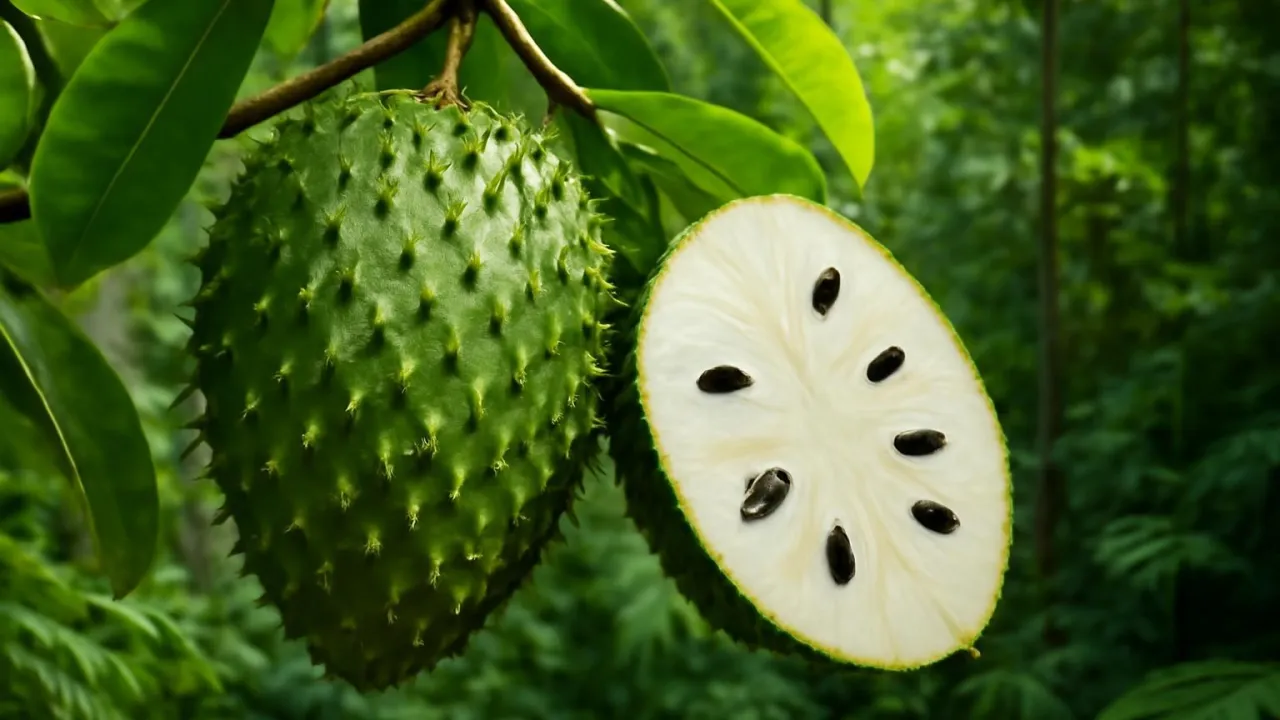
Soursop can be bigger than your head!
Have you ever seen a fruit with green spikes?
1 A Spiky Surprise
Soursop is green and . It grows on a big tree. The fruit is heavy and soft.
2 Yummy and Creamy
Inside, soursop is white and sweet. It tastes like many fruits. People eat it with a spoon.
3 Where Does It Grow?
Soursop grows in warm, wet places. It likes lots of sun. It needs water to grow big.
1. What color is the outside of soursop?
2. How do people eat soursop?
Some soursop fruits can grow longer than a football!
What fruit looks like a green dragon egg and tastes like a fruit salad?
1 Spikes on the Outside
A soursop has a bumpy, spiky green skin that feels soft and strange. This thick skin protects the yummy fruit inside from getting eaten too early. Soursops can grow very big and heavy, sometimes as long as your arm.
2 A Creamy, Mixed-Up Flavor
Cut open a soursop and youâll see creamy, white with shiny black seeds. The flavor is a mix of pineapple, banana, and strawberry, all in one bite. People love to eat it fresh with a spoon or drink its sweet juice.
3 Growing in Warm, Rainy Places
Soursop trees grow best in places that are hot and wet all year. The fruit starts as a flower and takes months to ripen before itâs picked. Farmers look for soft, ready soursops to and share with others.
1. What does the inside of soursop look like?
2. Where do soursop trees grow best?
Soursop is related to the custard apple and cherimoya!
What fruit is spiky on the outside but creamy like ice cream inside?
1 Soursopâs Strange Look
Soursop has a bumpy, spiky green skin that protects its soft inside. This fruit grows on trees in tropical rainforests where it is hot and wet. The fruit can be as long as your forearm and weighs several pounds. Its tough skin keeps animals from eating it too soon.
2 A Flavor Explosion
When you cut open soursop, you see white, creamy flesh with shiny black seeds. The taste is a mix of pineapple, banana, and strawberry, making it very popular in juices and desserts. People scoop out the soft part and throw away the seeds. The creamy texture helps it blend easily into smoothies.
3 Growing Up Soursop
Soursop trees start as seeds and grow quickly in sunny, moist soil. The treeâs large leaves help it catch sunlight for , which gives energy for fruit to grow. Flowers turn into fruit after by insects. It can take up to five months for a soursop to fully ripen.
4 Survival Tricks
The soursopâs spiky skin is an that helps keep hungry animals away. Its strong smell attracts pollinators like beetles, which help make new fruits. The treeâs deep roots soak up water during dry times. Soursop is a botanical fruit, even though people often call it a tropical treat.
1. Why does soursop have spiky skin?
2. How does soursop start growing?
Soursopâs scientific name, Annona muricata, means âpricklyâ in Latin!
Imagine biting into a fruit that tastes like a fruit salad and looks like a green hedgehogâwhat could it be?
1 The Soursopâs Unusual Appearance
Soursop, also called graviola, is a tropical fruit with a thick, spiky green skin that acts as a natural shield against pests and curious animals. Its tough exterior protects the soft, juicy white flesh inside until the fruit is ripe enough to eat. Soursop fruits can grow up to a foot long and weigh as much as a newborn baby. The fruitâs unusual look helps it stand out in the dense rainforest.
2 A Taste Adventure
When soursop is sliced open, its creamy flesh is filled with large, shiny black seeds that must be removed before eating. The flavor is a blend of pineapple, banana, and citrus, making it a favorite for smoothies, ice creams, and juices in tropical countries. Its creamy texture comes from natural sugars and , making it both sweet and filling. People enjoy soursop fresh or mixed into drinks and desserts.
3 How Soursop Grows and Thrives
Soursop trees thrive in humid, warm climates with plenty of rainfall, such as Central and South America, the Caribbean, and parts of Africa and Southeast Asia. The tree produces large, glossy leaves that collect sunlight for photosynthesis, helping the fruit grow big and healthy. Pollination is mainly done by beetles, which are attracted to the flowerâs strong scent. After pollination, it takes several months for the fruit to mature and ripen.
4 Soursopâs Role in the Ecosystem
Soursop trees provide food and shelter for many rainforest animals, including insects, birds, and mammals that eat fallen fruit. The fruitâs seeds are spread by animals, helping new trees grow in different areas. Soursop is a fruit, which means it develops from the flowerâs ovary, even though people often use it like a dessert. Farmers must protect soursop trees from pests and diseases, as the fruit is important for both local diets and markets.
1. Why do soursop trees need beetles?
2. How do soursop seeds spread?
A single soursop fruit can weigh up to 15 poundsâabout as much as a medium-sized bowling ball!
What fruit can weigh as much as a bowling ball and tastes like a tropical smoothie?
1 Botanical Identity and Classification
Soursop, scientifically known as Annona muricata, belongs to the Annonaceae family, which includes other tropical fruits like cherimoya and custard apple. Botanically, soursop is classified as a true fruit because it develops from the ovary of the flower after pollination. Its spiky green exterior is a key adaptation that deters many insect pests and from damaging the fruit before it ripens. Soursop is native to the tropical regions of the Americas but is now cultivated in Africa, Southeast Asia, and the Pacific Islands. The tree typically grows up to 30 feet (9 meters) tall and produces large, heart-shaped fruits.
2 Physiology and Growth Cycle
Soursop trees require full sunlight, high humidity, and well-drained, fertile soil to thrive and produce healthy fruit. The treeâs broad, glossy leaves maximize photosynthesis, providing the energy needed for rapid growth and fruit development. Soursop flowers are pollinated mainly by beetles, which are drawn to the flowerâs strong, sweet scent and unique structure. After successful pollination, the fruit takes approximately five months to mature, growing up to 12 inches (30 centimeters) long and weighing as much as 15 pounds (7 kilograms). The creamy white pulp inside contains dozens of hard, black seeds, which must be removed before eating.
3 Nutritional Value and Uses
Soursop pulp is rich in vitamin C, fiber, and , making it a nutritious addition to tropical diets. The fruitâs flavor is described as a combination of pineapple, banana, and citrus, with a creamy texture that is ideal for smoothies, sorbets, and juices. In many cultures, soursop is used in both sweet and savory dishes, and its juice is a popular refreshing drink. The seeds and leaves contain natural compounds that have been studied for possible medicinal properties, but they should not be eaten raw due to toxicity. Soursop is not only valued for its taste but also for its potential health benefits.
4 Ecological and Economic Importance
Soursop trees play an important ecological role in tropical rainforests by providing food and shelter for a variety of animals, including birds, mammals, and insects. Animals that eat the fruit help disperse the seeds, enabling new soursop trees to grow in different locations and supporting forest regeneration. Soursop is cultivated commercially in many countries, supporting local farmers and economies through fruit sales in markets and export. However, soursop trees are vulnerable to pests such as fruit flies and fungal diseases, which can reduce crop yields. Sustainable farming practices are essential to protect soursop crops and maintain healthy ecosystems.
5 Conservation, Curiosities, and Quantitative Comparisons
Despite its popularity, soursop is sensitive to cold temperatures and cannot survive frost, limiting its cultivation to tropical and subtropical regions. Compared to other fruits, soursop is much larger and heavier; a single fruit can weigh ten times more than an average apple. The tree can produce up to 50 fruits per year under optimal conditions, contributing significantly to local food supplies. Conservation efforts focus on protecting wild soursop populations and promoting to resist diseases and climate change. Soursopâs fascinating mix of size, flavor, and ecological impact makes it a standout among tropical fruits.
1. What helps soursop trees survive in tropical climates?
2. Why is genetic diversity important for soursop?