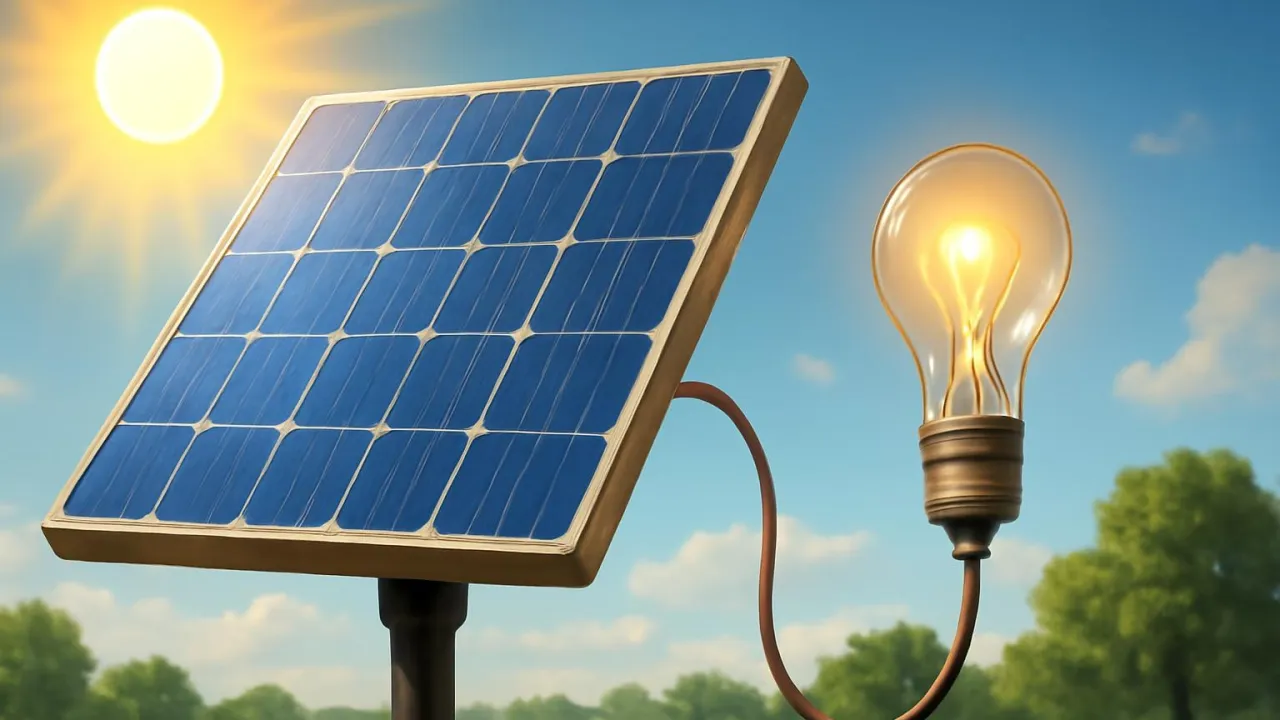
A solar cell can power a real car if you use enough panels!
✨ Word Sparks (Grade 2 Glossary)
Tap 🔊 to hear
panel
A flat piece that collects sunlight
silicon
A shiny material inside solar cells
electron
A tiny part that carries electricity
🪝
Have you seen shiny panels on a roof or in a field?
1
Catching Sunlight
Solar cells are flat, shiny that love sunlight. When the sun shines on them, they make electricity. People put them on houses, schools, and even space stations. They help power lights, fans, and computers.
2
How Do They Work?
A solar cell is made from special materials called . When sunlight hits the cell, it shakes up tiny parts called . These electrons move and make electricity travel through wires to things we use.
3
Good for the Earth
Solar cells do not make smoke or bad air. They use clean sunlight, so they help keep our planet healthy. Many people want more solar cells to help save energy and protect nature.
The largest solar farm in the world can power over a million homes!
✨ Word Sparks (Grade 3 Glossary)
Tap 🔊 to hear
photovoltaic
Turning sunlight into electricity
current
A flow of electricity
silicon
A rock-like material in solar cells
🪝
What if you could power your toys with just sunshine?
1
Panels That Catch the Sun
Solar panels are made of many solar cells linked together. They look blue and shiny, and you can spot them on rooftops or in big solar farms. When sunlight hits these panels, something amazing happens inside. The panels turn light energy into electricity we can use.
2
The Science Inside
Each solar cell is made of , a material that helps move electricity. Sunlight gives energy to electrons inside the silicon, making them vibrate and flow. This movement creates an electric , which travels through wires. The whole process is called the effect.
3
Clean Energy for All
Solar cells do not need fuel or make pollution, so they are called clean energy. They help fight problems like air pollution and climate change. Solar panels can power houses, schools, and even satellites in space. Many countries use more solar energy every year.
4
From Idea to Invention
The first real solar cell was made in 1954 by scientists at Bell Labs. Before that, people tried to make electricity from sunlight, but it was not very strong. The Bell Labs cell was powerful enough to light a small toy. Today, solar cells are everywhere, from calculators to giant power plants.
The International Space Station is powered almost entirely by giant solar panels!
✨ Word Sparks (Grade 4 Glossary)
Tap 🔊 to hear
photon
A tiny particle of light energy
efficiency
How well something works
renewable
Can be used again and again
🪝
Imagine if every rooftop could make its own electricity from sunlight!
1
Harnessing the Sun’s Power
Solar photovoltaic cells are special devices that convert sunlight directly into electricity using a process called the photovoltaic effect. These cells are grouped together in panels, which you can see on rooftops, fields, and even spacecraft. When sunlight strikes the silicon inside each cell, it excites electrons, causing them to move and generate an electric current. This clean energy can be used to power homes, schools, and even entire cities.
2
How Does a Solar Cell Work?
A solar cell is made mainly from silicon, a material that is both abundant and able to conduct electricity. When from sunlight hit the silicon, they transfer their energy to electrons, freeing them to flow through the material. This movement of electrons creates a current, which is then carried away by wires to power electrical devices. The of a solar cell depends on how well it absorbs sunlight and converts it into usable energy.
3
A Clean Solution for the Planet
Solar cells do not produce pollution or greenhouse gases, making them a sustainable energy source. They help reduce our dependence on fossil fuels, which can harm the environment through air pollution and climate change. Many countries are investing in solar farms and encouraging people to use solar panels at home. Solar energy is also important in places where electricity is hard to reach, like remote villages or space missions.
4
The Invention That Changed Energy
The first practical solar cell was invented in 1954 by scientists at Bell Labs in the United States. Earlier versions existed, but they were not efficient enough for everyday use. The Bell Labs cell could power small devices, starting a revolution in energy. Today, solar technology continues to improve, with new materials and designs making solar cells more affordable and powerful than ever before.
1. What happens when photons hit a solar cell’s silicon?
2. Why are solar cells good for the environment?
🤯 Mind-Blowing Fact • Grade 5
The world’s largest solar power plant, Bhadla Solar Park in India, covers 14,000 acres and produces over 2,200 megawatts!
✨ Word Sparks (Grade 5 Glossary)
Tap 🔊 to hear
p-n junction
A special boundary inside a solar cell
megawatt
A million watts of electrical power
perovskite
A new material used for solar cells
🪝
What if a single invention could help power the world and protect the planet at the same time?
1
The Science of Sunlight Conversion
Solar photovoltaic cells use the photovoltaic effect to convert sunlight directly into electrical energy, a process first observed by physicist Edmond Becquerel in 1839. Modern solar cells are typically made from crystalline silicon, which is specially treated to create a —a boundary that helps separate electrical charges. When photons from sunlight strike the silicon, they excite electrons, freeing them to flow across the junction and generate direct current (DC) electricity. This electricity can then be used immediately or stored in batteries for later use.
2
Engineering Marvels: Structure and Materials
A typical solar cell consists of a thin silicon wafer, anti-reflective coatings, metal contacts, and a protective glass cover. Silicon is chosen for its abundance and excellent ability to absorb sunlight and conduct electricity. The cell’s efficiency—how much sunlight it can turn into usable electricity—depends on factors like purity, thickness, and how well it captures photons. Advanced solar cells now use materials like gallium arsenide or to push efficiency even higher.
3
From Rooftops to Space: Global Impact
Since the first practical solar cell was invented at Bell Labs in 1954, solar technology has transformed how we generate power worldwide. Solar panels now provide electricity for millions of homes, power remote villages, and fuel satellites and the International Space Station. Large-scale solar farms can generate hundreds of , enough to supply entire cities with clean energy. Solar power reduces reliance on fossil fuels, helping to slow climate change and improve air quality.
4
The Evolution of Solar Technology
Early solar cells were expensive and inefficient, converting less than 6% of sunlight into electricity. Today’s commercial silicon cells typically reach 20% efficiency, while laboratory prototypes have surpassed 40% using multi-junction designs. Innovations in manufacturing have made solar panels more affordable and durable, allowing widespread adoption in both developed and developing countries. Research continues into flexible, transparent, and even printable solar cells for new applications.
5
A Bright Future for Renewable Energy
Solar photovoltaic technology is a cornerstone of the global shift toward renewable energy. As costs decrease and efficiency rises, solar power will play an even greater role in reducing greenhouse gas emissions and meeting the world’s growing energy needs. Governments and scientists are working together to create smart grids, energy storage systems, and solar-powered transportation. The journey from a simple silicon wafer to powering entire communities shows how innovation can change the world for the better.