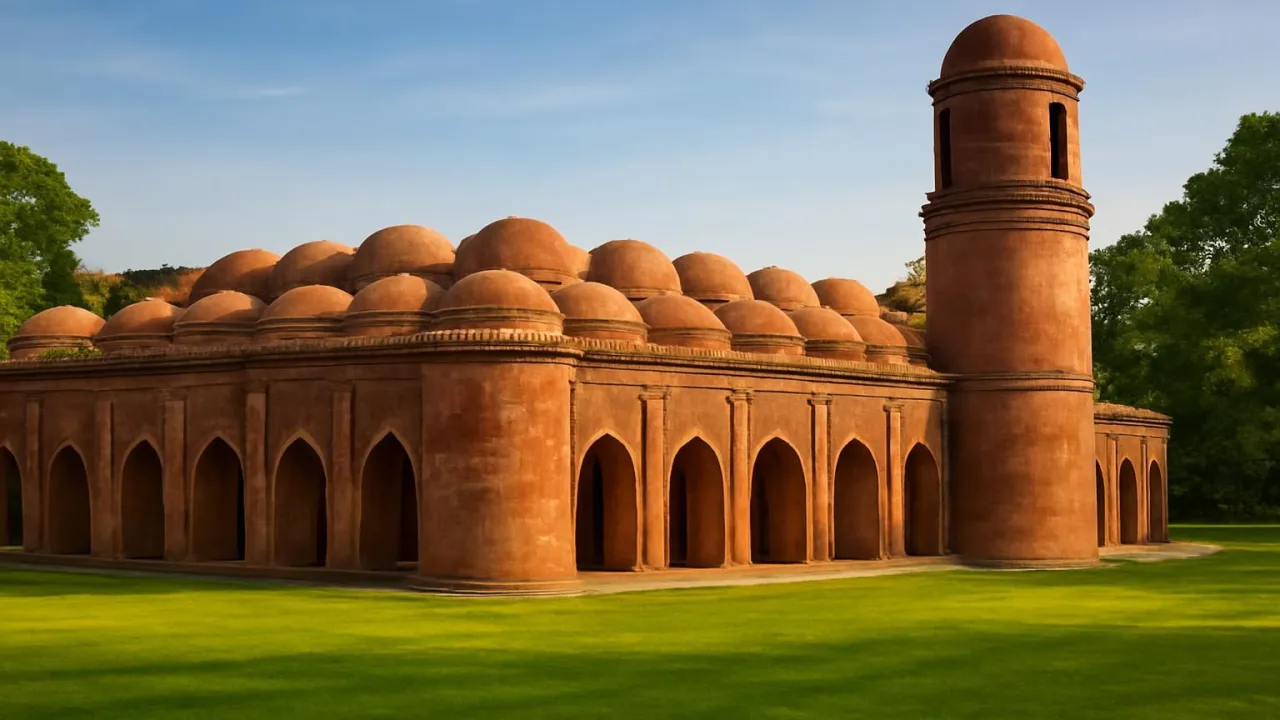
The mosque’s 77 domes help spread sound evenly during prayers.
✨ Word Sparks (Grade 3 Glossary)
Tap 🔊 to hear
acoustic
How sound travels in a place
pillar
A tall post that holds things up
heritage
Something special from the past
🪝
Imagine your footsteps bouncing off seventy-seven domes—how would that sound?
1
A Marvel of Many Domes
The Sixty Dome Mosque is famous for its roof covered with domes. Even though it is called 'Sixty Dome,' it actually has seventy-seven domes. The domes create gentle echoes when people talk or pray inside. This special sound is called an effect.
2
Strong Pillars and Arches
Sixty stone stand in neat rows inside the mosque. These pillars support the heavy domes and keep the roof strong. Wide arches connect the pillars and let sunlight shine through. The arches and pillars make the mosque look like a forest of stone.
3
Built to Last
The mosque was built around 1459 CE in Bagerhat, Bangladesh. Its thick red brick walls protect it from rain and heat. The builders used local bricks and clever design to keep the inside cool. Over time, the mosque has survived floods and storms.
4
A Place of Gathering
People come from all over to visit and pray at the mosque. It is a UNESCO World Site because it is so special and old. The mosque is still used today for prayers and festivals. Its beauty and history make it a treasure for Bangladesh and the world.
2. Why is the mosque called a World Heritage Site?
🤯 Mind-Blowing Fact • Grade 4
The mosque’s domes and arches were designed to carry sound without microphones.
✨ Word Sparks (Grade 4 Glossary)
Tap 🔊 to hear
resonance
When sound vibrates and fills a space
terracotta
A reddish clay used for bricks
preservation
Care to keep something safe and strong
🪝
What secrets do the domes of Bagerhat whisper when hundreds gather to pray?
1
A Masterpiece of Medieval Bengal
The Sixty Dome Mosque, built in the 15th century, is a masterpiece of Bengal Sultanate architecture. Its real name, Shaṭ Gombuj Masjid, means 'sixty domes,' but it actually boasts seventy-seven domes arranged in rows. The mosque’s enormous prayer hall is supported by sixty stone pillars, creating a grid that holds up the domed roof. This unique design lets light and air flow gently through the vast space.
2
Engineering for Sound and Strength
The builders used thick bricks and lime mortar to make the walls strong against floods and storms. The domes and arches create acoustic , so prayers and voices echo softly across the hall. Each dome is carefully shaped to reflect sound evenly, making it easier for everyone to hear the imam. The pillars and arches distribute the heavy weight of the domes, preventing the roof from collapsing.
3
A Center of Community and Faith
For centuries, the mosque has been a center for prayer, learning, and community gatherings. People visit from all over Bangladesh and beyond to admire its beauty and history. The mosque is still used for daily prayers and special religious festivals. Its peaceful atmosphere and architectural wonders inspire visitors of all ages.
4
A Treasure for the World
UNESCO named the mosque a World Heritage Site in 1985, recognizing its cultural and historical value. The mosque stands as a symbol of Bangladesh’s rich past and creative engineering. teams work to protect its bricks and domes from erosion and weathering. The Sixty Dome Mosque remains a source of pride and wonder for people everywhere.
2. Why do people visit the Sixty Dome Mosque today?
🤯 Mind-Blowing Fact • Grade 5
The mosque’s 77 domes and 60 pillars form a perfect grid, creating both strength and stunning sound effects.
✨ Word Sparks (Grade 5 Glossary)
Tap 🔊 to hear
lateral thrust
Sideways force that pushes out on walls
conservation
Careful work to protect old buildings
pilgrimage
A special journey to a holy place
🪝
What architectural genius lets a sea of domes fill a prayer hall with clear, echoing voices—without any speakers?
1
A Monument of Medieval Innovation
Step inside the Sixty Dome Mosque and you’ll find yourself surrounded by a grid of stone pillars and a ceiling rippling with domes. Built around 1459 CE by Khan Jahan Ali, this mosque is one of the largest and most architecturally complex structures from the Bengal Sultanate period. Despite its name, the mosque actually features seventy-seven low domes and four larger corner domes, all supported by sixty robust stone pillars. Its vast rectangular prayer hall stretches 160 feet by 104 feet, making it the largest mosque from the Sultanate era in Bangladesh.
2
Engineering Marvel: Pillars, Arches, and Domes
The mosque’s grid of pillars forms eleven aisles and seven bays, distributing the immense weight of the domes through pointed arches and thick brick walls. The builders used locally sourced terracotta bricks, which resist the region’s heavy monsoon rains and humidity. Each dome is a shallow hemisphere, designed to minimize and prevent collapse. The arches and domes work together to create a stable, earthquake-resistant structure that has endured for over five centuries.
3
Acoustic Brilliance: Sound Without Technology
The Sixty Dome Mosque is celebrated for its extraordinary acoustic engineering. The domes and arches create natural resonance, allowing even a soft voice to be heard clearly throughout the hall. This effect was essential for communal prayers before the invention of microphones. The interior’s geometry prevents echoes from becoming muddled, so the imam’s words travel smoothly to every corner. Visitors often marvel at how footsteps and whispers seem to dance across the stone floor.
4
A Living Heritage and Cultural Beacon
For centuries, the mosque has been a vibrant center for worship, education, and community gatherings. It remains active today, hosting daily prayers and major Islamic festivals that attract thousands. The mosque’s architecture blends local Bengali styles with Persian and Turkish influences, symbolizing a meeting of cultures. Its enduring presence has made Bagerhat a significant and tourism site, contributing to the region’s identity and economy.
5
Preservation and Global Recognition
Designated a UNESCO World Heritage Site in 1985, the Sixty Dome Mosque is protected as a global treasure. Conservationists work to combat erosion, water damage, and vegetation growth that threaten its ancient bricks and mortar. Modern restoration uses traditional materials and techniques to preserve its authentic character. As a masterpiece of medieval engineering and faith, the mosque continues to inspire architects, historians, and visitors from around the world.