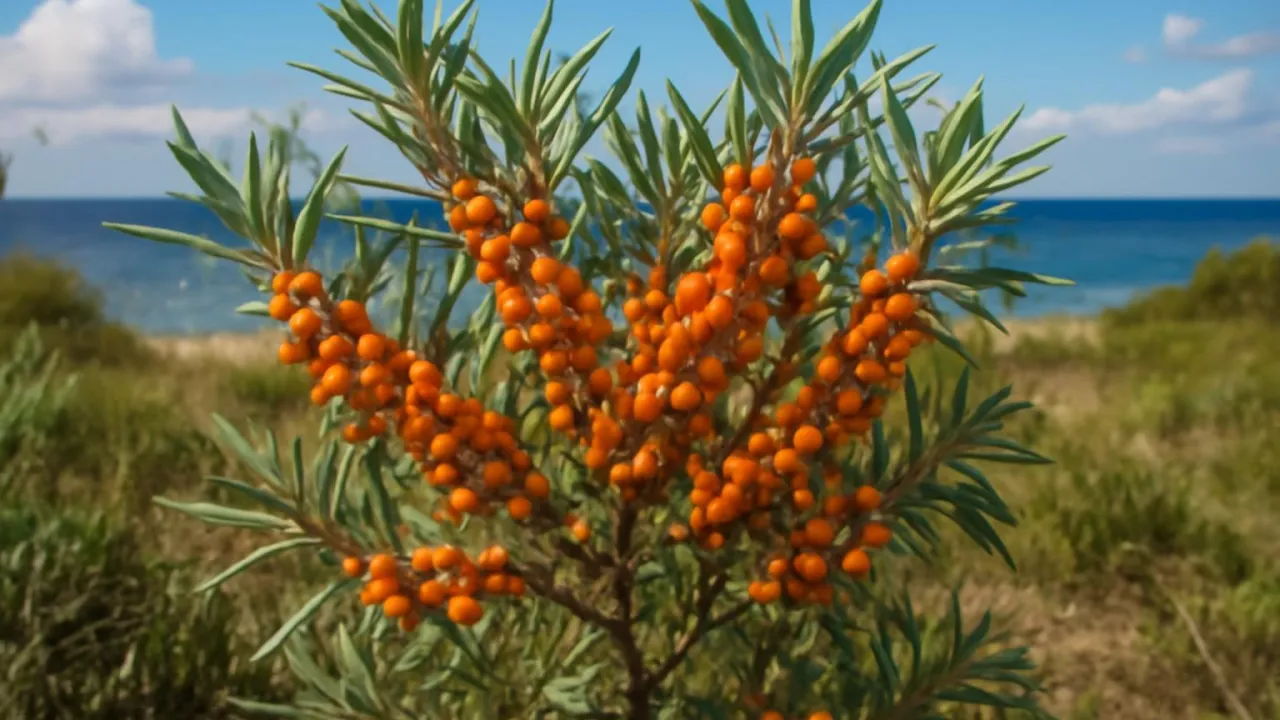
Sea buckthorn berries contain more vitamin C than oranges and also have antioxidants that protect cells.
✨ Word Sparks (Grade 3 Glossary)
Tap 🔊 to hear
pollination
When pollen moves to help plants make seeds
adaptation
A change that helps a plant or animal survive
nutrients
Food parts that help plants and animals grow
🪝
Did you know sea buckthorn berries are full of vitamin C and help plants survive tough places?
1
Sea Buckthorn’s Tough Habitat
Sea buckthorn grows in coastal and mountainous regions with salty air and dry soil. This plant adapts well to harsh environments. Its deep roots help it find water underground. The bush’s tough leaves reduce water loss.
2
Bright Berries and Pollination
The bright orange berries attract birds that help spread seeds far away. In spring, tiny flowers bloom and rely on wind or insects for . Pollination helps the plant make fruit and grow new bushes. This cycle is important for the plant’s survival.
3
How Sea Buckthorn Helps Ecosystems
Sea buckthorn bushes provide food and shelter for many animals, including birds and insects. The plant also improves soil by adding through its roots. This helps other plants grow nearby. It plays a key role in coastal food webs.
4
A Special Adaptation
The sea buckthorn’s leaves have a waxy coating that protects them from salty winds. Its orange berries contain antioxidants that protect cells from damage. These help the plant survive and thrive in tough conditions.
Sea buckthorn fixes nitrogen in soil, helping other plants grow in tough environments.
✨ Word Sparks (Grade 4 Glossary)
Tap 🔊 to hear
nitrogen
A gas in air that helps plants grow strong
erosion
When wind or water wears soil away
herbivores
Animals that eat plants for food
🪝
How does sea buckthorn survive in salty, windy places and help other plants grow?
1
Surviving Harsh Coastal Environments
Sea buckthorn thrives in coastal areas where salty winds and dry soil make survival difficult, thanks to its waxy leaves that reduce water loss and protect against salt damage. Its deep, extensive root system anchors the plant firmly and absorbs water from deep underground sources, allowing it to endure droughts and strong winds.
2
Role in Ecosystems and Food Webs
This shrub provides essential food for birds and insects, which helps maintain local food webs. Birds eat the bright orange berries and disperse seeds over wide areas, promoting new plant growth. Additionally, sea buckthorn enriches the soil by fixing , improving conditions for other plants nearby.
3
Human Uses and Agricultural Impact
Humans harvest sea buckthorn berries for juice, oil, and supplements rich in vitamin C and antioxidants, which support health. The plant is also used in land restoration projects to prevent soil in coastal and mountainous regions. Its ability to grow in poor soils makes it valuable for agriculture and environmental conservation.
4
Geographic Distribution and Adaptations
Sea buckthorn naturally grows across Europe and Asia, especially in coastal and mountainous zones with harsh climates. Its adaptations, such as thorny branches and waxy leaves, help it survive and extreme weather. This wide distribution shows how well the plant has evolved to thrive in challenging habitats.
1. What helps sea buckthorn protect itself from salty winds?
2. How does sea buckthorn help other plants grow?
🤯 Mind-Blowing Fact • Grade 5
Sea buckthorn berries have 15 times more vitamin C than oranges and thrive in temperatures from -40°F to 104°F.
✨ Word Sparks (Grade 5 Glossary)
Tap 🔊 to hear
oxidative stress
Damage to cells caused by harmful molecules
nitrogen fixation
Process where plants add nitrogen to soil
reclamation
Restoring damaged land to a healthy state
🪝
What makes sea buckthorn a vital plant for harsh climates and human health worldwide?
1
Scientific Classification and Habitat
Sea buckthorn, scientifically known as Hippophae rhamnoides, belongs to the Elaeagnaceae family and thrives in temperate coastal and mountainous regions across Europe and Asia. It prefers sandy, well-drained soils and tolerates drought, saline conditions, and extreme temperatures, making it a resilient species in challenging environments.
2
Physiological Adaptations and Survival
This plant has evolved deep root systems that access water far below the surface, and its leaves possess a thick waxy cuticle to minimize water loss and protect from salt spray. The thorny branches deter herbivores, while the orange berries contain high levels of vitamin C and antioxidants, which protect plant cells from .
3
Ecological and Agricultural Importance
Sea buckthorn plays a crucial role in , enriching poor soils and facilitating the growth of other plants in its ecosystem. It supports biodiversity by providing food and habitat for various birds and insects. Agriculturally, it is used for soil stabilization and land projects, preventing erosion in vulnerable coastal and mountainous areas.
4
Conservation and Botanical History
Historically, sea buckthorn has been valued in traditional medicine and nutrition for centuries, especially in Asia and Europe. Conservation efforts focus on protecting wild populations from overharvesting and habitat loss, ensuring sustainable use. Its expanding cultivation reflects growing global interest in its health benefits and environmental applications.
5
Quantitative Comparisons and Uses
Sea buckthorn berries contain up to 15 times more vitamin C than oranges and can survive temperatures from -40°F to 104°F (-40°C to 40°C). The shrub grows between 3 and 10 feet tall (1 to 3 meters) and produces oil rich in omega fatty acids, widely used in cosmetics and dietary supplements worldwide.