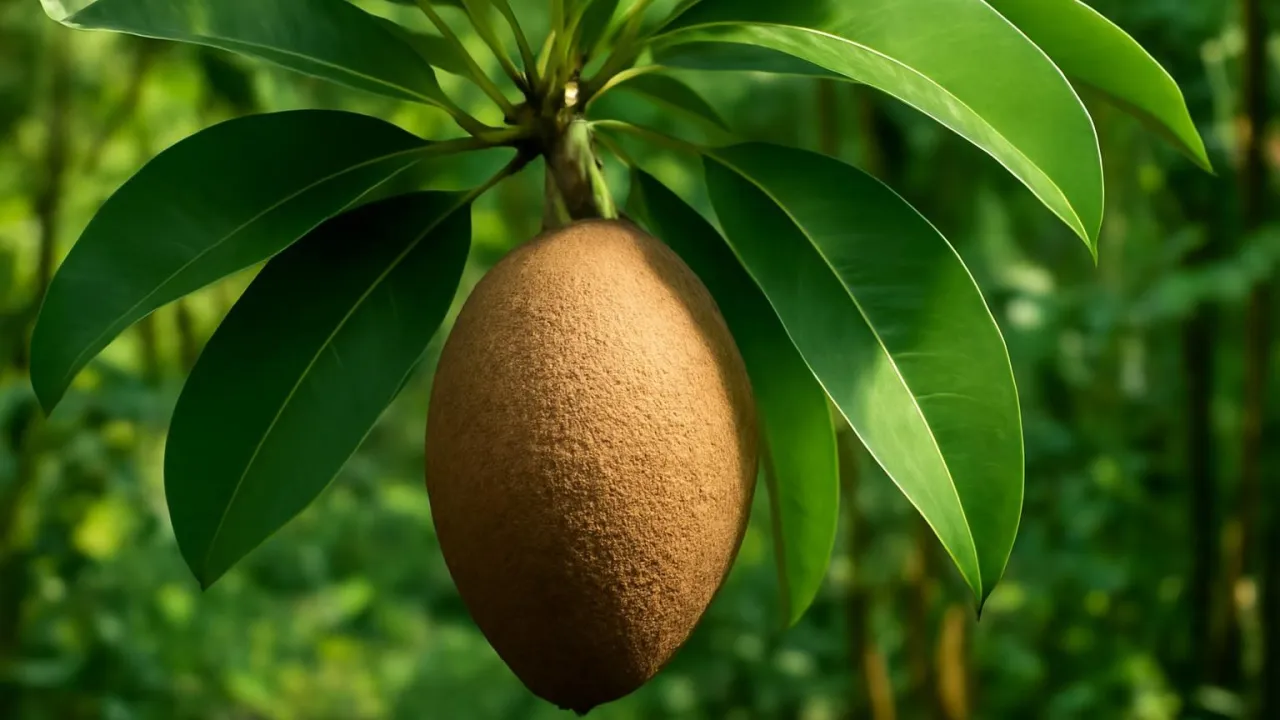
The sticky sap from sapodilla trees was the original chewing gum base!
✨ Word Sparks (Grade 2 Glossary)
Tap 🔊 to hear
tropical
Warm places near the equator
sap
Sticky juice inside some trees
seeds
Tiny parts inside fruit that grow plants
🪝
Have you ever tasted a fruit that feels like brown sugar?
1
What Sapodilla Looks Like
Sapodilla fruit is round and brown with rough skin, and it feels grainy inside. The fruit is soft and very sweet when ripe, and many people enjoy its unique flavor.
2
Where Sapodilla Grows
Sapodilla trees grow in warm, places like Central America and Asia. They need full sunlight and moderate rain to grow tall and strong. Birds and animals eat the fruit and help spread its .
3
A Special Feature
The sapodilla tree produces a sticky white called chicle, which was once used to make chewing gum. This sap helps protect the tree from insects and injury.
Sapodilla’s sticky sap, called chicle, was the original base for chewing gum worldwide!
✨ Word Sparks (Grade 3 Glossary)
Tap 🔊 to hear
camouflage
How animals or plants hide by blending in
latex
Sticky liquid some plants make to protect themselves
symbiotic
Two living things helping each other survive
🪝
Did you know sapodilla fruit has a grainy texture and a sweet taste like brown sugar?
1
Sapodilla’s Appearance and Texture
Sapodilla fruit is round and covered with rough, brown skin that helps protect it from predators. Inside, the flesh is soft and grainy, which is an adaptation that makes it easy to eat. The sweet flavor comes from natural sugars that develop as the fruit ripens fully.
2
Where Sapodilla Grows
Sapodilla trees thrive in tropical climates where they receive plenty of sunlight and moderate rainfall. These trees grow tall, sometimes reaching 100 feet, and their leaves help them from some predators. The fruit attracts many animals that help with seed dispersal.
3
The Tree’s Sticky Sap
The sapodilla tree produces a sticky called chicle, which protects the tree from insects and physical damage. This sap was once harvested to make chewing gum before synthetic gums were invented. The sap also seals wounds on the tree’s bark, preventing infection.
4
How Sapodilla Helps the Ecosystem
Sapodilla fruits provide food for birds and mammals, which in turn spread the seeds to new areas. This relationship helps the tree reproduce and keeps the tropical forest healthy. The tree also contributes oxygen and shade, supporting many other plants and animals.
Sapodilla’s chicle sap was once a major natural resource for chewing gum worldwide!
✨ Word Sparks (Grade 4 Glossary)
Tap 🔊 to hear
dispersal
Spreading seeds far from the parent plant
nutrients
Food that plants and animals need to grow
cultivation
Growing plants for food or use by people
🪝
Have you ever wondered how a sticky sap tree helps tropical forests thrive?
1
Sapodilla’s Protective Features
The sapodilla fruit’s rough, brown skin acts as a natural barrier against pests and harsh weather, which helps the fruit survive until it ripens fully. Its grainy, sweet flesh attracts animals that eat the fruit and aid in seed , creating a cause-and-effect cycle essential for the tree’s reproduction.
2
Role in Tropical Ecosystems
Sapodilla trees provide food for many animals like birds and mammals, which depend on the fruit for nutrition. This relationship creates a symbiotic bond where animals help spread seeds while gaining nourishment. The trees also contribute oxygen and shade, supporting diverse plant and animal life in tropical forests.
3
Geographic Distribution and Growth
Native to tropical regions of Central America and Southeast Asia, sapodilla trees thrive in warm climates with well-drained soil. They can grow up to 100 feet tall and require full sun and moderate water to develop healthy fruit. Human has spread sapodilla to many tropical countries around the world.
4
Human Uses and Environmental Impact
Historically, the sticky sap called chicle was harvested to make natural chewing gum, which helped local economies. Today, sapodilla fruit is enjoyed worldwide for its sweet flavor, but overharvesting and habitat loss threaten wild trees. Sustainable farming practices are important to protect this valuable tropical species.
1. What helps sapodilla fruit survive until it ripens?
2. Why is seed dispersal important for sapodilla trees?
🤯 Mind-Blowing Fact • Grade 5
Sapodilla’s chicle latex was the original natural chewing gum base before synthetic gums were invented!
✨ Word Sparks (Grade 5 Glossary)
Tap 🔊 to hear
latex
Sticky sap that helps plants heal wounds
mutualistic
Both species benefit from their relationship
carbon sequestration
Trees storing carbon to help the planet
🪝
How does the sapodilla tree’s unique biology support tropical ecosystems and human culture?
1
Scientific Classification and Habitat
Sapodilla, scientifically named Manilkara zapota, belongs to the Sapotaceae family and is native to tropical Central America and Southeast Asia. It thrives in warm, humid climates with well-drained soils and requires full sunlight and moderate rainfall to grow optimally. The species can reach heights of up to 100 feet (30 meters), forming dense canopies that support diverse wildlife.
2
Physiological Adaptations and Fruit Characteristics
The sapodilla tree produces a thick, rough brown fruit with grainy, sweet flesh rich in natural sugars like fructose and sucrose. Its rough skin acts as a protective barrier against pests and environmental damage, while the sticky sap, known as chicle, seals wounds and deters insects. This latex was historically harvested as a natural chewing gum base, demonstrating a unique physiological adaptation.
3
Ecological Role and Seed Dispersal Mechanisms
Sapodilla fruits serve as an important food source for various tropical birds and mammals, which consume the fruit and disperse the seeds through their droppings. This relationship aids in the propagation of sapodilla across tropical forests, contributing to biodiversity and forest regeneration. The tree also plays a role in and provides shade that supports understory plants.
4
Conservation, Cultivation, and Economic Importance
While sapodilla is widely cultivated in tropical regions for its fruit and chicle production, wild populations face threats from habitat loss and overharvesting. Sustainable agricultural practices and conservation efforts are vital to protect genetic diversity. Economically, sapodilla fruit is valued for its sweet flavor, and chicle harvesting historically supported local economies before synthetic alternatives emerged.
5
Quantitative Comparisons and Botanical Insights
Sapodilla trees can grow to 100 feet (30 meters) tall and produce fruits weighing up to 1 pound (450 grams). The fruit’s sugar content can reach 14–15%, making it sweeter than many common fruits. The sticky sap flows at a slow rate to seal wounds effectively, and the species’ growth rate depends on climate conditions, typically growing faster in consistently warm, moist environments.