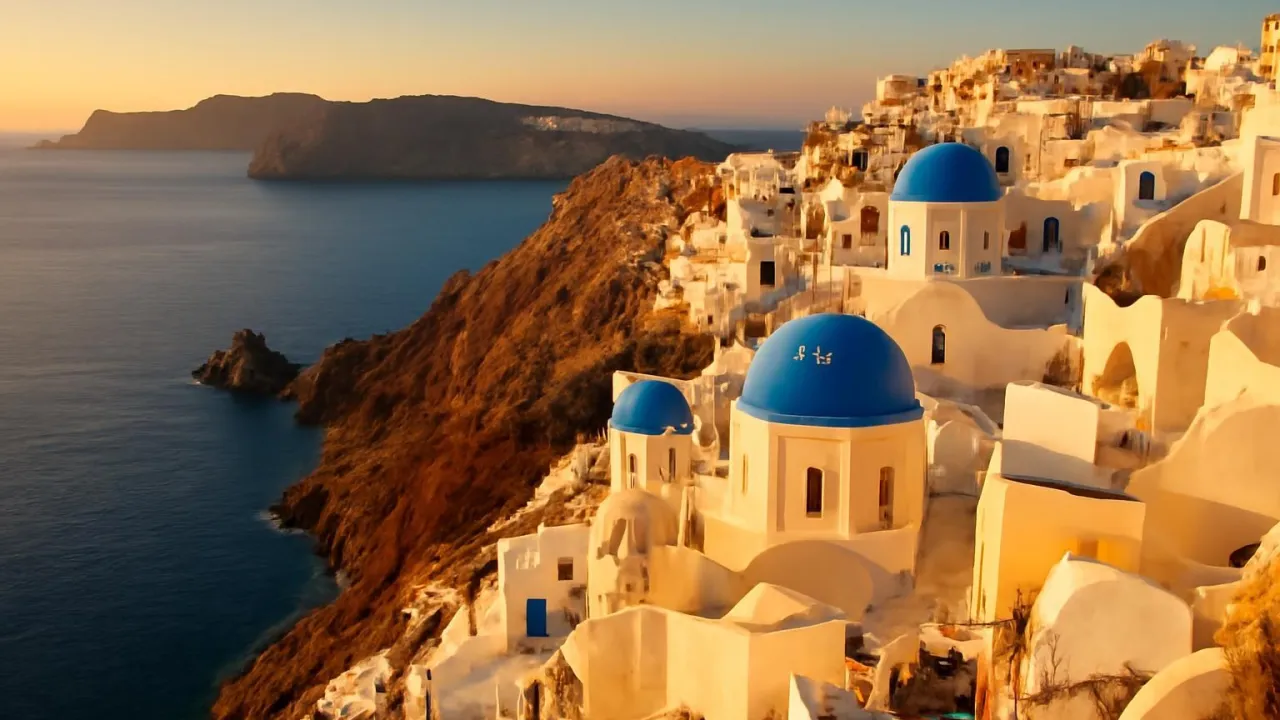
Santorini’s caldera was made by a huge volcano eruption long ago!
✨ Word Sparks (Grade 2 Glossary)
Tap 🔊 to hear
eruption
When a volcano explodes
dome
A roof shaped like half a ball
sparkle
To shine with bright flashes
🪝
Can you imagine climbing stairs above a blue sea every day?
1
Villages on the Volcano
The Santorini villages sit on the edge of a giant volcano. People built white houses with blue high above the sea. The cliffs are steep, and the view is amazing.
2
Paths and Stairs
Narrow paths and many stairs twist between the houses. People walk up and down to visit friends or see the sunset. The steps help everyone move safely on the cliffs.
3
Sun, Sea, and Boats
The sun shines on the blue water every day. Boats sail far below the villages. Visitors love to watch the sea from the top.
2. What do visitors love to watch from the villages?
🤯 Mind-Blowing Fact • Grade 3
Some Santorini homes are carved right into the volcanic cliff, called 'yposkafa' houses!
✨ Word Sparks (Grade 3 Glossary)
Tap 🔊 to hear
caldera
A giant bowl-shaped volcano crater
whitewashed
Painted bright white to reflect sun
monument
A special place made to remember
🪝
What would it feel like to live in a house carved into a cliff above a volcano?
1
A Village on a Volcano
Santorini’s villages perch on the rim of a massive volcanic . The caldera was formed by a powerful eruption thousands of years ago. houses and blue domes shine brightly in the sun. Their colors help keep homes cool during hot days.
2
Stairs, Paths, and Cave Homes
Narrow stairways and winding paths connect homes built into the volcanic rock. Many houses are called 'cave homes' because they are dug into the cliffside. These homes stay cool in summer and warm in winter. People use stairs instead of roads to travel between levels.
3
Views of Sea and Sky
From the village, you can see the deep blue Aegean Sea below. Boats look tiny as they cross the water far beneath the cliffs. The sunsets here are famous for their bright orange and pink colors. Tourists visit from around the world to enjoy the view.
4
A Living Monument
The villages are a to nature and engineering. Builders used local volcanic stone for strong, safe homes. The villages show how people can adapt to wild landscapes. Today, Santorini is a UNESCO World Heritage site.
Santorini’s volcanic eruption was one of the largest in human history and may have inspired the legend of Atlantis!
✨ Word Sparks (Grade 4 Glossary)
Tap 🔊 to hear
insulation
Material that keeps heat in or out
terrain
The shape of land and ground
resilience
The ability to recover and stay strong
🪝
Can you picture sunlight glinting off white houses high above a blue volcanic sea?
1
Born from a Volcanic Blast
Santorini’s caldera villages are perched on cliffs formed by a massive volcanic eruption around 1600 BCE. This eruption created a huge bowl-shaped crater, or caldera, now filled by the Aegean Sea. The villages of Oia, Fira, and Imerovigli cling to the caldera’s rim, offering breathtaking views. Their unique location is a result of both natural forces and human ingenuity.
2
Ingenious Architecture on Steep Cliffs
Builders used volcanic stone to construct whitewashed houses, which reflect sunlight and keep interiors cool. Many homes are 'yposkafa,' carved directly into the soft volcanic rock, providing from heat and cold. Winding stairways and narrow paths connect different levels, since roads are nearly impossible on such steep . Blue-domed churches and terraces dot the landscape, creating Santorini’s iconic look.
3
Life Above the Caldera
Residents and visitors travel by foot along twisting paths and countless steps. The villages overlook the deep blue sea, where boats and ferries appear tiny from above. Sunsets over the caldera are world-famous, drawing travelers who want to experience the brilliant colors. Local culture blends Greek traditions with the dramatic volcanic setting.
4
A World Heritage Wonder
Santorini’s caldera villages are recognized as a UNESCO World Heritage site for their beauty and history. The villages show how people adapt architecture to extreme environments, using local materials and clever designs. Tourism now supports the island, but the villages still preserve their ancient charm. Santorini remains a symbol of and harmony between humans and nature.
1. How do 'yposkafa' homes help people live on Santorini?
2. Why are there so many steps and paths in the villages?
🤯 Mind-Blowing Fact • Grade 5
The Minoan eruption that formed Santorini’s caldera was up to 100 times more powerful than the eruption of Mount Vesuvius that buried Pompeii!
✨ Word Sparks (Grade 5 Glossary)
Tap 🔊 to hear
tuff
A soft rock formed from volcanic ash
cistern
A tank for storing collected rainwater
panorama
A wide, sweeping view of a landscape
🪝
What if you could trace the story of an ancient volcano by walking through dazzling white villages perched above the sea?
1
The Caldera’s Explosive Origins
Roughly 3,600 years ago, a cataclysmic volcanic eruption reshaped Santorini, creating one of the world’s largest calderas. This eruption, known as the Minoan eruption, blasted away the island’s center, leaving behind towering cliffs that rise up to 1,312 feet (400 meters) above the Aegean Sea. The event not only altered the landscape but also affected civilizations across the eastern Mediterranean, with ash layers found as far as Turkey and Egypt.
2
Architectural Ingenuity on Volcanic Cliffs
Santorini’s caldera villages, such as Oia and Fira, are masterpieces of adaptation and engineering. Builders constructed homes from local volcanic , using whitewash to reflect intense sunlight and blue domes to mirror the sky and sea. Many dwellings are 'yposkafa,' or cave houses, carved directly into the pumice rock for natural insulation and earthquake resistance. The villages cascade down the caldera’s rim in a 7-mile (11-kilometer) arc, with labyrinthine stairways replacing roads.
3
Living with the Volcano
Life in the caldera villages is shaped by the dramatic terrain and volcanic legacy. Residents and visitors navigate hundreds of steps and winding alleys, as vehicles cannot access most areas. Rainwater is carefully collected in , and homes are designed to maximize coolness and safety. The volcanic soil supports unique crops like cherry tomatoes and fava beans, while the caldera’s waters attract scientists and divers exploring its geology.
4
Sunsets, Culture, and Global Fame
Santorini’s sunsets, viewed from the caldera’s edge, are world-renowned for their vibrant colors and breathtaking . The villages host blue-domed churches, bustling markets, and traditional Greek festivals, blending ancient heritage with modern tourism. As a UNESCO World Heritage site, Santorini draws millions of visitors annually, inspiring artists, writers, and filmmakers with its beauty and history.
5
A Lasting Legacy of Adaptation
The Santorini caldera villages exemplify human resilience and creativity in the face of natural challenges. Their architecture, shaped by necessity and tradition, provides lessons in sustainable building and environmental harmony. The eruption’s impact on ancient societies remains a subject of scientific research, while the villages themselves continue to evolve, balancing preservation with the demands of global tourism. Santorini stands as a living testament to the power of nature and the ingenuity of people who call it home.