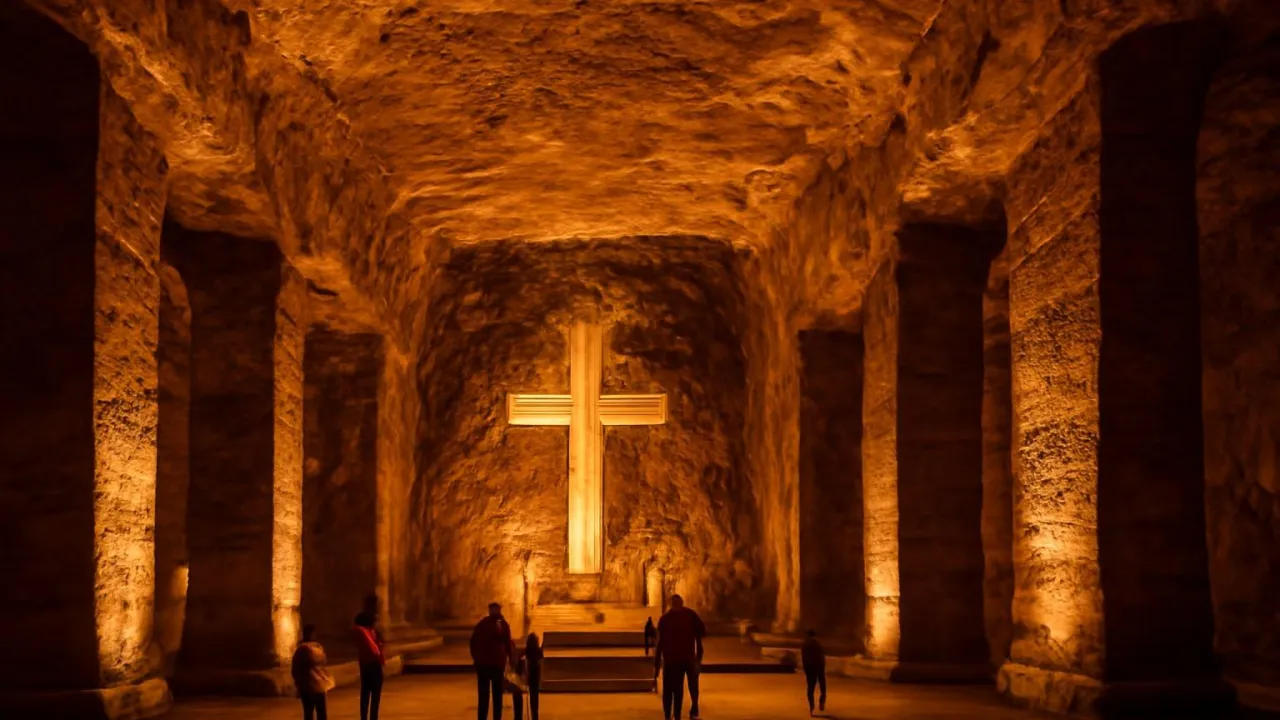
The Salt Cathedral is almost 600 feet below the ground!
✨ Word Sparks (Grade 2 Glossary)
Tap 🔊 to hear
tunnel
A long path underground
carving
A shape cut into rock
visitor
Someone who comes to see
🪝
Have you ever imagined a glowing church hidden under the ground?
1
Deep Down Below
People walk down long to reach the Salt Cathedral. The walls and floors are made from real salt rock. Colorful lights shine on the salty walls and make them sparkle.
2
A Special Place to Visit
see and big salt crosses inside the cave. Some people come to pray, while others just want to explore. The huge main hall can hold many people at once.
3
Made by Miners and Artists
Long ago, miners dug out salt for work. Later, artists carved the cathedral inside the old mine. Now, it is a famous place in Colombia.
The Salt Cathedral’s main cross is 52 feet tall and carved from pure salt!
✨ Word Sparks (Grade 3 Glossary)
Tap 🔊 to hear
arch
A curved shape that holds up weight
resonance
Echoes that make sound stronger
landmark
A famous place people visit
🪝
Can you picture echoes bouncing off sparkling salt walls deep inside a mountain?
1
Journey into the Earth
Visitors enter the Salt Cathedral by walking through long, winding tunnels. The air feels cool and tastes a little salty. As you step inside, lights shine on the white and blue salt, making everything shimmer. The space is so big that voices echo all around.
2
A Cathedral Built by Hands
Miners first dug these tunnels to collect salt long ago. Later, artists and engineers carved giant , crosses, and benches from the salt rock. The cathedral’s main hall is large enough to hold hundreds of people for services. Special lighting highlights carvings, making the underground church look magical.
3
Salt Rock and Engineering
Salt rock forms when ancient seas dry up and leave thick layers underground. Engineers had to carefully design the cathedral so the salt wouldn’t crumble. They used and columns to support the heavy ceiling and keep visitors safe.
4
A Place for Wonder and Worship
People visit the Salt Cathedral to pray, listen to music, or just explore. The echoing sound inside is called acoustic , which makes singing feel powerful. This cathedral is now one of Colombia’s most famous , drawing visitors from around the world.
The Salt Cathedral’s main hall is large enough to fit an entire soccer field inside!
✨ Word Sparks (Grade 4 Glossary)
Tap 🔊 to hear
erosion
Wearing away of rock over time
pillar
A strong column that holds up weight
monument
A special building or statue
🪝
Imagine stepping into a glowing underground cathedral where every wall is made of ancient salt—what mysteries would you discover?
1
Descending into the Salt Mountain
To reach the Salt Cathedral, visitors descend 590 feet below the surface through winding tunnels in the mountain. The air is cool and slightly salty, and the walls glimmer with crystals left by ancient seas. As you walk deeper, colored lights reveal carvings and sculptures that seem to glow from within. The cathedral’s entrance feels like stepping into a magical, hidden world.
2
A Marvel of Mining and Art
The original salt mine was dug by Muisca people and later expanded by Spanish miners. In the 1990s, Colombian artists and engineers transformed the abandoned mine into a cathedral by carving arches, columns, and religious symbols directly into the salt rock. The main hall, large enough to fit 8,400 people, is supported by massive salt and features a 52-foot salt cross.
3
Engineering Strength from Salt
Salt rock is both beautiful and fragile, so engineers used special designs to prevent collapse. The cathedral relies on thick arches and columns to distribute weight and reduce . Lighting designers placed colored lights to highlight the sparkling salt and create a peaceful, awe-inspiring atmosphere.
4
A Global Landmark of Faith and Wonder
The Salt Cathedral is not only a place of worship but also a symbol of Colombia’s creativity and resilience. It attracts over 600,000 visitors each year, who come to experience its unique acoustics, history, and beauty. The cathedral is now recognized as one of the world’s most remarkable underground .
1. Why did engineers use thick pillars in the cathedral?
2. What makes the Salt Cathedral a global landmark?
🤯 Mind-Blowing Fact • Grade 5
The Salt Cathedral’s salt cross is the world’s largest underground cross, measuring 52 feet tall and 36 feet wide!
✨ Word Sparks (Grade 5 Glossary)
Tap 🔊 to hear
halite
The scientific name for salt rock
humidity
How much water is in the air
heritage
Something important from the past
🪝
What would it feel like to stand hundreds of feet underground, surrounded by shimmering salt pillars and echoing voices in a cathedral carved from the very earth?
1
Entering a Hidden World Beneath the Mountain
Descending into the Salt Cathedral of Zipaquirá, visitors travel nearly 590 feet underground through a labyrinth of salt-carved tunnels. The air is cool and dry, and every surface glistens with ancient salt crystals formed from evaporated seas millions of years ago. Colored LED lights illuminate the cathedral’s intricate carvings, casting blue, purple, and golden glows across the vast chambers. As you walk deeper, the sound of footsteps and voices bounces along the walls, creating a unique acoustic experience.
2
From Ancient Mine to Modern Marvel
The original salt mine was first used by the indigenous Muisca people, who extracted salt for trade and food preservation. Spanish colonists later expanded the mine, and by the twentieth century, it became one of Colombia’s most important industrial sites. In the 1990s, after mining stopped, Colombian architects and artists transformed the abandoned caverns into a cathedral, carving massive arches, columns, and religious symbols directly from solid . The main sanctuary, measuring over 8,500 square feet, features a striking 52-foot salt cross—the largest of its kind in the world.
3
Engineering Against Nature’s Challenges
Constructing a cathedral inside a salt mine required advanced engineering to overcome the natural fragility of salt rock. Engineers designed thick arches and pillars to distribute the immense weight of the mountain above and prevent structural collapse. Special drainage systems were installed to protect against water infiltration, which could dissolve the salt and cause erosion. The cathedral’s lighting design not only highlights its beauty but also helps maintain stable levels, preserving the salt structures for generations.
4
Acoustics, Art, and Spiritual Resonance
The Salt Cathedral is renowned for its remarkable acoustic resonance, which amplifies music and voices during ceremonies and concerts. Artists sculpted Stations of the Cross, angels, and biblical scenes into the salt walls, blending religious art with geological wonder. The interplay of light, sound, and salt creates a spiritual atmosphere that draws both worshippers and tourists from around the world.
5
A Colombian Icon with Global Impact
Today, the Salt Cathedral of Zipaquirá stands as a testament to human creativity and resilience, attracting over 600,000 visitors annually. It has inspired other underground churches and is recognized by UNESCO as a site of cultural and engineering excellence. The cathedral not only preserves the region’s mining history but also serves as a symbol of faith, innovation, and Colombia’s unique connection to its land.