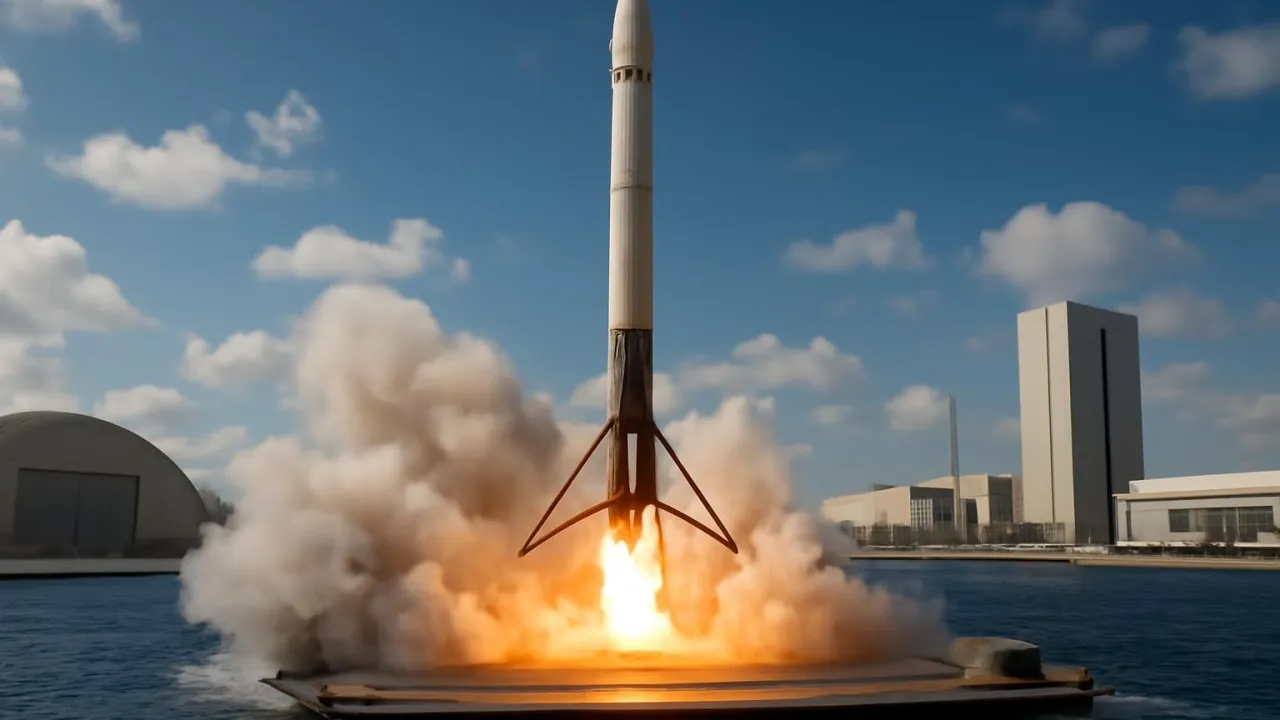
The Falcon 9 rocket booster can land itself on a floating drone ship!
✨ Word Sparks (Grade 2 Glossary)
Tap 🔊 to hear
booster
Part of a rocket that pushes it up
drone ship
A ship with no people on it
engine
A machine that makes things move
🪝
Can you imagine a rocket flying back and landing on its feet?
1
A Rocket That Comes Home
Most rockets used to fall into the ocean, but now some can land. These use strong to slow down and stand upright. People watch and cheer as the rocket gently returns to Earth.
2
Landing on a Ship
The rocket lands on a special ship in the ocean. It uses computers to guide itself and lands safely on a flat spot. This makes it possible to reuse the rocket many times.
3
Why Reuse Rockets?
Using a again saves money and time for space travel. It helps us send more satellites and people into space. This new way is changing how we explore the universe.
A single Falcon 9 booster has flown to space and landed up to 16 times!
✨ Word Sparks (Grade 3 Glossary)
Tap 🔊 to hear
thrust
A strong push that moves rockets
sensor
A tool that helps measure things
aerospace
The science of flying in air and space
🪝
What would it feel like to watch a rocket booster fall from space and land gently on a ship?
1
Blast Off and Return
When a rocket launches, the booster uses powerful engines to push it toward space. After its fuel burns up, the booster separates from the rocket and falls back to Earth. Instead of crashing into the ocean, new boosters use special engines to slow down. This lets them land safely and be used again.
2
Amazing Rocket Landings
The booster lands upright on a drone ship or landing pad. Computers and help guide the rocket as it descends. The engines create a controlled vibration that slows the booster for a soft landing. This technology makes rocket launches much less wasteful.
3
How Reuse Changes Space Travel
Reusable boosters make space missions cheaper and faster. Engineers can inspect, refuel, and launch the same booster many times. This invention has inspired other companies to build their own reusable rockets. It is a huge step forward in engineering.
4
The Science Behind the Booster
The booster’s engines burn liquid fuel to create . When landing, the engines fire again to slow the booster’s speed. Landing legs unfold to help the rocket stand up straight. This process uses precise computer controls to avoid tipping or crashing.
2. Why is the booster’s reuse important for space travel?
🤯 Mind-Blowing Fact • Grade 4
The same Falcon 9 booster has been launched and landed up to 16 times, setting a world record.
✨ Word Sparks (Grade 4 Glossary)
Tap 🔊 to hear
grid fins
Metal flaps that help steer rockets
aerodynamic
Shaped to move easily through air
guidance system
Computers that help steer rockets
🪝
Imagine the rumble as a rocket booster falls from the sky and lands upright—how does it do that?
1
The Rocket Revolution: Reusable Boosters
For decades, rocket boosters were used once and then discarded in the ocean, making spaceflight extremely expensive. In 2015, SpaceX engineers achieved a breakthrough: they landed the Falcon 9 booster upright, using powerful engines and precise computer controls. This invention marked a major leap in aerospace engineering and changed the economics of space travel.
2
Engineering the Impossible Landing
To land safely, the booster uses for steering and reignites its engines to slow down. Sensors and computers constantly measure its speed and position, adjusting the rocket’s path in real time. As the booster nears the landing pad or drone ship, its landing legs deploy, absorbing shock and keeping it upright. This process demands perfect timing and advanced technology.
3
A New Era in Space Exploration
By reusing boosters, companies can launch satellites and cargo more often and at lower cost. This innovation has sparked a global race to develop reusable rockets, with new designs emerging from around the world. The ability to fly boosters multiple times reduces waste and opens up more ambitious missions, like lunar bases or Mars exploration.
4
Behind the Science: Thrust, Guidance, and Control
Rocket engines create thrust by burning liquid fuel, pushing the booster skyward at tremendous speed. During descent, the engines fire again to slow the booster’s fall, while provide control. Advanced use real-time data to keep the booster stable and on target. Every landing is a demonstration of physics, computer science, and engineering working together.
1. Why do reusable boosters make spaceflight less expensive?
2. What is the role of grid fins during landing?
🤯 Mind-Blowing Fact • Grade 5
A Falcon 9 booster can land with less than 10 meters of error after traveling over 500 kilometers downrange.
✨ Word Sparks (Grade 5 Glossary)
Tap 🔊 to hear
aerodynamic heating
Extreme heat from moving fast through air
refurbishment
Careful checking and fixing after each flight
gyroscope
A tool that helps measure direction and spin
🪝
What complex engineering secrets let a rocket booster survive the heat, speed, and precision needed to land and fly again?
1
From Disposable to Reusable: A Spaceflight Revolution
For most of the space age, rocket boosters were single-use, falling into the ocean after launch and making every mission costly and wasteful. In 2015, SpaceX’s Falcon 9 booster achieved the world’s first successful upright landing after orbital flight, marking a paradigm shift in aerospace engineering. This breakthrough was made possible by advances in propulsion, materials science, and real-time computer guidance, enabling boosters to withstand the extreme forces of launch and reentry.
2
The Science of Controlled Descent and Landing
Reusable boosters must survive intense , high-speed reentry, and precise navigation. As the booster falls back through the atmosphere, grid fins made of titanium deploy to provide aerodynamic steering, while onboard computers process data from , GPS, and radar sensors. The engines reignite for a series of landing burns, reducing velocity from over 2,000 meters per second to near zero just above the landing pad or drone ship.
3
Engineering for Multiple Flights: Materials and Inspection
Every reusable booster is constructed from advanced alloys and heat-resistant materials, designed to endure repeated thermal and mechanical stress. After landing, technicians inspect critical components—like engines, avionics, and landing legs—for signs of fatigue or erosion. can take days or weeks, but rapid turnaround is key to lowering costs and enabling frequent launches.
4
Global Impact and the Future of Space Access
The success of reusable boosters has dramatically reduced the cost-per-kilogram to orbit, making space access more affordable for governments, companies, and researchers worldwide. Other space agencies and private firms are now developing their own reusable launch systems, accelerating innovation and competition. This technology is essential for ambitious goals like building lunar bases, Mars missions, and large-scale satellite networks.
5
A Symphony of Physics, Engineering, and Software
The reusable orbital booster is a marvel of modern science, combining Newton’s laws of motion, advanced computer algorithms, and robust mechanical design. Each landing is a carefully choreographed sequence: sensors feed data to the flight computer, engines adjust thrust in milliseconds, and grid fins steer with aerodynamic precision. This synergy allows a 50-meter-tall booster to land within a few meters of its target, ready to be refueled and launched again, shaping the future of human space exploration.