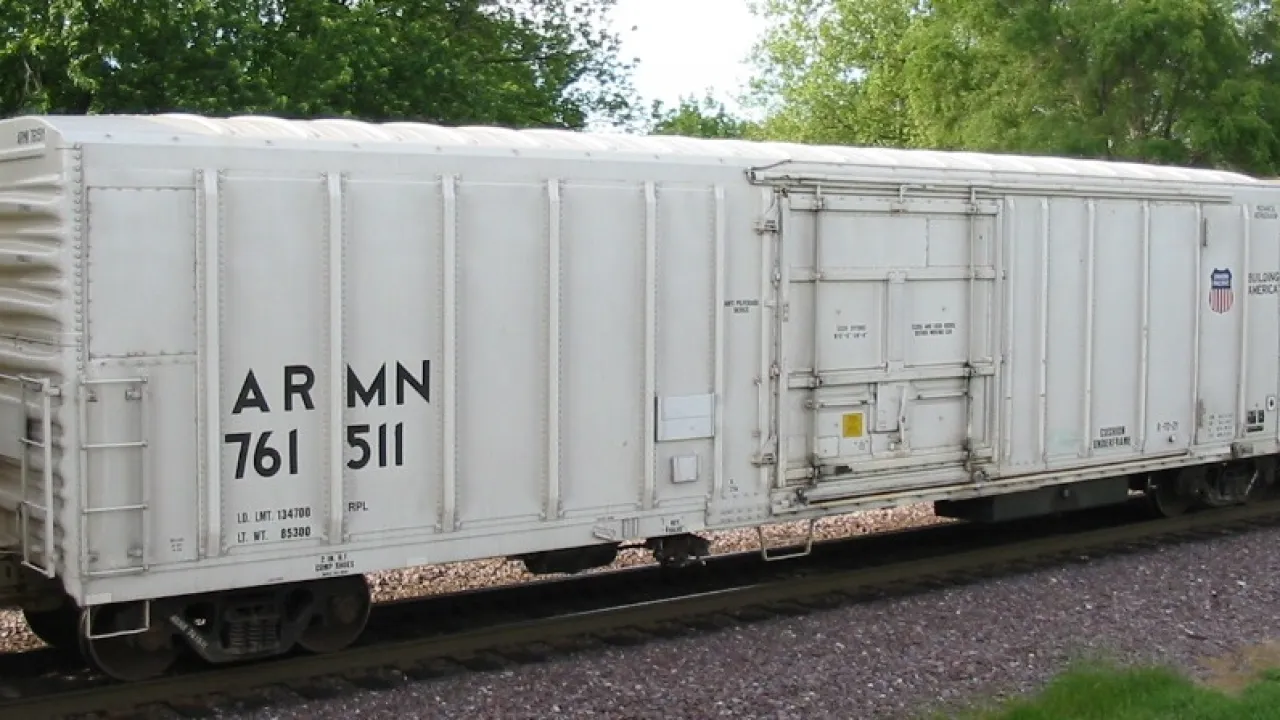
Some refrigeration train cars could carry over 10,000 pounds of ice at once!
✨ Word Sparks (Grade 2 Glossary)
Tap 🔊 to hear
freezer
A box that keeps things frozen
inventor
A person who makes something new
fresh
Not old or spoiled; just picked
🪝
What if you could send ice-cold milk across the country by train?
1
The Chilly Train Car
This special train car is cold inside, almost like a giant . People put big blocks of ice at both ends, and the cold air spreads everywhere. Farmers fill it with milk, cheese, and fruit, and close the heavy doors.
2
Traveling Far and Wide
The train car rolls down the tracks, carrying food to cities far away. The ice keeps everything , so people in distant towns can enjoy tasty food. Before these cars, people could only eat what grew nearby.
3
A Cool Invention
worked hard to make this train car strong and cold. They used thick walls to keep the cold air in, and made sure the ice lasted a long time. This invention changed how people eat and shop for food.
1. What goes inside the train car to keep it cold?
2. Why did people need refrigeration train cars?
🤯 Mind-Blowing Fact • Grade 3
Refrigeration train cars helped make the first coast-to-coast ice cream deliveries possible in America!
✨ Word Sparks (Grade 3 Glossary)
Tap 🔊 to hear
brine
Very salty water used for cooling
patent
Legal paper for a new invention
vent
A small opening for air to move
🪝
Imagine opening a heavy train door and feeling a blast of icy air—how did that happen?
1
A Rolling Refrigerator
Refrigeration train cars were like giant moving coolers on wheels. Workers loaded big blocks of ice into special compartments at each end of the car. As the train traveled, the ice melted slowly, keeping the inside cold and protecting food from spoiling. This clever invention let farmers send fresh meat, milk, and fruit much farther than before.
2
How Did It Work?
The thick walls of the train car trapped the cold air inside. Air and fans helped spread the chilly air around, so every corner stayed cool. Sometimes, the cars used salt with the ice to make it even colder, a trick called ' cooling.' The food stayed safe from heat, even on long journeys.
3
Inventors and Their Ideas
Gustavus Swift and engineer Andrew Chase helped create the first successful refrigeration train cars in the 1800s. They made sure the ice was placed above the cargo, so cold air would sink down over the food. Their design was so smart, it was patented and copied across the country.
4
Changing the Way We Eat
Before these cars, people could only eat food grown nearby, especially in summer. After refrigeration train cars, cities could enjoy fresh fruit, vegetables, and even ice cream from faraway farms. This invention changed diets and made new foods possible for everyone.
2. Who helped invent the first successful refrigeration train cars?
🤯 Mind-Blowing Fact • Grade 4
By 1920, over 100,000 refrigerated train cars were carrying fresh food across America every day!
✨ Word Sparks (Grade 4 Glossary)
Tap 🔊 to hear
insulation
Material that keeps heat or cold inside
compressor
A machine that squeezes and cools air
perishable
Food that spoils quickly without cold
🪝
What if you could taste oranges from Florida or cheese from Wisconsin—delivered fresh by train?
1
The Science of Staying Cool
Refrigeration train cars used the principle of thermal to keep food cold during long journeys. Thick walls filled with insulating materials, like sawdust or cork, slowed down heat from entering the car. Large blocks of ice, sometimes mixed with salt to lower the freezing point, were loaded into compartments above or at the ends of the car. As the ice melted, it absorbed heat from the air, keeping the temperature low and the cargo safe.
2
Inventors Who Changed Food Forever
Gustavus Swift, a meat packer, and engineer Andrew Chase designed the first successful refrigerated railcar in the 1870s. Their prototype used a clever system where ice was placed above the cargo, allowing cold air to sink naturally over the meat and dairy products. Their design was patented and quickly adopted by railroads across the United States, making it possible to ship goods over thousands of miles.
3
Impact on Trade and Diets
Before refrigeration train cars, people mostly ate food grown nearby or preserved by drying and salting. With this invention, cities could enjoy fresh produce, dairy, and even ice cream from distant farms and factories. This revolution in food transport changed American diets, created new markets for farmers, and helped cities grow bigger and healthier.
4
From Ice to Modern Cooling
Early train cars relied on natural ice, but by the early 1900s, mechanical refrigeration began to replace ice blocks. These new systems used and coolants to keep the cars cold, allowing even longer trips and less spoilage. Today, refrigerated railcars, or 'reefers,' use advanced technology to safely deliver fresh food all over the world.
A single modern refrigerated train car can carry up to 200,000 pounds of fresh produce across a continent without spoilage.
✨ Word Sparks (Grade 5 Glossary)
Tap 🔊 to hear
convection
Movement of air that spreads heat or cold
phase change
When something changes from solid to liquid
refrigerant
A special liquid or gas that cools things down
🪝
Close your eyes and picture the rumble of a train carrying fresh strawberries across hundreds of miles—how did science make that possible?
1
Engineering the First Cold Cars
The invention of the refrigeration train car in the late 19th century was a triumph of both engineering and science. Early designs relied on thick, insulated walls packed with materials like sawdust, cork, or even horsehair to minimize heat transfer from the outside environment. Large ice bunkers were strategically placed at each end or above the cargo, and as the ice melted, cold air would circulate downward, creating a current that evenly cooled the perishable goods. This system was carefully engineered to maintain temperatures below 40°F, even during long summer journeys.
2
The Minds Behind the Innovation
Gustavus Swift, a Chicago meat packer, recognized the need to transport fresh beef over long distances without spoilage. He partnered with engineer Andrew Chase, who designed a prototype car that placed ice above the cargo, allowing cold air to sink naturally due to gravity and air density differences. Their design was patented in 1877, and soon, thousands of 'Swift cars' revolutionized the meatpacking and dairy industries. This breakthrough enabled the safe shipment of fresh food from the Midwest to distant cities, transforming American agriculture and commerce.
3
Physics and Mechanics of Cooling
The refrigeration train car operated on the principle of heat transfer and . As ice absorbed heat from the warmer air inside the car, it melted, removing energy and lowering the temperature. The cars often used brine (saltwater) to further depress the freezing point, allowing for even colder conditions. Air vents and fans were sometimes added to ensure uniform temperature distribution, preventing 'hot spots' that could spoil food. The careful balance of insulation, ice placement, and airflow was essential for reliable cooling.
4
Societal and Economic Impact
The widespread adoption of refrigerated railcars, or 'reefers,' dramatically altered American society. For the first time, people in cities could access fresh produce, dairy, and meat year-round, regardless of local climate or season. This invention enabled the rise of national food markets, reduced food waste, and improved public health by making safer, more nutritious food widely available. It also created new jobs in farming, rail transport, and refrigeration technology.
5
From Ice to High-Tech Cooling
By the early 20th century, mechanical refrigeration began to replace ice in train cars. These systems used compressors, evaporators, and like ammonia to absorb heat and maintain precise temperatures. Modern refrigerated railcars can be digitally monitored and adjusted, ensuring food arrives fresh even after journeys of thousands of miles. The evolution of the refrigeration train car stands as a testament to human ingenuity and the power of science to change everyday life.