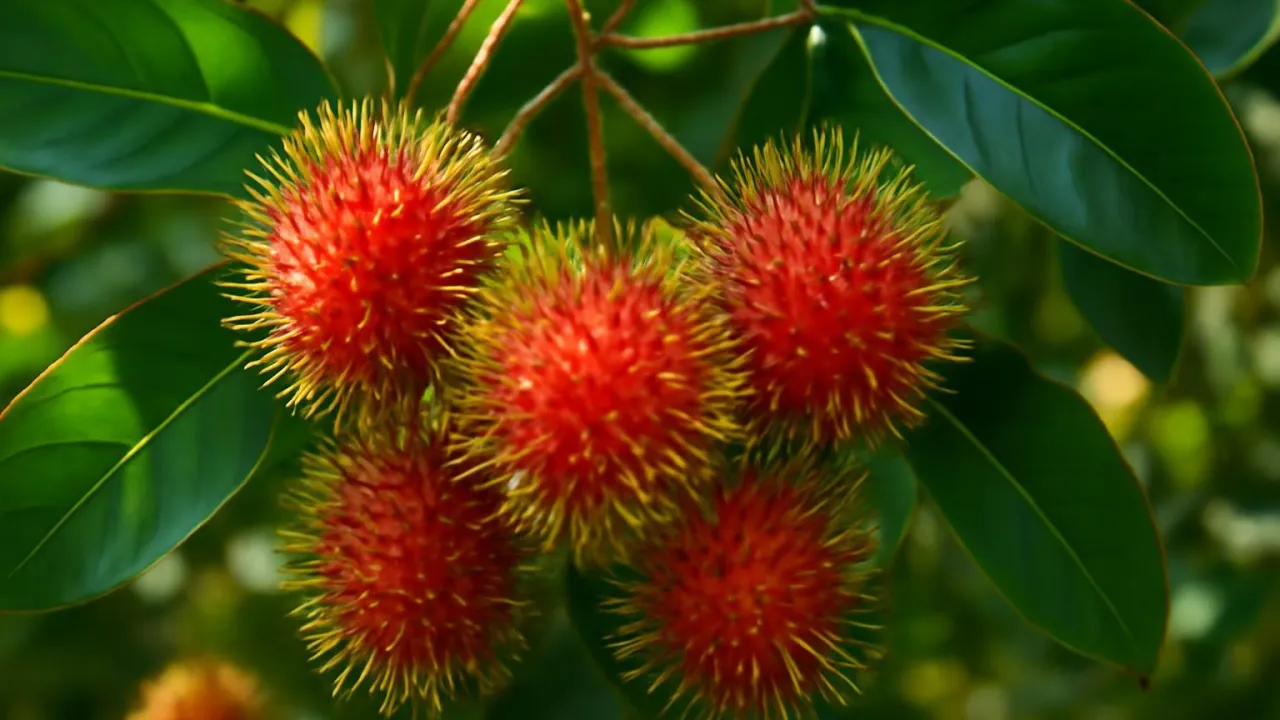
Rambutan fruit’s hairy skin helps keep it safe from insects and animals.
✨ Word Sparks (Grade 2 Glossary)
Tap 🔊 to hear
tropical
Warm places near the equator
harvest
To pick fruits or crops from plants
flesh
The soft, edible part inside a fruit
🪝
Did you know a fruit can wear a hairy coat to stay safe?
1
Rambutan’s Unique Look
Rambutan fruit is red and covered with soft, bendy hairs. These hairs look like tiny spikes but are not sharp. They help protect the fruit from bugs and animals. The fruit’s skin is thick and leathery.
2
Where Rambutan Grows
Rambutan trees grow best in warm, rainforests. They need plenty of sunlight and water to grow well. These trees can reach up to 80 feet tall. Farmers the fruit during the rainy season.
3
Tasty Inside the Hairy Skin
Inside the fruit is white, juicy that tastes sweet and slightly sour. The flesh surrounds a seed that is not eaten. People enjoy eating rambutan fresh or adding it to fruit salads.
Rambutan’s hairy skin is an adaptation that helps it survive in tropical forests.
✨ Word Sparks (Grade 3 Glossary)
Tap 🔊 to hear
camouflage
A way to blend in with surroundings
pollination
When insects help plants make seeds
predator
An animal that hunts other animals
🪝
How does a hairy fruit like rambutan protect itself in the wild?
1
Rambutan’s Hairy Protection
Rambutan fruit is covered with soft, bendable hairs that look like spikes. These hairs act as and help protect the fruit from . The thick skin beneath the hairs prevents damage from insects. This adaptation helps the fruit survive until it is ripe.
2
Where Rambutan Thrives
Rambutan trees grow in tropical rainforests where sunlight and water are plentiful. These trees can grow up to 80 feet tall and produce clusters of fruit. The warm, humid climate provides the perfect nutrients for growth. by insects helps the trees produce fruit each year.
3
Inside the Fruit
The fruit’s white, juicy flesh is sweet with a slightly sour taste. This flesh surrounds a single seed that is not edible. Animals like monkeys and birds eat the fruit and help spread the seeds. This seed dispersal is important for the plant’s life cycle.
4
Rambutan’s Role in Nature
Rambutan fruit provides food for many rainforest animals, supporting the food web. The tree also helps prevent soil erosion with its roots. Humans cultivate rambutan for food and income in tropical regions. Sustainable farming helps protect the rainforest ecosystem.
Rambutan’s hairy skin helps it survive by protecting fruit and aiding seed spread in forests.
✨ Word Sparks (Grade 4 Glossary)
Tap 🔊 to hear
ecosystem
A community of plants and animals living together
pollinators
Insects that help flowers make fruit and seeds
deforestation
Cutting down many trees in forests
🪝
What makes rambutan’s hairy skin a clever survival tool in rainforests?
1
The Protective Hairy Skin
Rambutan’s hairy skin acts as a physical barrier that deters many insects and small animals from eating the fruit. This protective layer reduces damage from predators and harsh weather, allowing the fruit to ripen fully. The hairs also help camouflage the fruit among leaves, making it harder to spot. This adaptation increases the fruit’s chances of survival and seed dispersal.
2
Rambutan’s Place in the Ecosystem
In tropical rainforests of Southeast Asia, rambutan trees contribute to the food web by providing fruit for animals like monkeys, bats, and birds. These animals eat the fruit and disperse seeds, which helps maintain forest diversity. The trees’ roots stabilize soil and prevent erosion in their environment. Humans cultivate rambutan commercially, impacting local economies and .
3
Growth and Pollination
Rambutan trees require warm temperatures and high humidity to grow successfully. They bloom with small flowers that rely on insect such as bees and flies. Successful pollination leads to the development of clusters of fruits. Farmers harvest rambutan during the rainy season when the fruit is ripe and juicy.
4
Human Impact and Conservation
Commercial farming of rambutan supports many tropical communities but can lead to if not managed sustainably. Conservation efforts encourage agroforestry practices that combine rambutan cultivation with forest preservation. Educating farmers about sustainable methods helps protect biodiversity. Maintaining healthy forests ensures the future of rambutan and many other species.
1. How does rambutan’s hairy skin help it survive?
2. Why is sustainable farming important for rambutan?
🤯 Mind-Blowing Fact • Grade 5
Rambutan’s spintern-covered skin evolved to protect fruit and attract animals for seed dispersal.
✨ Word Sparks (Grade 5 Glossary)
Tap 🔊 to hear
spinterns
Soft spines covering the rambutan fruit’s skin
aril
Juicy edible flesh around a seed inside fruit
agroforestry
Growing crops with trees to protect nature
🪝
How does the rambutan’s unique biology and ecology support its survival and human use?
1
Scientific Classification and Origin
Rambutan, scientifically known as Nephelium lappaceum, belongs to the Sapindaceae family. It is native to the tropical rainforests of Southeast Asia, particularly Malaysia and Indonesia. The genus Nephelium includes several related fruit species with similar characteristics. Understanding its taxonomy helps scientists study its evolutionary relationships and cultivation needs.
2
Physiological Adaptations of Rambutan
The rambutan’s hairy exterior consists of pliable, soft spines called that protect the fruit from herbivores and insect damage. Its thick, leathery rind prevents moisture loss in humid environments. Inside, the translucent, juicy surrounds a large seed, facilitating seed dispersal by frugivorous animals. These adaptations optimize rambutan’s survival in competitive tropical ecosystems.
3
Growth, Pollination, and Reproduction
Rambutan trees require consistently warm temperatures between 77°F and 95°F (25°C to 35°C) and high humidity to thrive. They produce small, inconspicuous flowers pollinated primarily by bees and flies, which are essential for fruit set. The fruit develops in clusters and matures approximately 16 weeks after flowering. Seed dispersal by animals ensures genetic diversity and forest regeneration.
4
Conservation and Agricultural History
Historically, rambutan cultivation has been practiced for centuries in Southeast Asia, spreading to tropical regions worldwide. While commercial farming supports local economies, unsustainable practices risk deforestation and biodiversity loss. Conservation efforts promote and sustainable harvesting to balance economic benefit with environmental protection. Ongoing research aims to improve disease resistance and yield.
5
Quantitative Comparisons and Impact
Rambutan fruits typically measure 2 to 3 inches (5 to 7.5 centimeters) in length and weigh about 20 to 30 grams each. Trees can grow up to 80 feet (24 meters) tall and produce hundreds of fruits per season. The fruit’s juicy flesh contains approximately 82% water and provides essential nutrients like vitamin C. Compared to lychee, rambutan’s hairy exterior is a unique morphological trait.