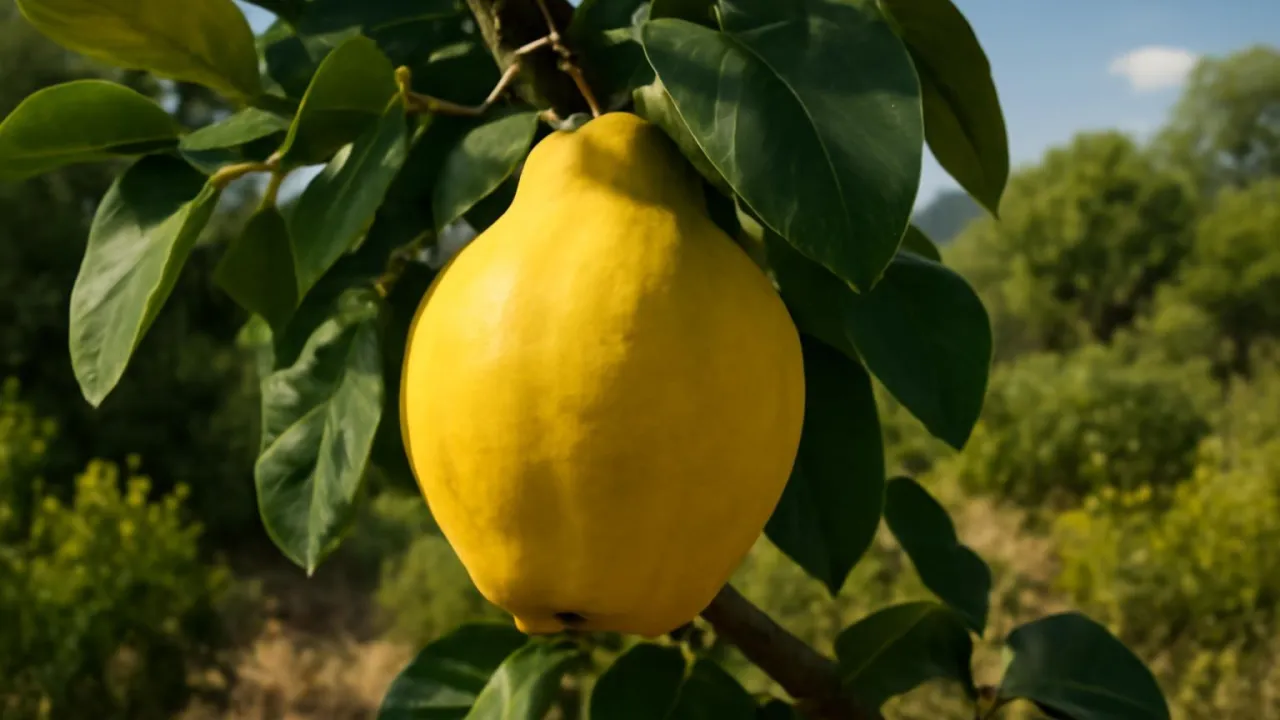
The sweet smell of quince helps bees find flowers to pollinate them!
✨ Word Sparks (Grade 2 Glossary)
Tap 🔊 to hear
pollinators
Animals that help plants make seeds
ripe
When fruit is ready to eat or pick
harvest
To pick fruits or crops from plants
🪝
Can you imagine a fruit that smells sweet and helps bees find it?
1
Quince’s Bright Look
Quince is bright yellow and looks like a pear, but it feels very hard. It grows on small trees that enjoy warm weather and plenty of sun. People pick quince fruits in the fall when they are and ready to eat.
2
Where Quince Grows
Quince trees grow best in warm places like Western Asia and the Mediterranean. They need full sun and regular watering to stay healthy and strong. These trees usually grow between three and five feet tall.
3
A Sweet Smell
The quince fruit has a strong, sweet smell that can be noticed from far away. Bees and other are attracted to this smell and help the tree make more fruit. This special smell is one of quince’s coolest features.
Quince’s bright color and strong smell work together to attract animals that spread its seeds!
✨ Word Sparks (Grade 3 Glossary)
Tap 🔊 to hear
pollination
When pollen moves to help plants make seeds
adaptation
A change that helps plants or animals survive
predator
An animal that hunts other animals or plants
🪝
Did you know quince fruit has a strong smell that helps it survive?
1
Quince’s Appearance and Texture
The quince fruit is bright yellow and looks like a pear but is harder. Its tough skin protects it from animals and weather. This hard texture helps quince last longer before spoiling. The fruit’s shape helps it hang safely on tree branches.
2
Pollination and Growth
Quince trees produce fragrant flowers that attract pollinators like bees. helps the tree make seeds inside the fruit. The fruit grows during warm months and is harvested in the fall. This cycle helps quince survive in its natural habitat.
3
Adaptations for Survival
Quince has a strong, sweet aroma that draws pollinators from far away. Its hard skin protects it from that might eat it too early. The fruit’s bright color signals ripeness to animals that help spread seeds. These improve quince’s chances to grow new trees.
4
Where Quince Lives
Quince trees grow mainly in Western Asia and Mediterranean climates. They need full sun and enough water to thrive. The trees are small, usually growing three to five feet tall. This habitat provides the right conditions for quince to grow and reproduce.
Quince’s sweet scent and bright color help it attract pollinators and animals that spread its seeds.
✨ Word Sparks (Grade 4 Glossary)
Tap 🔊 to hear
ecosystem
All living things and their home together
dispersal
The spreading of seeds or animals far away
harvest
To gather ripe fruits or crops from plants
🪝
How does quince’s strong smell help it survive in its environment?
1
Physical Traits and Survival
Quince’s bright yellow color and hard skin protect it from animals and harsh weather conditions. The tough skin prevents the fruit from spoiling quickly, which allows it to stay on the tree longer. This extended time helps animals notice the fruit when it is ripe. The fruit’s shape also helps it hang securely on branches during strong winds.
2
Pollination and Ecosystem Role
The quince tree produces fragrant flowers that attract pollinators such as bees, which are essential for pollination. Pollination causes the flowers to develop into fruit containing seeds. These seeds are spread by animals that eat the fruit, helping quince trees grow in new areas. This process supports the local food web by feeding pollinators and seed dispersers.
3
Geographic Distribution and Growing Needs
Quince trees are native to Western Asia and the Mediterranean, where the climate is warm and sunny. They require full sun exposure and regular watering to thrive. These trees typically grow between three and five feet tall, making them manageable for farmers and gardeners. Their ability to grow in these regions helps support local agriculture and food traditions.
4
Human Uses and Impact
Humans quince fruits in the fall to use in cooking and making jams because of their strong aroma and flavor. The fruit is often too hard and sour to eat raw but becomes sweet when cooked. Growing quince supports local economies and preserves traditional farming practices. However, overharvesting or habitat loss could threaten wild quince populations.
Quince’s thick skin and strong aroma help it survive dry climates and attract helpful animals.
✨ Word Sparks (Grade 5 Glossary)
Tap 🔊 to hear
volatile compounds
Chemicals that easily become smells or gases
genetic diversity
Variety of genes in plants or animals
pome fruit
Fruit with seeds inside a core, like apples
🪝
What fascinating features help quince survive and thrive in its native habitat?
1
Taxonomy and Scientific Classification
Quince, scientifically named Cydonia oblonga, belongs to the Rosaceae family, which includes apples and pears. This classification links quince to other that share similar structures and growth habits. Its genus, Cydonia, is unique because it contains only this single species. Understanding its taxonomy helps scientists study quince’s evolutionary relationships and traits.
2
Physiological Mechanics and Adaptations
Quince fruits develop a thick, waxy skin that protects against water loss and pest attacks, which helps the fruit survive harsh environmental conditions. The fruit’s strong, sweet aroma is produced by that attract pollinators and seed dispersers from a distance. Additionally, quince trees have deep roots that allow them to access water during dry periods, supporting their survival in Mediterranean climates.
3
Conservation and Botanical History
Quince has been cultivated for thousands of years, originating in Western Asia and spreading to the Mediterranean region. Historically, it was valued for its fragrance and culinary uses, especially in jams and jellies. Today, quince cultivation faces challenges from habitat loss and climate change, making conservation efforts important to preserve and traditional farming knowledge.
4
Ecological Role and Human Impact
In its ecosystem, quince supports pollinators like bees through its fragrant flowers, playing a crucial role in local food webs. Animals that consume the fruit help disperse seeds, promoting forest regeneration and plant diversity. Humans benefit from quince cultivation economically and culturally, but must manage land carefully to avoid overharvesting and habitat degradation.
5
Quantitative Comparisons and Growth Characteristics
Quince trees typically grow three to five feet tall, producing fruits that weigh between 4 and 8 ounces (110 to 225 grams). The fruits ripen in autumn when temperatures range between 50 to 70 degrees Fahrenheit (10 to 21 degrees Celsius). Compared to pears, quince fruits are harder and more aromatic, which influences their culinary uses and ecological interactions.