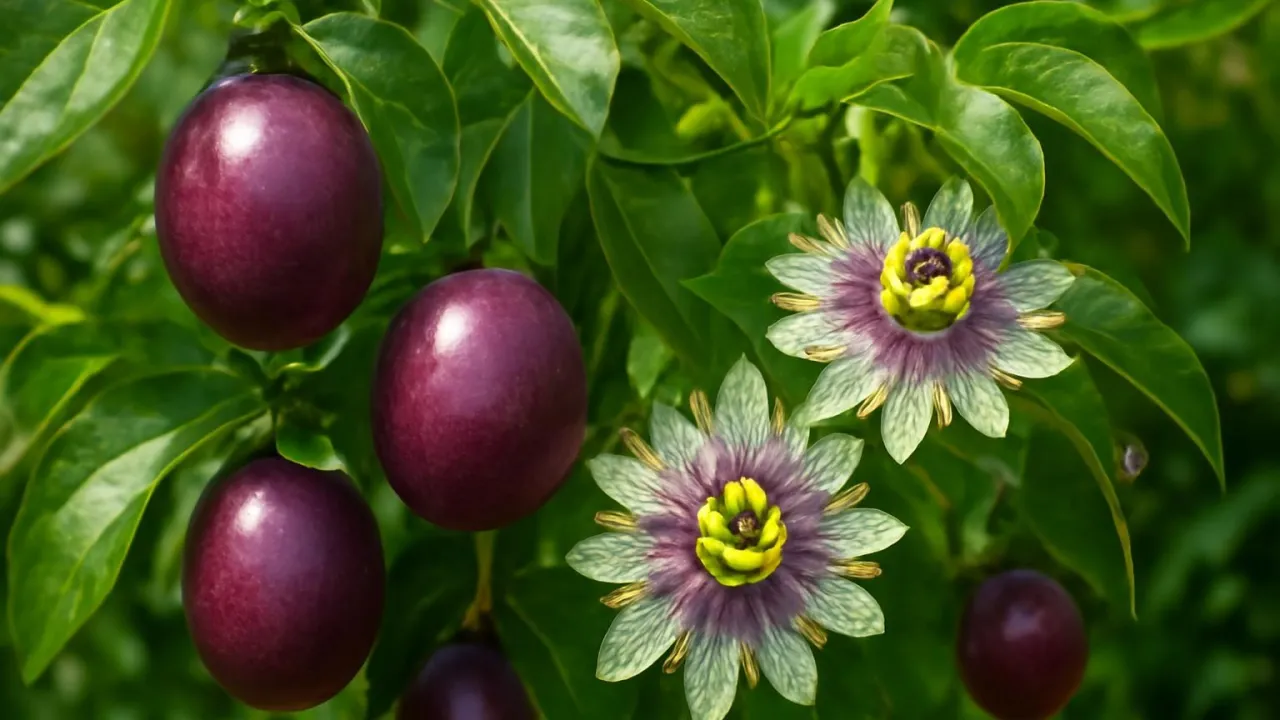
The strong sweet smell of purple passionfruit helps attract bees and butterflies from far away.
✨ Word Sparks (Grade 2 Glossary)
Tap 🔊 to hear
pulp
Soft, juicy part inside a fruit
ripe
Ready to eat and tastes good
pollinator
An animal that helps plants make seeds
🪝
Have you ever smelled a fruit that smells like candy?
1
Colorful and Round Fruit
Purple passionfruit is round and has smooth purple skin. It grows about two to three inches wide. The fruit feels firm and heavy when .
2
Inside is Sweet and Tangy
Inside, the fruit has many small yellow seeds. The seeds sit in juicy that tastes sweet and sour. Birds and animals eat the fruit to get food.
3
Grows on Vines in Warm Places
The passionfruit grows on long green vines with big leaves. These vines like warm, sunny places to grow well. Farmers water the plants to help them grow healthy.
Purple passionfruit vines can climb up to 30 feet to reach sunlight for better growth.
✨ Word Sparks (Grade 3 Glossary)
Tap 🔊 to hear
camouflage
Colors that help hide from animals
pollination
How plants make seeds with pollen
tendrils
Thin parts that help plants climb
🪝
Can you imagine a fruit using its smell to call bees for help?
1
Fruit Features and Growth
Purple passionfruit is round with smooth purple skin that protects the juicy inside. The fruit grows on long climbing vines that spread widely. It measures about two to three inches across and feels firm when ripe. The thick skin helps keep the fruit fresh and safe.
2
Pollination and Seed Spread
Its strong smell attracts pollinators like bees and butterflies that help flowers become fruit. happens when pollen moves from one flower to another. Inside the fruit, many small seeds sit in sweet, tangy pulp. Animals eat the fruit and spread seeds to new places for plants to grow.
3
Survival Adaptations
The purple skin acts as among leaves and shadows to hide from predators. The thick skin also protects against insects and bad weather. The vine uses to climb trees and reach sunlight. These features help the plant survive and produce more fruit.
4
Where It Grows Best
Purple passionfruit grows well in warm tropical places with full sun and regular water. It is native to South America but grows in many warm countries. The plant prefers soil that drains well and has many nutrients. Farmers grow passionfruit in orchards to collect tasty fruit.
1. What helps purple passionfruit vines climb to sunlight?
2. Why do animals eat purple passionfruit?
🤯 Mind-Blowing Fact • Grade 4
Purple passionfruit flowers produce nectar that feeds many pollinators essential for healthy ecosystems.
✨ Word Sparks (Grade 4 Glossary)
Tap 🔊 to hear
ecosystem
A place where plants and animals live together
pollinators
Animals that help plants make seeds
habitat
The natural home of a plant or animal
🪝
How does the purple passionfruit’s strong smell help it survive in the wild?
1
Physical Traits and Protection
Purple passionfruit has smooth, thick purple skin that protects its juicy interior from insects and harsh weather. The skin’s deep color helps camouflage the fruit among green leaves and shadows, reducing the chance of being eaten by predators. The fruit grows on vigorous climbing vines that can reach high into trees to access sunlight. These physical traits help the plant survive and reproduce successfully.
2
Role in the Ecosystem
The fruit’s strong, sweet aroma attracts such as bees and butterflies, which are essential for pollination and fruit development. Animals like birds and mammals eat the fruit, helping disperse seeds far from the parent plant, which supports forest regeneration. This interaction creates a food web where passionfruit plays a key role in providing nourishment. The plant also supports beneficial insects by offering nectar from its flowers.
3
Growing Conditions and Distribution
Purple passionfruit thrives in tropical and subtropical climates that offer warm temperatures and full sun exposure. It requires well-drained soil and consistent watering to produce healthy fruit. Originally native to South America, the plant is now cultivated worldwide in regions with similar climates. Human farming has expanded its range, making it an important crop in many tropical countries.
4
Human Impact and Uses
Farmers harvest purple passionfruit for its delicious juice and sweet pulp, which are popular in drinks and desserts. Sustainable farming practices help protect natural and that the plant depends on. However, habitat loss and climate change can threaten passionfruit growth in some areas. Conservation efforts focus on maintaining healthy for both the plant and its pollinators.
1. Why is the purple passionfruit’s aroma important?
2. Where did purple passionfruit originally grow?
🤯 Mind-Blowing Fact • Grade 5
Purple passionfruit vines can grow up to 30 feet in one season, climbing high to reach sunlight.
✨ Word Sparks (Grade 5 Glossary)
Tap 🔊 to hear
perennial
A plant that lives many years
volatile
Easily evaporates to make strong smells
mutualistic
Both plants and animals help each other
🪝
What scientific secrets help purple passionfruit thrive in tropical ecosystems?
1
Taxonomy and Botanical Classification
Purple passionfruit, scientifically named Passiflora edulis, belongs to the Passifloraceae family, which includes over 500 species of passionflowers. This species is a vine native to tropical South America but has been widely cultivated worldwide. Botanically, the passionfruit is classified as a berry because it develops from a single ovary and contains numerous seeds embedded in juicy pulp. Understanding its taxonomy helps scientists study its relationships with other plants and improve cultivation methods.
2
Physiological Adaptations and Mechanics
The thick purple rind of the passionfruit protects the delicate pulp inside from physical damage and dehydration. Its strong, sweet aroma results from organic compounds that attract specific pollinators like bees and hummingbirds. The vine’s tendrils coil tightly around supports, allowing the plant to climb efficiently toward sunlight in dense forests. Additionally, the fruit’s high sugar content provides energy to animals that disperse its seeds, creating a relationship.
3
Conservation and Agricultural History
Purple passionfruit cultivation has expanded due to its economic importance in tropical agriculture, especially for juice production and fresh fruit markets. While not currently endangered, habitat destruction and climate variability threaten wild populations. Agricultural practices now emphasize sustainable farming and pollinator protection to maintain healthy ecosystems. Historical records show indigenous peoples valued passionfruit for food and medicinal uses long before commercial farming began.
4
Ecological Role and Geographic Distribution
Native to southern Brazil, Paraguay, and northern Argentina, purple passionfruit thrives in tropical and subtropical climates worldwide. It plays a crucial role in local ecosystems by providing nectar for pollinators and fruit for various animals. The plant’s ability to grow in diverse soil types and climates demonstrates its adaptability. Its cultivation supports local economies but requires careful management to avoid invasive spread in non-native regions.
5
Quantitative Comparisons and Growth Metrics
Purple passionfruit vines can grow up to 30 feet (9 meters) in a single growing season under ideal conditions. The fruit typically measures between 2 and 3 inches (5 to 7.5 centimeters) in diameter and weighs about 2 to 4 ounces (60 to 120 grams). Optimal growth occurs at temperatures between 68 and 82 degrees Fahrenheit (20 to 28 degrees Celsius) with regular watering. The fruit’s sugar content ranges from 10 to 14 percent, contributing to its sweet-tart flavor loved worldwide.