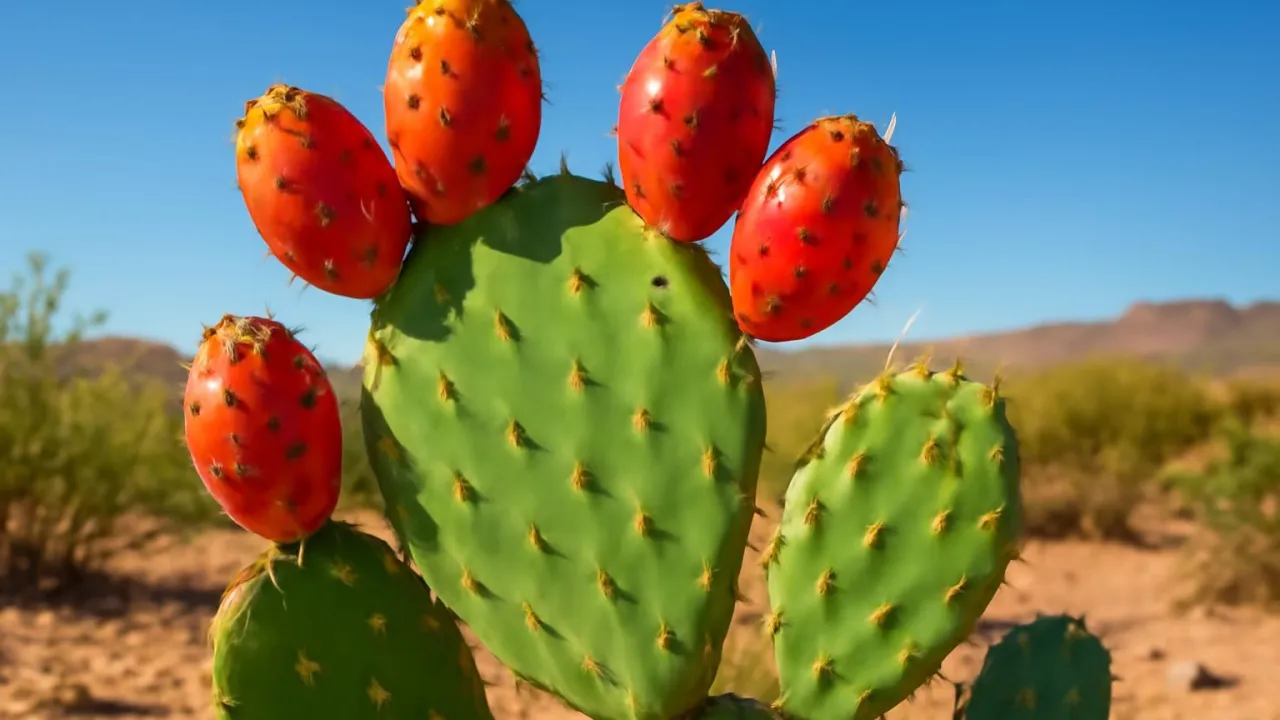
Prickly pear pads act like water bottles to help the cactus live in deserts!
✨ Word Sparks (Grade 2 Glossary)
Tap 🔊 to hear
cactus
A plant with thick pads and sharp spines
desert
A hot, dry place with little rain
spines
Sharp points that protect plants from animals
🪝
Have you ever seen a fruit that grows on a cactus plant?
1
What Is a Prickly Pear?
Prickly pears grow on plants that have thick, flat pads covered with sharp . These pads store water to help the plant survive dry . The cactus pads are green and can be very wide and flat.
2
Where Do They Live?
Prickly pears live in hot, dry places like in North and South America. They need full sunlight and very little water to grow well. The plants can survive long dry seasons because they store water in their pads.
3
Bright and Tasty Fruit
The prickly pear fruit grows on the pads and can be red, yellow, or purple when ripe. Many animals, like birds and insects, eat this sweet fruit and help spread its seeds. The fruit has tiny that you must be careful of.
The prickly pear’s spines not only protect it but also reduce water loss in hot deserts!
✨ Word Sparks (Grade 3 Glossary)
Tap 🔊 to hear
adaptation
A change that helps a plant survive
pollination
When pollen helps plants make seeds
ecosystem
A community of living things and places
🪝
Did you know prickly pears use their spines for protection and water storage?
1
Cactus Pads and Adaptations
Prickly pear cacti have thick, flat pads that store water to survive droughts. Their spines act as protection from predators and help reduce water loss. These help the plant live in harsh desert environments. The pads are also green because they perform photosynthesis.
2
Where Prickly Pears Grow
Prickly pears are native to deserts and dry areas in North and South America. They thrive in hot climates with full sun and sandy soil. These cacti are well adapted to absorb nutrients and water quickly after rare rains. Their survival depends on these environmental conditions.
3
Pollination and Fruit
Bright yellow flowers bloom on prickly pears to attract pollinators like bees and butterflies. helps the plant produce its fruit, which contains seeds for reproduction. The fruit is covered in tiny spines that protect it from some predators. Animals that eat the fruit help spread the seeds.
4
Ecosystem Role
Prickly pears provide food and shelter for many desert animals, including birds and insects. Their fruits are a vital food source during dry seasons. The cactus also helps prevent soil erosion with its root system. This makes prickly pears important players in desert .
Prickly pears help stop desert soil from blowing away by holding it with strong roots!
✨ Word Sparks (Grade 4 Glossary)
Tap 🔊 to hear
erosion
When wind or water wears soil away
invasive
A plant that spreads too much and harms others
desertification
When land turns into dry desert over time
🪝
How do prickly pears survive and help desert life in harsh conditions?
1
Water Storage and Survival
Prickly pear cacti survive desert heat by storing water in their thick pads, which act like natural reservoirs. This ability allows them to endure long dry periods without rain. Their spines protect the pads from animals that might try to eat them for water. This cause-and-effect relationship helps the cactus thrive in harsh environments.
2
Role in the Desert Ecosystem
Prickly pears provide food and shelter for many desert animals, including birds, insects, and small mammals. Their fruits are an important food source during dry seasons when other plants are scarce. The cactus also stabilizes soil and prevents with its root system, supporting other plants in the ecosystem.
3
Geographic Distribution
Native to deserts and dry regions across North and South America, prickly pears have adapted to a wide range of climates. They grow from the southwestern United States down to Argentina. Their ability to survive in different soil types and temperatures allows them to spread widely.
4
Human Uses and Impact
Humans use prickly pears for food, medicine, and even natural dye from their fruits and pads. Farming prickly pears helps prevent in some areas. However, in places where they are introduced, they can become and disrupt local ecosystems.
Prickly pears use nighttime photosynthesis to save water and survive desert heat!
✨ Word Sparks (Grade 5 Glossary)
Tap 🔊 to hear
xerophytic
Plants that live well with little water
stomata
Tiny holes on leaves for air and water
parenchyma
Cells that store water inside plants
🪝
What makes the prickly pear cactus a vital survivor and food source in deserts worldwide?
1
Scientific Classification and Adaptations
The prickly pear cactus belongs to the genus Opuntia in the Cactaceae family, known for its distinctive flat, fleshy pads. These pads serve as specialized stems that store significant amounts of water, enabling survival in arid environments. Its spines are modified leaves that reduce water loss and protect against herbivores. Such adaptations exemplify traits common among desert plants.
2
Physiological Mechanics of Water Storage
Prickly pears utilize Crassulacean Acid Metabolism (CAM) photosynthesis, opening their at night to minimize water loss. Their succulent pads store water in cells, allowing the plant to endure prolonged droughts. The thick cuticle covering the pads further reduces evaporation. This physiological strategy is essential for maintaining hydration in extreme heat.
3
Ecological and Conservation Importance
Prickly pears play a crucial role in desert ecosystems by providing nourishment and habitat for various animals, including birds, insects, and mammals. Their fruits are rich in nutrients and serve as a food source during scarce periods. Conservation efforts focus on protecting native prickly pear species from habitat loss and managing invasive populations that threaten biodiversity.
4
Cultural and Economic Uses
Humans have utilized prickly pears for centuries, harvesting their pads and fruits for food, medicinal purposes, and natural dyes. The pads, known as nopales, are a staple in Mexican cuisine. Additionally, prickly pear cultivation aids in combating desertification and soil erosion, offering sustainable agricultural benefits in arid regions.
5
Quantitative Comparisons and Growth
Prickly pear pads typically measure up to 12 inches (30 centimeters) wide and can weigh several pounds when saturated with water. The cactus thrives in temperatures ranging from 50 to 100 degrees Fahrenheit (10 to 38 degrees Celsius). Fruit ripening occurs over several weeks, attracting numerous animal species that aid seed dispersal.