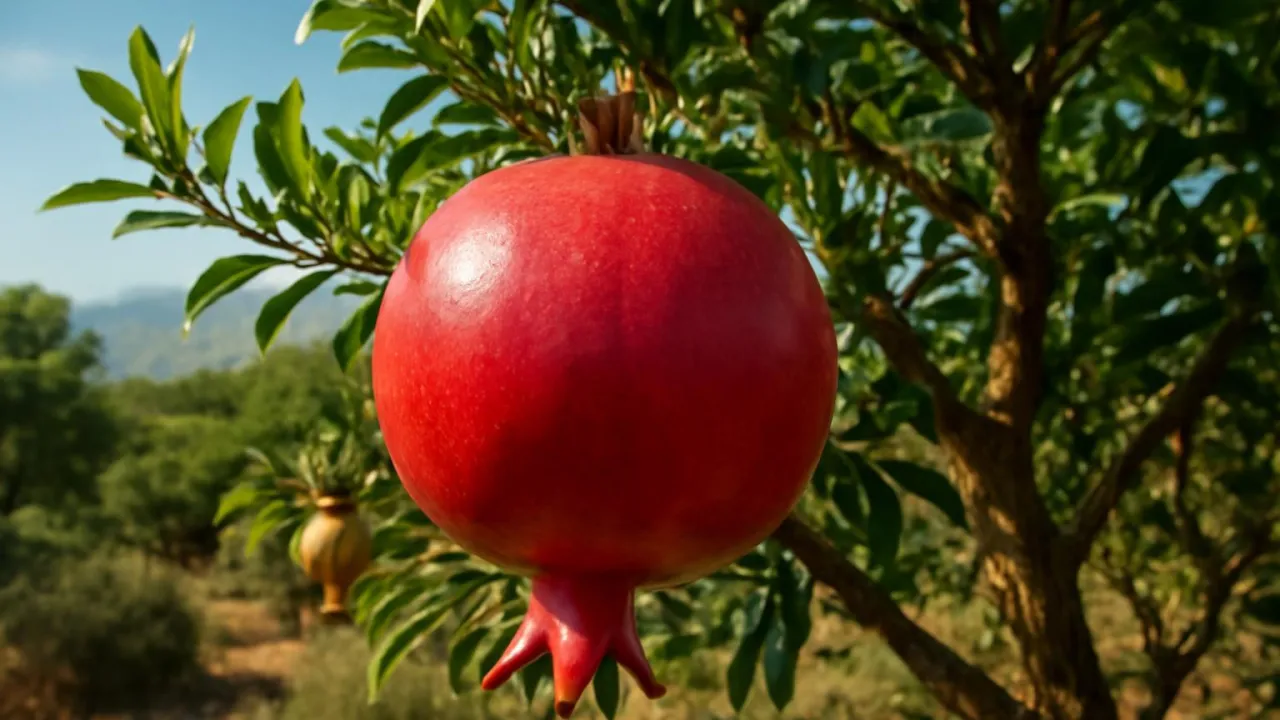
Pomegranates have been grown for over 4,000 years in many countries!
✨ Word Sparks (Grade 2 Glossary)
Tap 🔊 to hear
orchard
A place where many fruit trees grow
juice
Liquid made by squeezing fruit
climate
The usual weather in a place
🪝
Have you ever wondered how pomegranates grow on trees in warm places?
1
Growing on Trees
Pomegranates grow on small trees that like warm weather and lots of sun. These trees can reach up to ten feet tall. They need water but not too much. The thick skin protects the fruit inside from animals.
2
Many Juicy Seeds
Inside each pomegranate, there are hundreds of tiny seeds. Each seed is covered with juicy, red flesh. People eat the seeds fresh or make from them. Birds and animals also enjoy eating these seeds.
3
Where They Live
Pomegranates originally come from Iran and the Mediterranean area. They grow best in dry, warm with plenty of sunlight. Farmers grow pomegranates in for food and . The fruit is popular around the world.
Pomegranates are one of the oldest cultivated fruits, grown for over 4,000 years!
✨ Word Sparks (Grade 3 Glossary)
Tap 🔊 to hear
pollination
When bees help flowers make fruit
adaptation
A special trait that helps plants survive
camouflage
Colors that help hide plants or animals
🪝
Did you know pomegranates use their thick skin to protect hundreds of juicy seeds inside?
1
Thick Skin Protection
Pomegranates have a thick, leathery skin that protects the seeds inside from damage. This skin helps keep the fruit safe from predators like birds and insects. The tough outer layer also prevents water loss in dry climates. This helps the fruit survive in warm, sunny places.
2
Seeds and Pollination
Inside the fruit, hundreds of seeds are surrounded by juicy red arils that attract animals. Animals eat the seeds and help spread them, which is important for the plant’s reproduction. Flowers bloom in spring, and by bees helps the fruit develop. This process ensures new pomegranate trees grow.
3
Habitat and Growth
Pomegranates grow best in Mediterranean climates with hot, dry summers and mild winters. They need full sun to produce sweet fruit and moderate water for healthy growth. The trees can reach up to ten feet tall and have shiny, dark green leaves. Their roots absorb nutrients and water from the soil.
4
Camouflage and Survival
The reddish color of pomegranate fruit blends with the surrounding leaves and branches. This helps protect the fruit from some predators. However, animals like birds and squirrels eat the seeds to get nutrients. The plant depends on these animals to spread its seeds and survive.
Pomegranates contribute to biodiversity by supporting many animals and insects in their habitats.
✨ Word Sparks (Grade 4 Glossary)
Tap 🔊 to hear
symbiosis
A helpful relationship between two living things
irrigation
Giving water to plants on farms
biodiversity
Many different plants and animals living together
🪝
Have you ever wondered how pomegranates fit into their ecosystem and help other living things?
1
Ecosystem Role
Pomegranates play an important role in their ecosystems by providing food for many animals such as birds and small mammals. These animals eat the juicy seeds and help spread them across the landscape, aiding in the plant’s reproduction. This mutual relationship is called , where both plants and animals benefit. Without animals, pomegranates would struggle to spread their seeds effectively.
2
Cause and Effect of Growth
Pomegranates grow best in warm, dry climates with plenty of sunlight and moderate water supply, which causes their fruit to become sweet and juicy. If the tree does not get enough sun or water, the fruit may be smaller or less flavorful. Farmers carefully manage water and soil nutrients to maximize fruit production. This cause-and-effect relationship shows how environment impacts plant growth.
3
Geographic Distribution
Originally native to Iran and the Mediterranean region, pomegranates are now cultivated worldwide in similar climates such as California and parts of India. Their ability to grow in dry, warm areas allows them to thrive in many countries. Human farming and trade have helped spread pomegranates far beyond their native range. This wide distribution supports global demand for fresh fruit and juice.
4
Human Impact and Agriculture
Humans have cultivated pomegranates for thousands of years, selecting varieties with sweeter seeds and thicker skins. Agricultural practices such as and pruning improve fruit yield and quality. However, over-farming and habitat loss can threaten wild pomegranate populations. Sustainable farming helps maintain healthy ecosystems and ensures future pomegranate crops.
Pomegranates contain over 600 seeds, each surrounded by sweet, juicy arils full of antioxidants.
✨ Word Sparks (Grade 5 Glossary)
Tap 🔊 to hear
antioxidant
A nutrient that helps protect the body’s cells
transpiration
Water loss from leaves into the air
genetic erosion
Loss of plant diversity over time
🪝
Did you know that the pomegranate, Punica granatum, is one of the oldest cultivated fruits with fascinating biological traits?
1
Scientific Classification and History
The pomegranate belongs to the family Lythraceae and the genus Punica, with the species name granatum. It has been cultivated for over 4,000 years, originating in the region of modern-day Iran and the Mediterranean basin. Archaeological evidence shows its importance in ancient cultures for food, medicine, and symbolism. Its long history reflects its adaptability and cultural significance worldwide.
2
Physiological Mechanics of the Fruit
The pomegranate fruit consists of a tough outer rind and hundreds of arils, each containing a seed surrounded by juicy, -rich flesh. The thick rind protects seeds from environmental stress and predators. Inside, the arils store sugars and nutrients that attract animals for seed dispersal. The fruit’s structure supports both protection and reproduction efficiently.
3
Growth Conditions and Adaptations
Pomegranate trees thrive in subtropical to Mediterranean climates with hot, dry summers and mild winters. They require full sun exposure and well-drained soils to optimize photosynthesis and fruit production. Their deep root systems allow access to water in arid environments, while their leathery leaves reduce water loss through . These adaptations make them drought-tolerant and suitable for cultivation in semi-arid regions.
4
Conservation and Agricultural Importance
While widely cultivated, wild pomegranate populations face threats from habitat loss and due to agricultural expansion. Conservation efforts focus on preserving genetic diversity through seed banks and protected areas. Agriculturally, pomegranates are economically valuable, with global production exceeding one million tons annually. Their health benefits and culinary uses drive continuous research and breeding programs.
5
Quantitative Comparisons and Uses
A mature pomegranate tree can grow between six and ten feet tall and produce up to 200 fruits per year. Each fruit weighs about one pound (450 grams) and contains roughly 600 seeds. The juice has a pH around 3, making it acidic but rich in vitamin C and . These properties make pomegranates a popular fruit for fresh consumption and juice production worldwide.