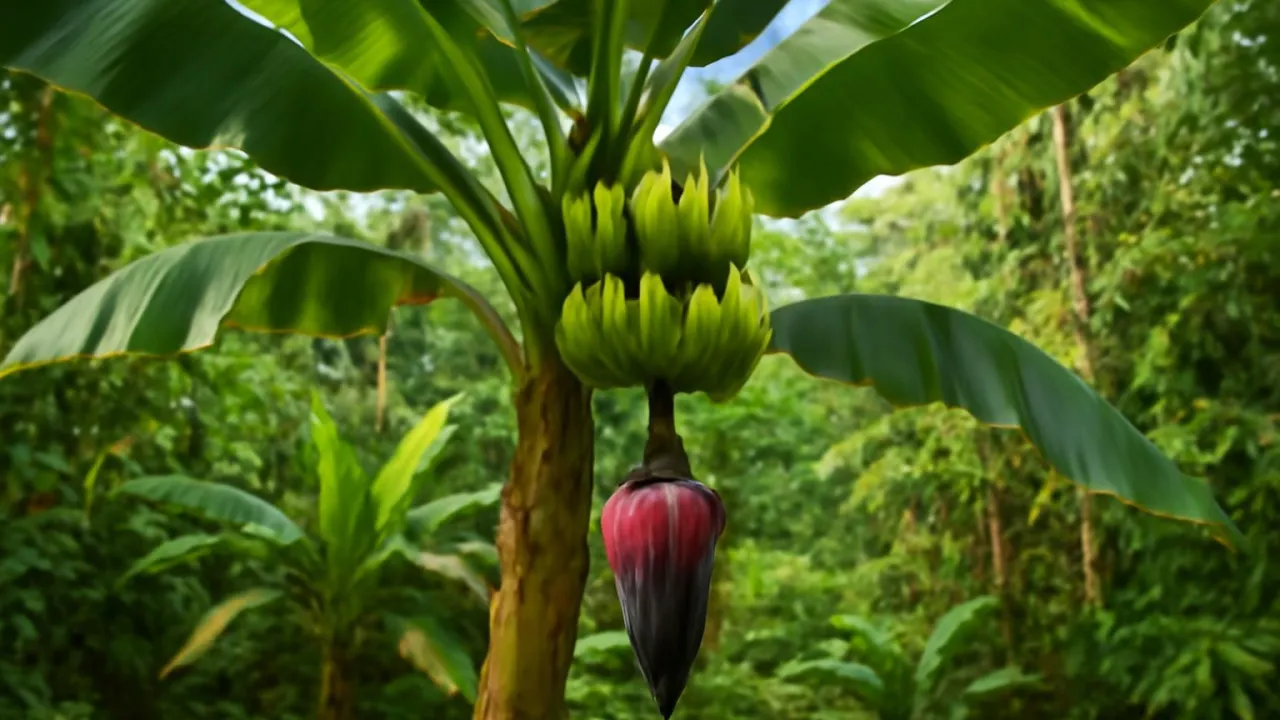
Plantains are a staple food for millions of people around the world.
✨ Word Sparks (Grade 2 Glossary)
Tap 🔊 to hear
tropical
Warm places near the equator
starchy
Food that has a lot of energy
skin
The outside cover of a fruit
🪝
Have you ever seen a fruit that you must cook before eating?
1
What Is a Plantain?
Plantains look like bananas but are bigger and thicker. They grow in warm, places. People often cook plantains before eating them.
2
Where Do Plantains Grow?
Plantains grow best in hot places with plenty of sun and water. They grow on tall plants that can reach up to nine feet. Farmers take care of them carefully.
3
Plantain’s Special Feature
Plantains have thick that protects them as they grow. When green, they are and firm. When ripe, they turn yellow and become sweeter.
Plantains are a vital food source in tropical regions and are eaten cooked like vegetables.
✨ Word Sparks (Grade 3 Glossary)
Tap 🔊 to hear
adaptation
A change that helps plants survive better
starchy
Full of energy-giving starch like potatoes
ripen
When fruit gets sweeter and softer
🪝
Did you know plantains are fruits that act like vegetables when cooked?
1
Plantain’s Appearance and Habitat
Plantains resemble bananas but are larger and have thicker skin. They thrive in tropical climates with warm temperatures. Their tall plants can reach heights of nine feet easily.
2
How Plantains Grow and Adapt
Plantains grow in clusters called bunches that hang from the plant. Their thick skin helps protect them from pests and harsh weather. This allows them to survive in humid environments.
3
Plantain’s Role in Food and Culture
Unlike sweet bananas, plantains are and usually cooked before eating. They provide important nutrients and energy to many people worldwide. Plantains are a staple food in many tropical regions.
4
Interesting Plantain Facts
Plantains can be green, yellow, or black when ripe, showing different stages of ripeness. Their starch content decreases as they and sugars increase. This change affects how they are cooked and eaten.
Plantains support both ecosystems and human communities in tropical regions worldwide.
✨ Word Sparks (Grade 4 Glossary)
Tap 🔊 to hear
ecosystem
A community of living things and their environment
pollinate
Help flowers make seeds by moving pollen
sustainable
Using resources without harming the environment
🪝
Why do plantains play an important role in tropical food webs and farming?
1
Plantain Growth and Environment
Plantains grow in tropical regions where warm temperatures and heavy rainfall create ideal conditions. Their tall, sturdy plants support large bunches of fruit that develop over several months. Because they need full sun and plenty of water, they often grow near rivers or in rich soil. These conditions help plantains produce healthy, energy-rich fruits.
2
Plantain’s Role in Ecosystems
Plantains provide food for many animals, including insects and birds, which help the flowers. They also contribute to the food web by feeding humans and livestock. Their large leaves are sometimes used as animal fodder or for wrapping food, showing a symbiotic relationship with people. This makes plantains important to both nature and human life.
3
Agricultural Importance and Human Impact
Farmers cultivate plantains as a major crop because they yield large amounts of energy-rich fruit. However, plantain farming can affect soil health if not managed well. farming practices help maintain soil nutrients and protect the environment. These practices include crop rotation and using organic fertilizers to keep the land healthy.
4
Geographic Distribution and Uses
Plantains are grown widely across Africa, Asia, and the Caribbean, adapting well to various tropical soils. They are cooked in many ways, such as frying, boiling, or baking, making them versatile in local cuisines. This wide distribution reflects their importance in food security. Many cultures rely on plantains as a daily food source.
1. How do plantains help animals in their ecosystem?
2. Why is sustainable farming important for plantains?
🤯 Mind-Blowing Fact • Grade 5
Plantains are a scientifically unique fruit vital to tropical ecosystems and global food security.
✨ Word Sparks (Grade 5 Glossary)
Tap 🔊 to hear
genus
A group of related plants or animals
monoculture
Growing only one crop in one place
photosynthesis
How plants use sunlight to make food
🪝
How do plantains fit scientifically into the banana family and support tropical agriculture worldwide?
1
Scientific Classification and Botanical Traits
Plantains belong to the Musa and species paradisiaca within the Musaceae family, closely related to bananas. Unlike dessert bananas, plantains have higher starch content and lower sugar levels. Their large, herbaceous plants can grow up to nine feet tall, with broad leaves that aid efficiently. This botanical classification helps scientists understand their growth and uses.
2
Physiological Mechanics and Growth
Plantains develop in large bunches called hands, each containing multiple fingers or fruits. Their thick peel protects against pests and physical damage during growth. The plants require warm temperatures between 77°F and 95°F and consistent moisture for optimal nutrient uptake and fruit development. These physiological needs influence where and how plantains are farmed.
3
Conservation and Agricultural History
Plantains have been cultivated for thousands of years, originating in Southeast Asia and spreading to Africa and the Caribbean through trade routes. They remain a vital food crop for millions, but farming poses risks to biodiversity and soil health. Conservation efforts promote genetic diversity and sustainable agricultural practices to protect this important crop.
4
Quantitative Comparisons and Uses
A mature plantain plant can produce up to 40 pounds (18 kilograms) of fruit per bunch, providing substantial food energy. Plantains are cooked at different ripeness stages, with green plantains used like vegetables and ripe ones eaten as sweet fruit. Their versatility makes them essential in tropical diets and economies, supporting millions of people daily.
5
Ecological and Economic Importance
Plantains contribute to tropical ecosystems by supporting pollinators and providing habitat for various species. Economically, they are a staple crop that supports millions of smallholder farmers worldwide. Their cultivation influences food security, cultural traditions, and sustainable development across multiple continents and communities.