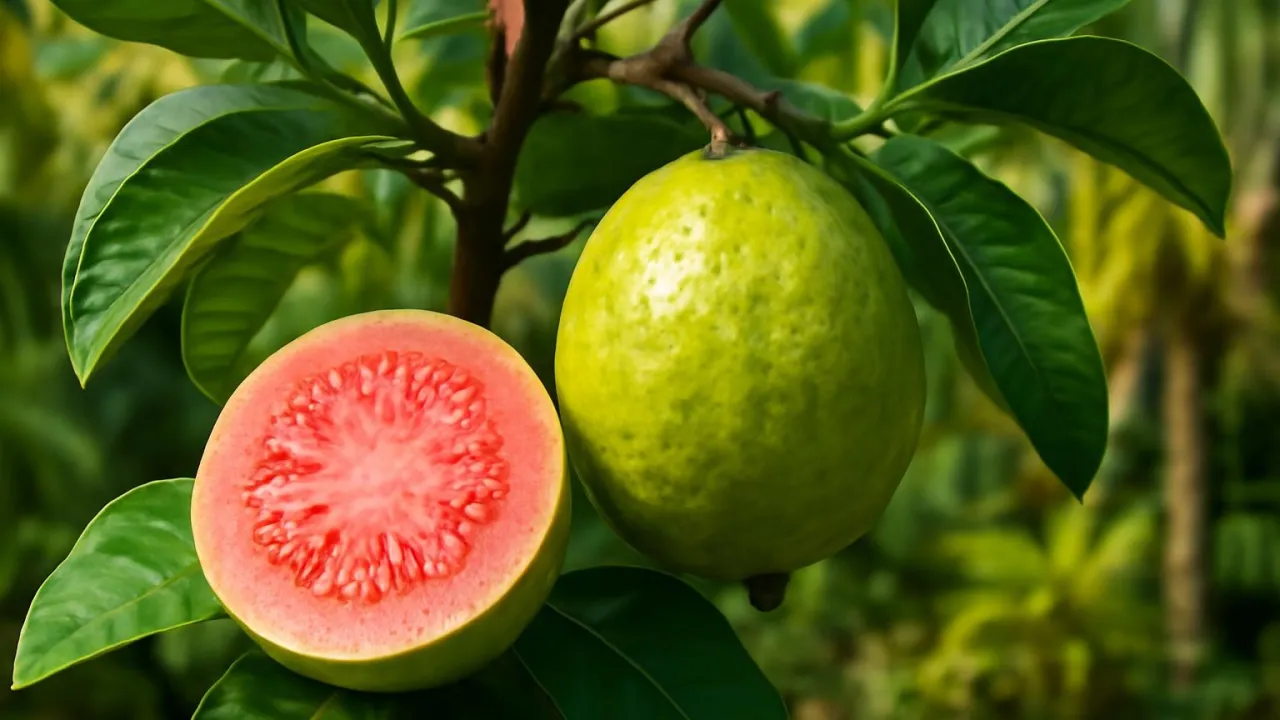
Pink guava contains four times more vitamin C than an orange!
✨ Word Sparks (Grade 2 Glossary)
Tap 🔊 to hear
vitamin C
A healthy nutrient in fruits that helps fight sickness
tropical
A warm place where many fruits grow
fragrant
A nice smell that attracts animals and people
🪝
Have you ever tasted a fruit with pink, juicy inside?
1
Colorful Outside and Inside
Pink guava has green skin and bright pink flesh inside that is soft and sweet. It smells very and attracts many animals. People enjoy eating it fresh or in juices.
2
Where It Grows
This fruit grows on trees in warm places like America and Asia. The trees need plenty of sunshine and some water to grow healthy and strong.
3
Special Features
Pink guava is full of , which helps keep people healthy. Its seeds are small and hard, and the fruit has a unique sweet taste that many love.
Pink guava contains more vitamin C than many common fruits, boosting immunity naturally.
✨ Word Sparks (Grade 3 Glossary)
Tap 🔊 to hear
pollination
When insects help flowers make fruit
adaptation
A change that helps plants or animals survive
nutrients
Good stuff in food that helps us grow
🪝
Did you know pink guava’s bright color helps it survive in the wild?
1
Bright Colors and Camouflage
Pink guava has green skin that blends with leaves, helping it hide from some predators. Its bright pink flesh attracts animals that help spread its seeds. This helps the tree reproduce and survive.
2
Life Cycle and Growth
The pink guava tree grows up to ten meters tall in tropical climates. It flowers before fruiting, and by insects helps produce the fruit. The fruit matures in about three to four months.
3
Nutrients and Health
Pink guava is rich in vitamin C, fiber, and antioxidants, providing that support health. Eating this fruit can help protect against sickness and improve digestion. Its seeds are hard and spread by animals eating the fruit.
4
How It Survives
The thick skin protects the fruit from pests and weather damage. The sweet scent attracts animals, which eat the fruit and disperse seeds far away. This helps pink guava spread across wide areas.
Pink guava’s vitamin C content can be four times higher than oranges, supporting human health worldwide.
✨ Word Sparks (Grade 4 Glossary)
Tap 🔊 to hear
biodiversity
Many different kinds of plants and animals living together
cultivation
Growing plants on farms or gardens
sustainable
Using resources carefully to protect nature
🪝
How does pink guava’s bright pink flesh affect its place in nature?
1
Ecosystem Role and Food Web
Pink guava fruit plays an important role in tropical food webs by feeding many animals like birds and mammals. These animals help disperse seeds, which supports forest growth and . The fruit’s sweetness attracts pollinators and seed dispersers alike, making it crucial for the ecosystem.
2
Geographic Distribution and Growth
Pink guava trees grow naturally in tropical regions of the Americas and Asia, thriving in warm climates with moderate rainfall. Human has spread pink guava worldwide because of its delicious flavor and health benefits. The trees prefer sunny locations and well-drained soil for optimal growth.
3
Cause and Effect of Adaptations
The thick skin of pink guava protects the fruit from insect damage and weather, allowing seeds to mature safely. Bright pink flesh attracts animals, which eat the fruit and carry seeds far away, helping the species spread. This mutual relationship benefits both the tree and animals in the environment.
4
Human Impact and Agriculture
Farmers grow pink guava commercially for fresh markets and juice production, which supports local economies. However, overharvesting and habitat loss can threaten wild populations, so farming is important. Conservation efforts help protect natural pink guava habitats and maintain .
Pink guava’s vitamin C levels can reach 400 mg per 100 grams, quadruple that of oranges.
✨ Word Sparks (Grade 5 Glossary)
Tap 🔊 to hear
endozoochory
Seed spread when animals eat fruit and drop seeds
antioxidants
Natural chemicals that protect cells from damage
genetic diversity
Many different genes in a plant or animal group
🪝
What scientific secrets does the pink guava tree hold about tropical fruit evolution?
1
Taxonomy and Botanical Classification
Pink guava belongs to the Myrtaceae family and is scientifically named Psidium guajava. It is a tropical fruit tree native to Central and South America but has been widely cultivated in Asia and other tropical regions. Its classification helps scientists study its relationships to other fruit trees.
2
Physiological Mechanics and Adaptations
The pink guava’s thick, waxy skin protects against water loss and insect damage, while its bright pink flesh contains high levels of vitamin C and . Its seeds are encased in a sweet pulp that attracts animals, facilitating seed dispersal through . The tree’s deep root system helps it survive drought conditions.
3
Conservation and Agricultural History
Historically, pink guava has been cultivated for thousands of years by indigenous peoples for food and medicine. Today, it is commercially farmed worldwide, but wild populations face threats from habitat destruction and overharvesting. Conservation programs promote sustainable farming practices to protect .
4
Quantitative Comparisons and Growth Data
Pink guava trees can grow up to 10 meters tall and produce fruits weighing between 100 and 300 grams. The fruit’s vitamin C content ranges from 200 to 400 milligrams per 100 grams, which is roughly four times higher than that of oranges. The tree thrives in temperatures between 68°F and 95°F (20°C to 35°C).
5
Ecological and Economic Importance
Pink guava plays a vital role in tropical ecosystems by supporting diverse animal species through its fruit supply. Economically, it contributes significantly to local and global markets through fresh fruit sales and juice production. Sustainable cultivation ensures long-term benefits for both nature and human communities.